Inside China’s EV Boom: Why the World’s Most Competitive EV Market Is in China
Key Takeaways
- •China leads global EV sales, over 6 million units annually
- •BYD, Xiaomi, Huawei compete across price and tech
- •Nationwide fast‑charging network covers 95% of cities
- •Smartphone makers leverage existing supply chains for cars
- •Government subsidies and standards spur rapid model rollout
Summary
China remains the world’s largest electric‑vehicle market, with millions of EVs on its streets daily. The ecosystem features a dense mix of legacy manufacturers like BYD and tech entrants such as Xiaomi and Huawei, each launching high‑performance or software‑centric models. Robust charging infrastructure and an integrated supply chain enable rapid product cycles and fierce price‑performance competition. The market’s scale and speed of innovation illustrate how China built a self‑reinforcing EV platform.
Pulse Analysis
China’s electric‑vehicle market has evolved from a niche segment to a mass‑market powerhouse, now accounting for roughly 40% of global EV sales. This scale is not merely a function of consumer demand; it reflects coordinated policy support, aggressive pricing, and a deep pool of domestic manufacturers. Brands such as BYD dominate volume sales, while newcomers like Xiaomi’s YU7 showcase how software expertise can translate into compelling automotive experiences. The result is a hyper‑competitive landscape where multiple players vie for market share, driving continuous innovation and price compression.
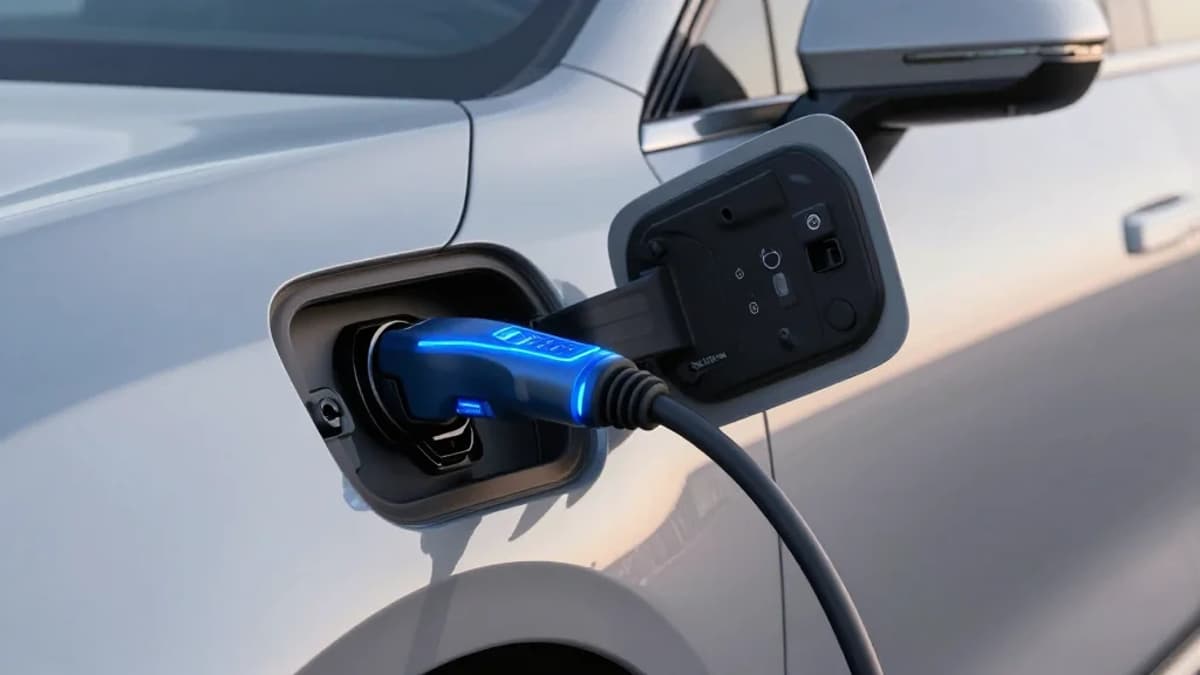
A critical enabler of this boom is China’s ubiquitous charging infrastructure. By 2024, fast‑charging stations are present in over 95% of major cities, and public chargers are installed alongside residential complexes, retail hubs, and highway rest stops. This seamless integration eliminates range anxiety and encourages daily EV usage, reinforcing consumer confidence. Moreover, China’s mature component ecosystem—spanning batteries, semiconductors, and vehicle electronics—allows firms from unrelated sectors, like smartphones, to repurpose existing supply chains and accelerate vehicle development timelines dramatically.
The implications extend far beyond China’s borders. International automakers watch the market closely, recognizing that the speed of model rollout and cost efficiencies set new industry standards. As Chinese firms export technology and design concepts, global supply chains will increasingly align with Chinese specifications, compelling competitors to adapt or risk obsolescence. Ultimately, China’s EV model illustrates how coordinated infrastructure, policy, and industrial capacity can fast‑track a nation’s transition to sustainable mobility, offering a blueprint for other economies seeking similar transformation.
Inside China’s EV Boom: Why the World’s Most Competitive EV Market Is in China


Comments
Want to join the conversation?