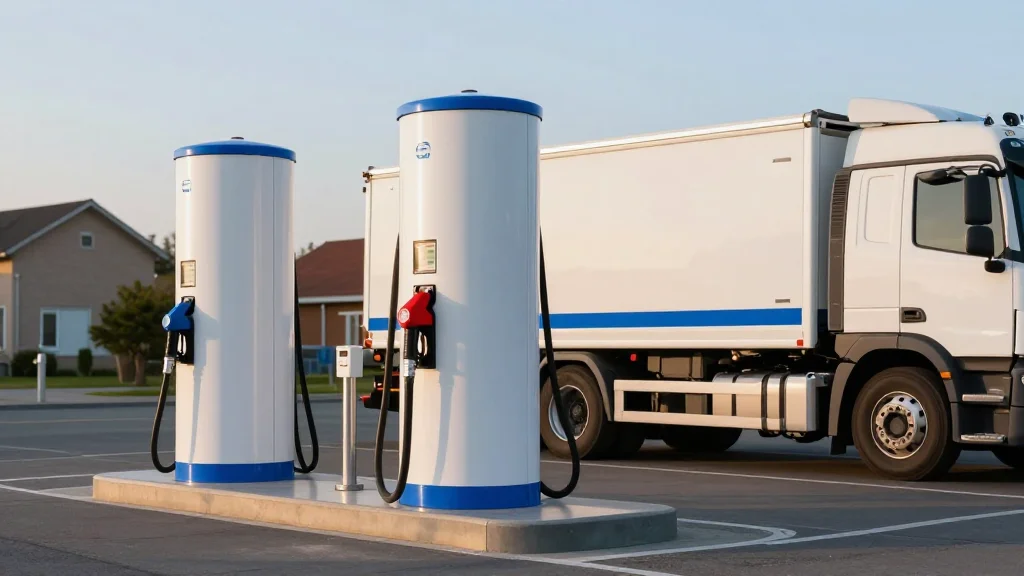
Atawey Sells Three Hydrogen Stations to Colruyt Group and Virya Energy
Why It Matters
The gap between announced station capacity and real‑world vehicle demand questions the economic viability of Belgium’s hydrogen trucking push and signals that policy‑driven infrastructure may outpace market adoption.
Key Takeaways
- •Atawey to build three stations with >7,000 kg/day capacity.
- •Belgium currently operates only 109 hydrogen vehicles.
- •Projected demand (5‑10 kg/vehicle/day) far below announced capacity.
- •Utilization risk threatens economic viability of hydrogen refuelling.
- •Policy pushes stations, but market traction remains limited.
Pulse Analysis
Belgium’s latest hydrogen announcement—three stations capable of dispensing over 7 tonnes of fuel daily—captures headlines but masks a deeper utilization challenge. The country’s hydrogen vehicle base is modest, with roughly 109 trucks and vans recorded in public programs. Even if each vehicle consumed a generous 10 kg per day, total demand would top out at just over 1 tonne, a fraction of the infrastructure’s advertised throughput. This mismatch underscores a recurring denominator problem: capacity metrics can look impressive on paper while actual kilograms dispensed remain minimal, threatening the financial case for such projects.
The discrepancy becomes clearer when compared with the earlier H2Benelux trial, which paired three Belgian stations delivering about 600 kg per day with 80 trial vehicles. Atawey’s new package multiplies nominal capacity eleven‑fold without a proportional increase in fleet size. Low utilization inflates fixed‑cost per kilogram, eroding margins and raising the risk of stranded assets. Investors and policymakers must therefore shift focus from station count to daily hydrogen throughput, uptime, and the price per useful kilometre to gauge true market traction.
For hydrogen to move beyond pilot status, coordinated growth of both vehicles and refuelling points is essential. Unlike battery‑electric trucks, which can add chargers as fleets expand, hydrogen requires a dedicated supply chain—production, compression, storage, and safety systems—that only becomes economical at high throughput. Regulators should consider tying subsidies to utilization benchmarks rather than mere geographic coverage. Until Belgian fleets can reliably consume several hundred kilograms each day, the country’s hydrogen ambition will remain a capacity‑heavy, demand‑light proposition.
Deal Summary
Atawey announced the sale of three new hydrogen refuelling stations to Colruyt Group and Virya Energy for heavy‑duty mobility, with a combined capacity of over 7 tonnes per day. Deployment is planned by the end of 2027, marking a significant infrastructure expansion in Belgium.
Comments
Want to join the conversation?
Loading comments...