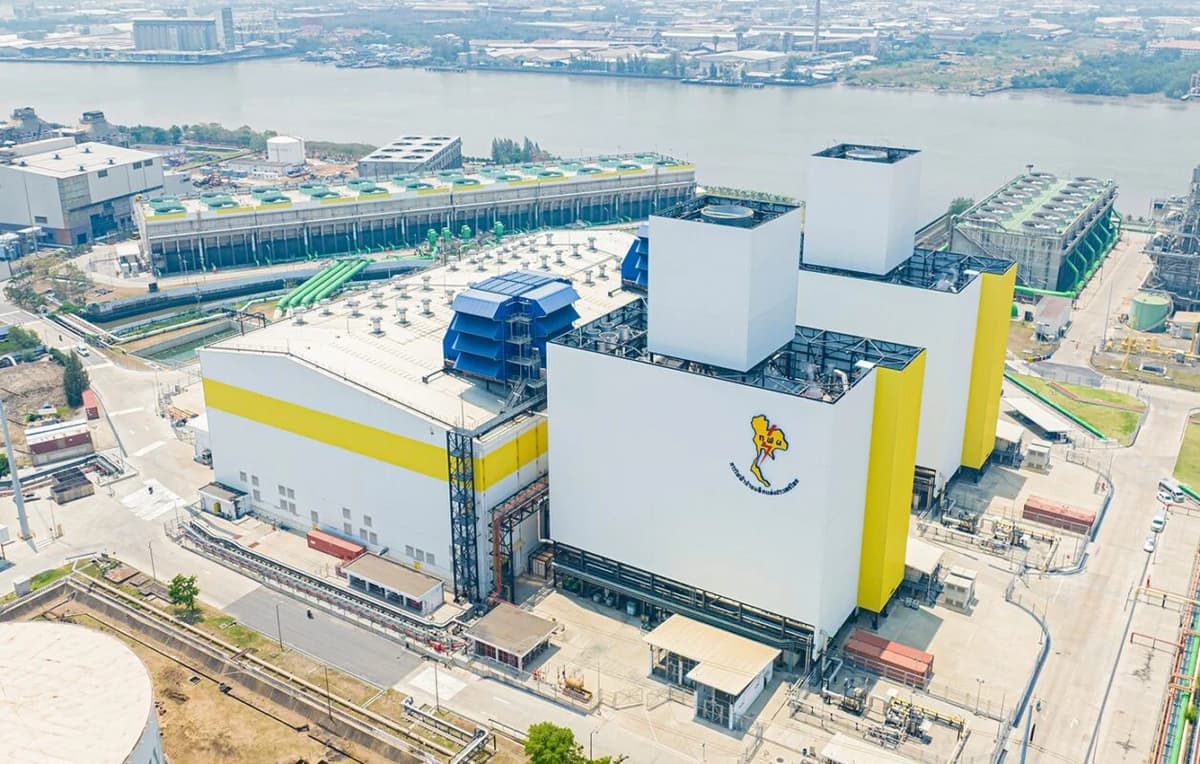
Gulf Energy Secures THB 60 Billion Loan From Asian Development Bank
•March 6, 2026
•Mar 6, 2026
0
Participants
Why It Matters
The gap between renewable targets and storage deployment threatens grid reliability and limits Thailand’s ability to meet its decarbonisation goals, while policy inertia may cede market leadership to faster‑adopting ASEAN neighbours.
Key Takeaways
- •Renewable share stalls around 25% despite capacity growth
- •Battery storage target 10 GW, but projects remain scarce
- •EGAT dominates market, limiting ancillary services liberalization
- •New 2 GW data‑center pilot may spur storage demand
- •Upstream incentives attract battery cell manufacturers, not developers
Pulse Analysis
Thailand’s energy roadmap is ambitious on paper, with the draft Power Development Plan 2024 earmarking 35 GW of renewable capacity and a combined 13.5 GW of storage by 2037. In practice, EGAT still supplies the majority of grid power, and natural‑gas‑fired combined‑cycle plants represent over half of its portfolio. Renewable generation has nudged up to roughly a quarter of total output, but solar and wind together barely reach 2 %, underscoring the structural reliance on fossil fuels and the need for flexible storage solutions to balance intermittency.
The storage lag stems largely from regulatory constraints. Thailand’s single‑buyer model gives EGAT control over ancillary services, while the absence of a liberalised market for frequency regulation and capacity trading discourages private investors. Compared with Vietnam and the Philippines, which have introduced revenue‑streaming mechanisms and competitive bidding for battery projects, Thailand’s policy environment appears stagnant. Nonetheless, the Board of Investment’s tax incentives for battery cell manufacturers signal a strategic push to develop an upstream supply chain, even as downstream developers struggle to secure viable revenue.
Looking ahead, several pilots could tip the balance. EGAT’s floating‑solar program targets 2.7 GW, with 69 MW already online, and Gulf Energy’s solar‑plus‑battery portfolio has secured a THB 60 billion ADB loan for further expansion. Most notably, a 2 GW direct‑power‑purchase agreement for data centres—requiring renewable‑only supply—offers a concrete use case for large‑scale storage. If the government introduces market‑based incentives for ancillary services, these projects could catalyse broader battery adoption, helping Thailand align its storage capacity with its renewable ambitions.
Deal Summary
Thailand's largest IPP, Gulf Energy, secured a THB 60 billion (US$1.9 billion) loan from the Asian Development Bank in early 2026 to fund solar‑plus‑battery projects and 12 industrial waste‑to‑energy projects, supporting the country's renewable energy and storage expansion.
0
Comments
Want to join the conversation?
Loading comments...