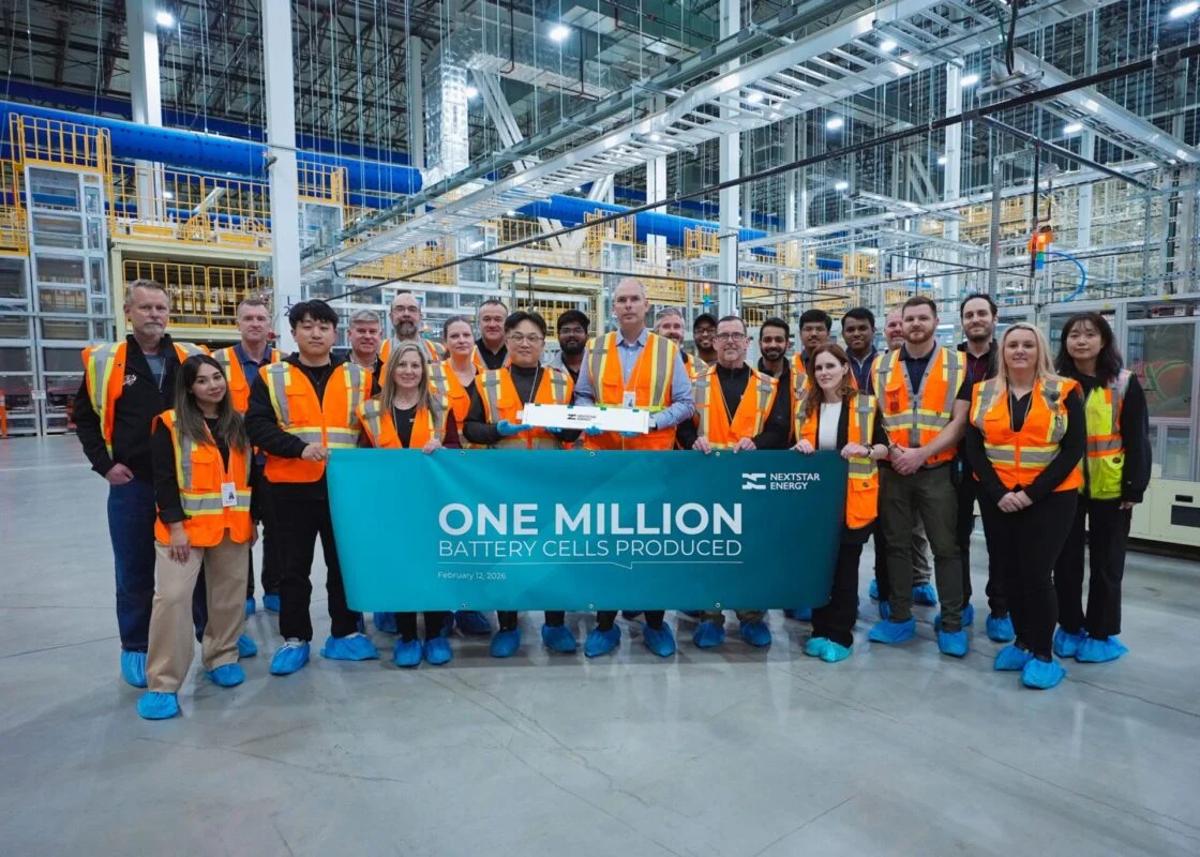
LG Energy Solution Acquires Stellantis' 49% Stake in NextStar Energy Joint Venture
Participants
Why It Matters
LG ES’s aggressive U.S. manufacturing rollout secures early‑mover status in a market driven by tax‑credit incentives, positioning the company to capture a large share of the fast‑growing battery‑storage demand.
Key Takeaways
- •LG ES targets >50 GWh ESS capacity in North America by 2026
- •Five US/Canada factories operational or under construction, including Michigan and Ontario sites
- •Q1 2026 loss of KRW 208 bn (~$140 M) driven by ESS ramp‑up costs
- •New BESS cells projected to be 15 % cheaper by 2028
- •Total order backlog reaches 440 GWh, supporting growth despite EV slowdown
Pulse Analysis
LG Energy Solution’s manufacturing push reflects a strategic bet on the United States’ evolving energy‑storage landscape. By repurposing EV‑cell lines for lithium‑iron‑phosphate (LFP) ESS cells and expanding to five sites—including Michigan, Ontario, Tennessee and Ohio—the firm aims to exceed 50 GWh of annual capacity by the end of 2026. This scale aligns with the H.R. 1 tax credit framework, which rewards projects that source at least half of their components domestically. LG ES’s ability to meet the 50% domestic‑content threshold positions it to capture the full 30% base investment credit plus the 10% bonus, giving developers a competitive edge.
Financially, the quarter’s KRW 208 bn loss underscores the short‑term cost of rapid ramp‑up, even as overall revenue slipped only modestly to KRW 6.6 trillion (≈$4.4 B). The company’s capex has already been trimmed by 40% YoY, but the ESS spend remains front‑loaded. A robust 440 GWh order backlog—anchored by 100 GWh of new cylindrical EV battery orders—helps offset the EV market slowdown in North America. Moreover, LG ES secured KRW 190 bn (≈$127 M) in production tax credits, demonstrating that policy incentives can partially mitigate the financial strain of scaling.
The broader market context intensifies the significance of LG ES’s actions. The Energy Storage Coalition projects $100 billion of U.S. cell‑manufacturing investment, targeting 146 GWh of capacity by 2026—far exceeding the 60 GWh of BESS projects slated for deployment. Competitors such as Samsung SDI, SK On, and new entrants are racing to fill the gap, while LG ES differentiates itself through next‑generation cells that promise 15% cost reductions by 2028 and a growing software integration arm, Vertech. As renewable‑energy demand accelerates and data‑center loads rise, LG ES’s early‑mover advantage and diversified technology roadmap could make it a pivotal supplier in the United States’ clean‑energy transition.
Deal Summary
LG Energy Solution completed the acquisition of Stellantis' 49% ownership in the NextStar Energy joint venture in February, gaining full control of the Ontario battery factory. The deal expands LG ES's North American ESS manufacturing capacity as it targets over 50 GWh of production by year‑end.
Comments
Want to join the conversation?
Loading comments...