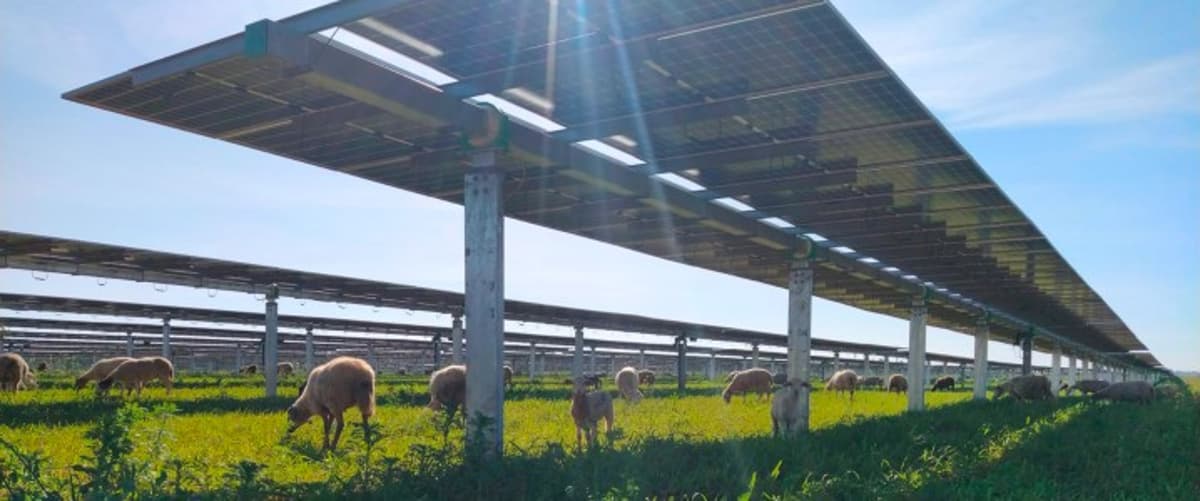
Scatec Secures €34M Debt Financing From EIB and EBRD for 190 MW Romanian Solar Project
•February 22, 2026
•Feb 22, 2026
0
Participants


Why It Matters
By scaling solar capacity, Romania strengthens energy security, meets EU decarbonisation goals, and attracts significant foreign investment, reshaping the regional renewable market.
Key Takeaways
- •Romania targets 8.2 GW solar by 2030.
- •760 MW farm near Bucharest will be Europe’s largest.
- •EU banks fund projects, €34 M loan for 190 MW.
- •Solar share aims 30.7% of energy mix by 2030.
- •Dama project includes 500 MW storage, operational 2028.
Pulse Analysis
Romania’s solar surge reflects a broader Eastern European pivot toward renewables, driven by EU climate mandates and generous financing tools. The country’s ambitious roadmap—7 GW by early 2026 and 8.2 GW by 2030—relies on a mix of utility‑scale farms, rooftop installations, and supportive policy instruments such as green certificates and contracts‑for‑difference. This momentum is amplified by the European Investment Bank and the European Bank for Reconstruction and Development, which have already pledged tens of millions of euros to de‑risk projects and attract private capital.
The flagship 760 MW plant near Bucharest, slated to begin construction this spring, will host roughly one million panels and integrate a sizable battery system, setting a new benchmark for capacity and reliability in the region. Adjacent developments, like the 1.04 GW Dama project with its 500 MW storage hub, illustrate how developers are pairing generation with grid‑balancing assets to meet both peak‑load demands and intermittent supply challenges. These projects are not only expanding generation but also creating a domestic supply chain for panels, inverters, and storage components, fostering job growth and technological expertise.
For investors, Romania’s clear regulatory framework and access to low‑cost EU financing make it an attractive entry point into the fast‑growing European solar market. The country’s rapid decoupling of economic growth from emissions—an 88% drop in greenhouse‑gas intensity since 1990—signals a resilient, forward‑looking economy. As neighboring nations scramble to replace coal, Romania’s scaling of solar capacity positions it as a regional hub for renewable expertise, potentially exporting both electricity and know‑how across the continent.
Deal Summary
Scatec announced it has reached financial close for a 190 MW solar power project in Romania, backed by a €34 million loan from the European Investment Bank and the European Bank for Reconstruction and Development. The financing will enable construction of the project, part of Romania's push to expand solar capacity to 8.2 GW by 2030.
0
Comments
Want to join the conversation?
Loading comments...