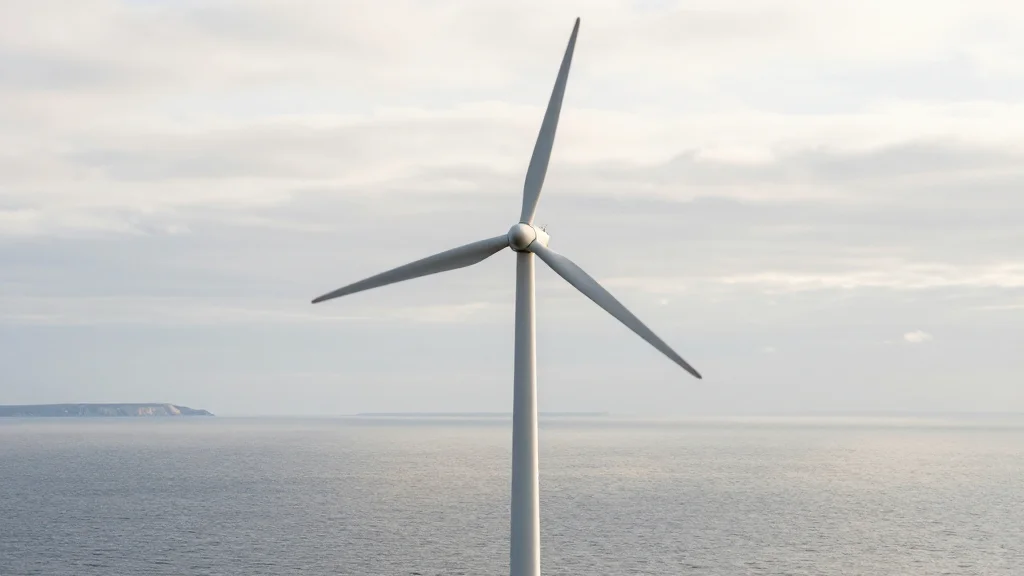
15 Years of Baltic 1: Germany’s First Offshore Wind Farm as a Pioneer for Offshore Expansion
Why It Matters
Baltic 1 proved offshore wind can be built and run profitably in Germany, unlocking a multi‑billion‑dollar expansion that underpins EnBW’s renewable growth strategy. Its success accelerates the country’s energy transition and signals robust investor confidence in offshore assets.
Key Takeaways
- •Baltic 1 delivered 48.3 MW, powering ~50,000 households
- •Project proved offshore wind can operate economically in Germany
- •EnBW now runs four farms totaling 976 MW, targeting 2 GW
- •EnBW plans up to $54 bn investments by 2030, focusing on renewables
Pulse Analysis
The Baltic 1 installation marked a watershed moment for German energy policy, demonstrating that offshore wind could move beyond pilot status to reliable, commercial generation. Its 48.3 MW output, achieved with 21 turbines positioned 16 km off the Darß/Zingst coast, has consistently met performance targets, offering a practical template for grid integration and maintenance logistics. By proving technical availability and economic viability, Baltic 1 helped de‑risk subsequent, larger projects and cemented offshore wind as a cornerstone of Germany’s renewable roadmap.
Building on that foundation, EnBW has rapidly expanded its offshore portfolio, now operating four farms that collectively deliver 976 MW of clean power. The imminent commissioning of the 960 MW He Dreiht project—one of the nation’s largest offshore sites—alongside the planned 1 GW Dreekant, signals a strategic shift from early‑stage experimentation to scale‑up. These assets not only diversify EnBW’s generation mix but also position the company to capture lucrative power purchase agreements and ancillary grid services, reinforcing its transformation into a sustainable infrastructure player.
Germany’s broader offshore ambitions are equally aggressive, with national targets calling for several gigawatts of capacity by the early 2030s. EnBW’s commitment to invest up to $54 billion by 2030, primarily in renewable generation and transmission networks, reflects confidence in policy support and market demand. The continued operation of Baltic 1, coupled with new megaprojects, underscores the sector’s maturation and its pivotal role in decarbonizing Europe’s energy system, offering investors a clear signal of long‑term growth potential.
15 Years of Baltic 1: Germany’s First Offshore Wind Farm as a Pioneer for Offshore Expansion
Comments
Want to join the conversation?
Loading comments...