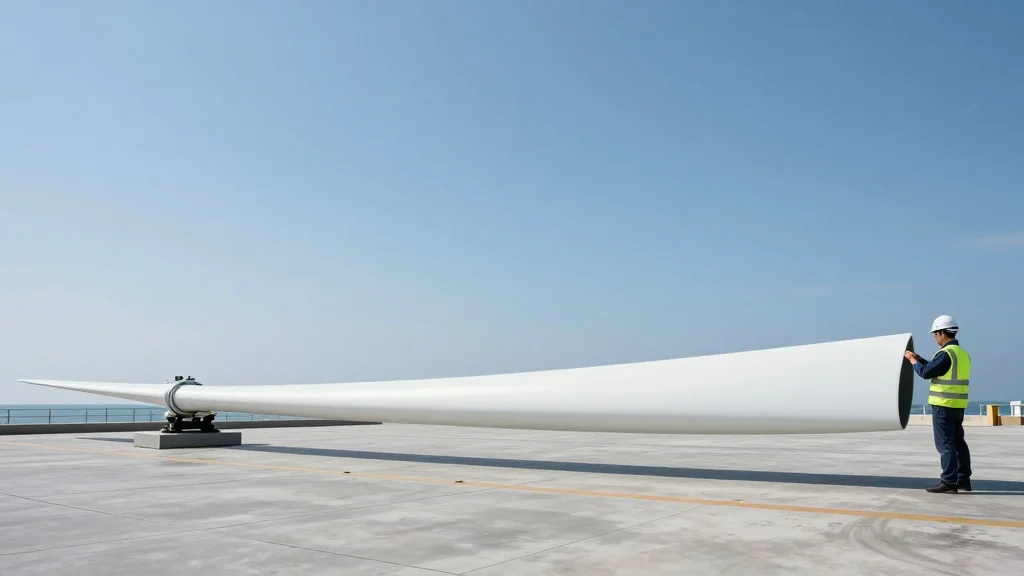
1.6 GW Nordlicht Offshore Cluster on Track: Vattenfall Simulates Complex Offshore Installation on Land
Why It Matters
Early on‑shore testing reduces technical risk and cost overruns, accelerating Europe’s push toward large‑scale, subsidy‑free offshore wind. The Nordlicht cluster’s size and innovative material use set a benchmark for sustainable, high‑capacity projects.
Key Takeaways
- •Vattenfall tests 23.7‑m, 362‑ton transition pieces on land
- •Offshore construction starts July 2026 with 68 monopiles per phase
- •Nordlicht cluster totals 1.61 GW, 112 turbines, no subsidies
- •15 MW Vestas V236 turbines target 6 TWh annual generation
- •Low‑emission steel cuts project CO₂ footprint by ~16 %
Pulse Analysis
The offshore wind industry is increasingly turning to on‑shore mock‑up facilities to de‑risk complex sea‑based installations. By replicating the full scale of transition pieces—23.7 metres tall and weighing 362 tonnes—Vattenfall can validate assembly sequences, bolting techniques, cable routing and emergency response plans under controlled conditions. This approach shortens the learning curve once the turbines are at sea, trims schedule buffers, and curtails the costly re‑work that has plagued earlier offshore projects.
Nordlicht’s 1.61 GW capacity places it among Europe’s largest offshore wind farms, yet it is being built without any public subsidies. The project will deploy 112 Vestas V236‑15 MW turbines, each capable of delivering unprecedented power output, and will rely on 68 monopiles per phase that stretch up to 80.5 metres and weigh 1,290 tonnes. Commissioning is slated for 2028, with an expected annual generation of roughly 6 TWh—enough to power over half a million German households. The use of low‑emission steel for turbine towers further underscores a commitment to reducing the carbon intensity of the supply chain.
For the broader market, Nordlicht demonstrates how scale, technology, and sustainability can converge without fiscal support. The successful on‑shore testing regime may become a template for future offshore ventures, encouraging developers to invest in similar facilities to streamline deployment and improve safety. Moreover, the project’s reliance on high‑capacity turbines and greener materials could accelerate cost reductions across the sector, reinforcing Europe’s ambition to dominate global offshore wind capacity in the coming decade.
1.6 GW Nordlicht Offshore Cluster on track: Vattenfall Simulates Complex Offshore Installation on Land
Comments
Want to join the conversation?
Loading comments...