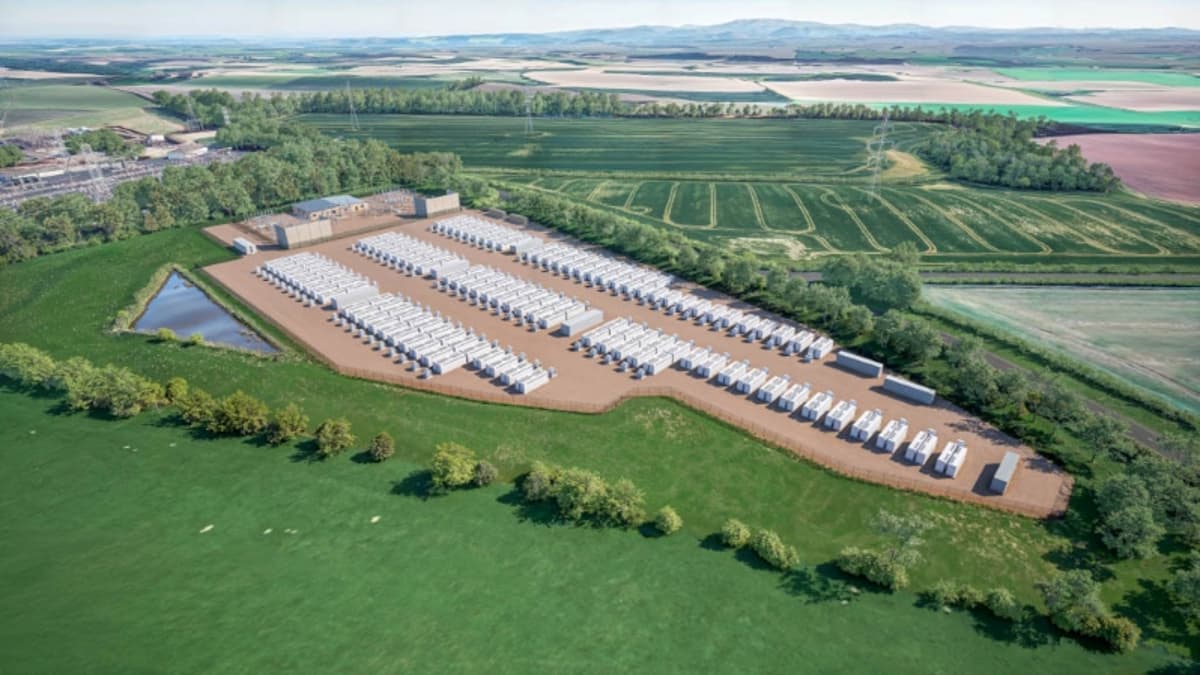
1GWh Eccles BESS by Matrix in Scotland Closes $331mn Financing Ahead of 2027 Operations Start
Why It Matters
The deal shows that battery storage is now treated as a mature, bank‑financed infrastructure asset, accelerating the UK’s ability to balance renewable generation and meet its Net‑Zero targets.
Key Takeaways
- •£245 M ($331 M) non‑recourse financing closed for 1 GWh BESS.
- •Tesla awarded EPC contract; EDF signed long‑term optimization agreement.
- •500 MW/1 GWh system will power ~100,000 homes in Scotland.
- •Project slated for commercial operation by summer 2027, boosting grid flexibility.
- •Financing signals battery storage’s emergence as a mature infrastructure asset.
Pulse Analysis
The £245 million ($331 million) non‑recourse financing closed by a consortium of CIBC, MUFG and NatWest marks a watershed moment for utility‑scale battery projects. Historically, such financing was reserved for mature infrastructure like transmission lines or gas plants; its extension to a 1 GWh storage asset signals that lenders now view batteries as low‑risk, cash‑flow‑generating infrastructure. This shift mirrors a broader trend across Europe and North America, where banks are increasingly allocating capital to energy‑storage portfolios to diversify away from fossil‑fuel exposure. The Matrix Eccles deal therefore sets a new benchmark for financing scale and structure in the sector.
The 500 MW/1 GWh lithium‑ion system, built by Tesla, will deliver two‑hour discharge capability that can be dispatched within seconds to balance supply‑demand mismatches. Its strategic siting near a major transmission corridor in the Scottish Borders enables rapid injection of stored renewable power, alleviating congestion on the national grid. EDF’s long‑term optimization agreement gives the project a ready market for frequency regulation and energy‑arbitrage services, turning the battery into a revenue‑generating asset from day one. Collectively, these technical and commercial elements position the Eccles BESS as a cornerstone of the UK’s flexibility market.
With the UK targeting 50 GW of offshore wind by 2030 and Net‑Zero by 2050, large‑scale storage like the Eccles BESS will be essential to smooth intermittent generation and avoid curtailment. The project joins a growing pipeline of Scottish battery installations, including Zenobe’s 600 MWh Blackhillock facility, creating a regional hub for ancillary services. As more developers secure similar non‑recourse financing, the cost of capital for storage is expected to decline, encouraging further private investment. In the long run, such assets will underpin a resilient, decarbonized grid and open new revenue streams for energy traders.
1GWh Eccles BESS by Matrix in Scotland Closes $331mn Financing Ahead of 2027 Operations Start
Comments
Want to join the conversation?
Loading comments...