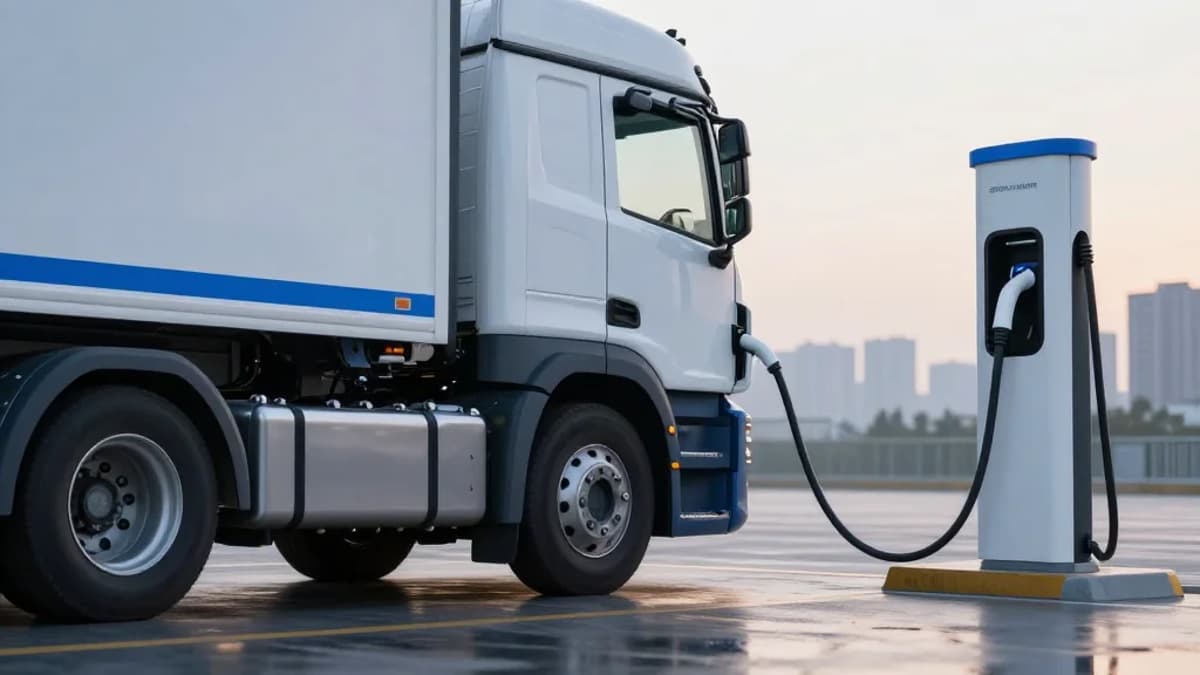
Achieving diesel‑stop parity demonstrates that electric freight can scale, reducing emissions and operating costs for logistics firms. The rollout accelerates the clean‑freight transition and reshapes infrastructure investment priorities.
The United States saw a 30 percent jump in fast‑charging sessions last year, topping 141 million, underscoring that EV adoption is no longer a niche market but a mainstream driver of electricity demand. This surge is prompting infrastructure providers to rethink capacity planning, moving beyond passenger‑car chargers to high‑power sites capable of handling fleets. As utilities grapple with load management, the data highlights the need for strategic siting and grid reinforcement to sustain growth without compromising reliability.
WattEV’s San Bernardino depot exemplifies the next phase of freight electrification. By delivering megawatt‑scale power to 200 trucks daily, the site matches the throughput of a conventional diesel truck stop, effectively proving that electric refueling can meet real‑world logistics schedules. The depot’s monthly draw of 700 MWh illustrates the substantial energy appetite of heavy‑duty vehicles, while the planned capacity expansion signals confidence in continued demand. Fleet operators stand to benefit from lower electricity costs, reduced maintenance, and compliance with tightening emissions regulations.
Looking ahead, WattEV’s ambition to field 12,000 electric heavy‑duty trucks in California by 2030 and to operate 100 depots by 2035 could reshape the freight landscape. Such scale would create a dense network of high‑power charging hubs, encouraging broader adoption across the supply chain and prompting ancillary services like battery‑as‑a‑service and smart‑grid integration. Investors and policymakers are likely to watch these developments closely, as they promise both environmental gains and new revenue streams in the evolving clean‑transport economy.
When I worked at an energy efficiency organization, a manager once said, “There are metrics and there are meaningful metrics.” Some measuring yields numbers that may not be useful or applied productively. Lately while writing about electric vehicle chargers, one metric that stood out from the others was the fact that a huge number of EV charging sessions had been completed in just one year. “In 2025, the U.S. fast‑charging networks provided an estimated 141 million charging sessions, a record, up roughly 30 % year over year, confirming that rising EV adoption translated directly into increased network usage rather than excess idle capacity.”
Of course, with electric vehicles, the focus seems to be mostly on them, and less about public EV charging infrastructure details. As a result, many people may never consider how many EV charging successes there are currently, or have been completed in total.
There has been much good news about new EV charger installations and new projects planned this year. Thousands upon thousands of new EV chargers in fact…
Another metric that jumped out recently comes from recent EV charging success and it is about the number of vehicles that can be charged at a single site. “The San Bernardino truck charging depot will now be able to charge up to 200 electric trucks per day while offering megawatt charging capability for trucks compatible with MCS standards. This volume compares to what a traditional diesel truck stop would service in a day.”
Two hundred electric trucks charged per day at one site seems like a very meaningful metric. Because most adults in America are not truck drivers, maybe 200 electric trucks charged per day doesn’t mean that much. However, that amount is comparable to the number of diesel trucks refueled at a diesel truck stop in a day. In other words, with this particular depot, one might say charging parity has been achieved.
“WattEV’s vertically integrated approach is what truly sets us apart in the charging and fleet electrification sector. That model is now driving measurable results. At our San Bernardino depot, strong and sustained utilization — currently averaging approximately 700 MWh per month — has created the need to more than double the site’s capacity,” said CEO Salim Youssefzadeh.
The San Bernardino truck charging depot is located in an area where there is heavy freight shipping activity. Electric vehicles can be particularly effective for fleet operations because of the low cost of electricity and potentially lower cost of maintenance and repairs.
WattEV included some encouraging metrics about its plans. “With a goal of deploying 12,000 electric heavy‑duty trucks in California by 2030, WattEV is exceeding industry forecasts and driving the clean freight revolution. The company currently operates five charging depots, with 15 more under development, and aims to reach 100 operational depots by 2035.”
Comments
Want to join the conversation?
Loading comments...