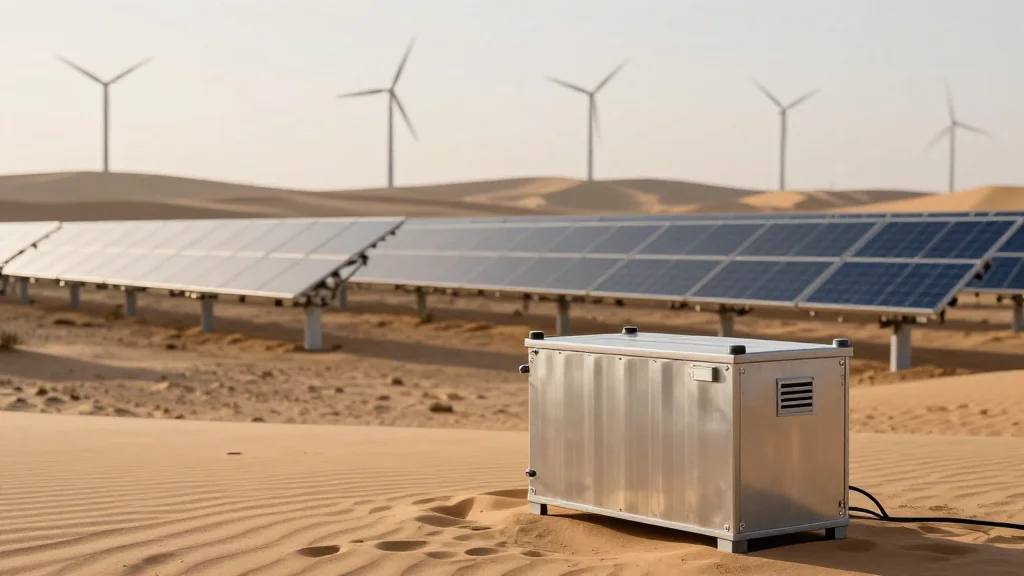
24/7 Renewables Could Happen Sooner than You Think
Companies Mentioned
Why It Matters
If firms can secure round‑the‑clock renewable power at competitive prices, they can replace costly fossil‑fuel peaker plants, accelerating decarbonization and reshaping energy markets. Policymakers and investors will need to adapt regulations and financing to unlock these projects at scale.
Key Takeaways
- •IRENA: firm renewables beat $100/MWh gas benchmark in top sites
- •China's solar‑battery projects cost as low as $46/MWh for 24/7 power
- •U.S. Nevada project projected $77/MWh by 2030, still higher than China
- •Hybrid solar‑wind‑storage projects attract tech giants seeking round‑the‑clock clean energy
- •Brazil, South Africa, Gulf regions approach fossil‑fuel cost parity
Pulse Analysis
The International Renewable Energy Agency’s latest technical report quantifies the economics of “firm” renewables—solar and wind paired with battery storage that can supply electricity continuously. By applying a global database of project costs and resource maps, IRENA shows that in premium locations the levelized cost of firm power can dip below $100 per megawatt‑hour, the typical benchmark for new combined‑cycle gas plants. In the most favorable sites, especially in China, the modeled cost falls to $46/MWh, a striking contrast to the $40/MWh LCOE of intermittent generation alone, underscoring how storage erodes the traditional “intermittency penalty.”
China’s rapid deployment of solar‑battery clusters on the Tibetan plateau and in Hebei demonstrates how policy support and low‑cost capital can push firm renewables into commercial viability. Brazil, South Africa and the Persian Gulf are already posting comparable cost curves, while the United States remains behind due to higher equipment prices, financing spreads and trade barriers; Nevada’s best‑case scenario sits at $113/MWh today, projected to reach $77/MWh by 2030. Real‑world analogues such as Adani’s 30‑GW Khavda hybrid complex and Intersect Power’s West Texas wind‑solar‑storage hub, recently acquired by Google, illustrate that developers are already testing the model at scale.
For corporate energy buyers, the report offers a credible pathway to meet 24/7 clean‑energy pledges without paying premium gas‑peaker rates. Regulators and grid operators must now consider new market designs that reward firm renewable output, including capacity payments and long‑duration storage incentives. As battery chemistry continues to improve and costs keep falling, investors are likely to channel more capital into hybrid megaprojects, accelerating the transition from fossil‑fuel baseloads to a fully decarbonized, round‑the‑clock grid.
24/7 renewables could happen sooner than you think
Comments
Want to join the conversation?
Loading comments...