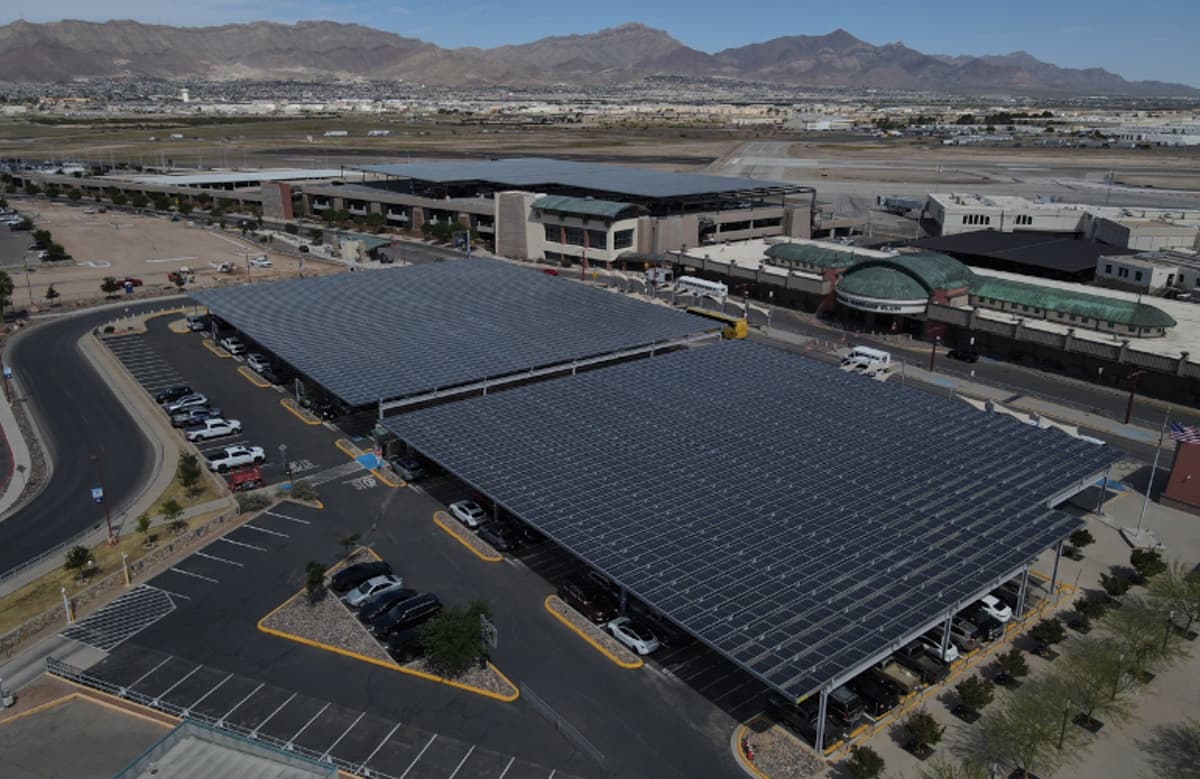
2.9-MW Carport Project Completed at El Paso International Airport
Why It Matters
The installation demonstrates how airports can leverage federal funding to accelerate renewable‑energy adoption, reducing operating costs and carbon footprints. It signals a scalable model for other U.S. hubs seeking sustainability targets.
Key Takeaways
- •Project adds 2.9 MW of solar capacity to airport parking
- •Solar carports will offset roughly 22% of annual electricity use
- •Funding includes $3 M FAA grant and $1.75 M DOE grant
- •Project supports FAA’s goal for carbon‑neutral airport operations
Pulse Analysis
Airports across the United States are turning to solar‑carport solutions as a pragmatic path to meet aggressive sustainability mandates while generating revenue‑positive assets. By integrating photovoltaic panels into existing parking infrastructure, carriers avoid the land‑use penalties of ground‑mount farms and provide shade for vehicles—a dual benefit that aligns with passenger expectations for greener travel experiences. Industry analysts note that the modular nature of carports accelerates deployment timelines, allowing airports to meet renewable‑energy targets without extensive permitting hurdles.
The El Paso International Airport project exemplifies this trend. Big Sun Solar’s 2.9 MW installation, financed largely through a $3 million FAA Airport Improvement Program grant and a $1.75 million Department of Energy award, will supply roughly one‑fifth of the facility’s annual electricity demand. By situating the panels over rental‑car and premium‑parking zones, the airport maximizes exposure to sunlight while preserving valuable apron space. Early performance data suggest the system will deliver consistent output, translating into lower utility bills and a measurable reduction in greenhouse‑gas emissions—key metrics for the airport’s sustainability reporting.
Beyond the immediate financial and environmental upside, the project underscores a broader shift toward carbon‑neutral aviation operations. The Federal Aviation Administration has set ambitious goals for net‑zero emissions by 2050, and renewable‑energy installations like El Paso’s carports are integral to that roadmap. As more airports adopt similar financing structures—leveraging federal grants and public‑private partnerships—the cumulative impact could reshape the sector’s energy profile, driving down costs, enhancing resilience, and positioning the U.S. aviation system as a leader in climate‑smart infrastructure.
2.9-MW carport project completed at El Paso International Airport
Comments
Want to join the conversation?
Loading comments...