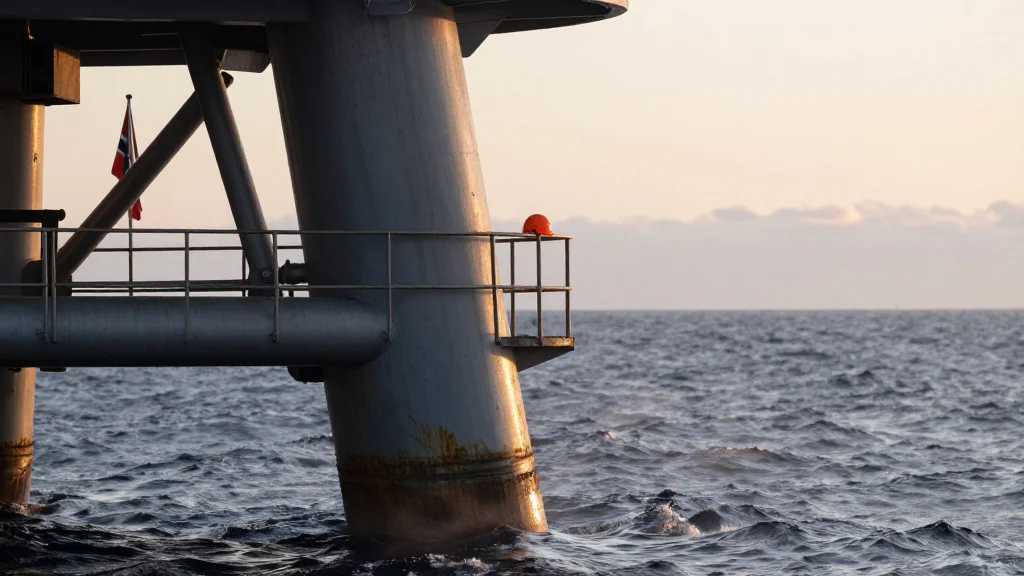
600 Offshore Workers Threaten Strike in Norway, Risking 4 Million Boe/Day Production

Why It Matters
The dispute underscores how labor relations in a key producing nation can quickly become a macro‑economic risk factor for global energy markets. With Europe still dependent on Norwegian gas to offset the loss of Russian supplies, any interruption could force utilities to turn to costlier liquefied natural gas imports, raising electricity prices for consumers. Moreover, the strike would test the resilience of Norway’s offshore operational model, which relies on a highly skilled, unionized workforce to maintain complex production facilities. Beyond immediate supply concerns, the episode may influence future wage‑setting frameworks in the sector. If unions secure favorable terms, other oil‑producing nations could see heightened labor expectations, potentially raising operating costs across the industry. Conversely, a failed strike could embolden employers to push back on benefit demands, reshaping the balance of power in future negotiations.
Key Takeaways
- •Up to 600 offshore workers (≈8% of the workforce) may strike from June 5 if talks fail.
- •Norway produces >4 million barrels of oil equivalent per day, split evenly between oil and gas.
- •The strike could cut up to 200,000 boe/day from global supply, heightening price volatility.
- •Negotiations stalled over advance sickness, parental and care benefits.
- •Europe relies on Norway as its largest gas supplier, replacing Russia in 2022.
Pulse Analysis
The looming Norwegian offshore strike arrives at a moment when the global energy market is already under stress from geopolitical tensions and dwindling inventories. Historically, Norway has been a model of labor‑industry cooperation, with collective bargaining agreements providing stability for both workers and operators. The current breakdown signals a shift: unions are demanding a broader suite of benefits that reflect post‑pandemic expectations, while industry players cite cost pressures from volatile oil prices and the need to remain competitive against lower‑cost producers.
If the strike proceeds, the immediate impact will be a supply shock that could push Brent crude and European gas benchmarks higher, at least in the short term. However, the longer‑term implication may be a recalibration of wage structures across the offshore sector. Companies could respond by accelerating automation and remote‑monitoring technologies to reduce reliance on on‑site labor, potentially reshaping the employment landscape in the North Sea.
Strategically, European policymakers will likely monitor the situation closely, balancing the need to support Norway’s role as a reliable gas supplier with the desire to avoid setting a precedent for labor‑driven supply disruptions. The outcome of the mediation could therefore influence not only Norway’s domestic labor market but also the broader geopolitical calculus of energy security in Europe.
600 Offshore Workers Threaten Strike in Norway, Risking 4 Million Boe/day Production
Comments
Want to join the conversation?
Loading comments...