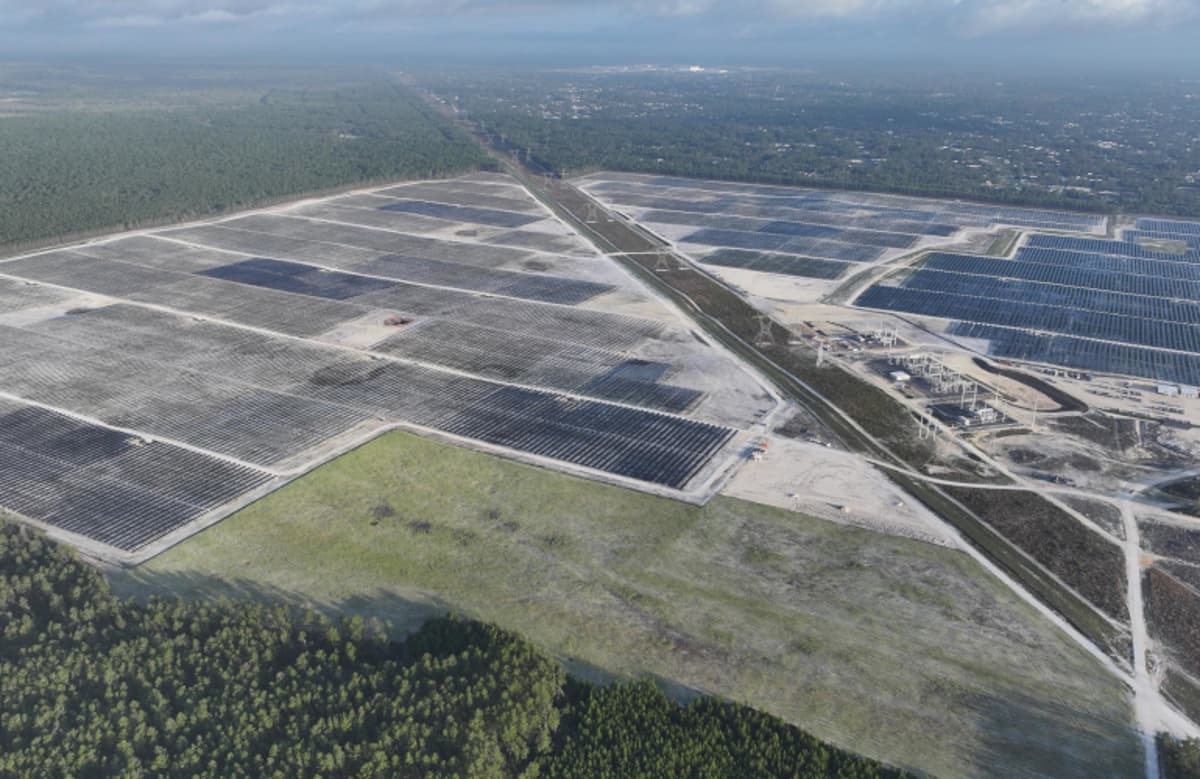
75-MW Jumper Creek Solar Site Now Online in Florida
Why It Matters
The project demonstrates how large‑scale solar can lower utility costs and shield customers from volatile fuel prices, accelerating Florida’s transition to cleaner, more affordable power.
Key Takeaways
- •Jumper Creek Solar Complex adds 74.9 MW to Duke Energy Florida’s grid.
- •Project expected to save two million customers about $250 million over its life.
- •Duke aims for 12 solar sites, 900 MW total, by 2028.
- •Savings stem from reduced fuel‑price exposure and lower generation costs.
- •Solar rollout supports Florida’s renewable‑energy targets and grid resilience.
Pulse Analysis
Duke Energy Florida’s activation of the 74.9‑MW Jumper Creek Solar Complex underscores the utility’s aggressive push into utility‑scale photovoltaics. The site, located in Sumter County, joins a pipeline of eleven additional projects slated for completion by 2028, which together will deliver roughly 900 MW of clean power. This scale of deployment is significant for a state historically reliant on natural‑gas‑fired generation, and it aligns with Florida’s Renewable Energy Portfolio Standard, which encourages utilities to meet a growing share of demand with solar and other renewables.
Financially, Jumper Creek is projected to generate about $250 million in customer savings over its operational lifespan. By displacing fuel‑intensive generation, Duke reduces exposure to volatile natural‑gas and oil markets, translating into more predictable bills for its two million customers. The cost‑avoidance model also frees capital for further grid modernization, such as advanced storage and demand‑response programs, amplifying the economic benefits beyond direct electricity savings. Analysts view these savings as a benchmark for future solar contracts, where utilities can lock in low‑cost, zero‑fuel generation for decades.
The broader industry impact is twofold. First, Duke’s roadmap signals to investors that large‑scale solar remains a viable, bankable asset class in the Southeast, encouraging additional private‑capital inflows. Second, the initiative supports state policymakers’ goals of cutting carbon emissions and enhancing grid resilience amid increasing extreme‑weather events. As more utilities replicate Duke’s model, Florida could see a rapid escalation in solar capacity, driving down wholesale power prices and fostering a more sustainable energy ecosystem for businesses and households alike.
75-MW Jumper Creek solar site now online in Florida
Comments
Want to join the conversation?
Loading comments...