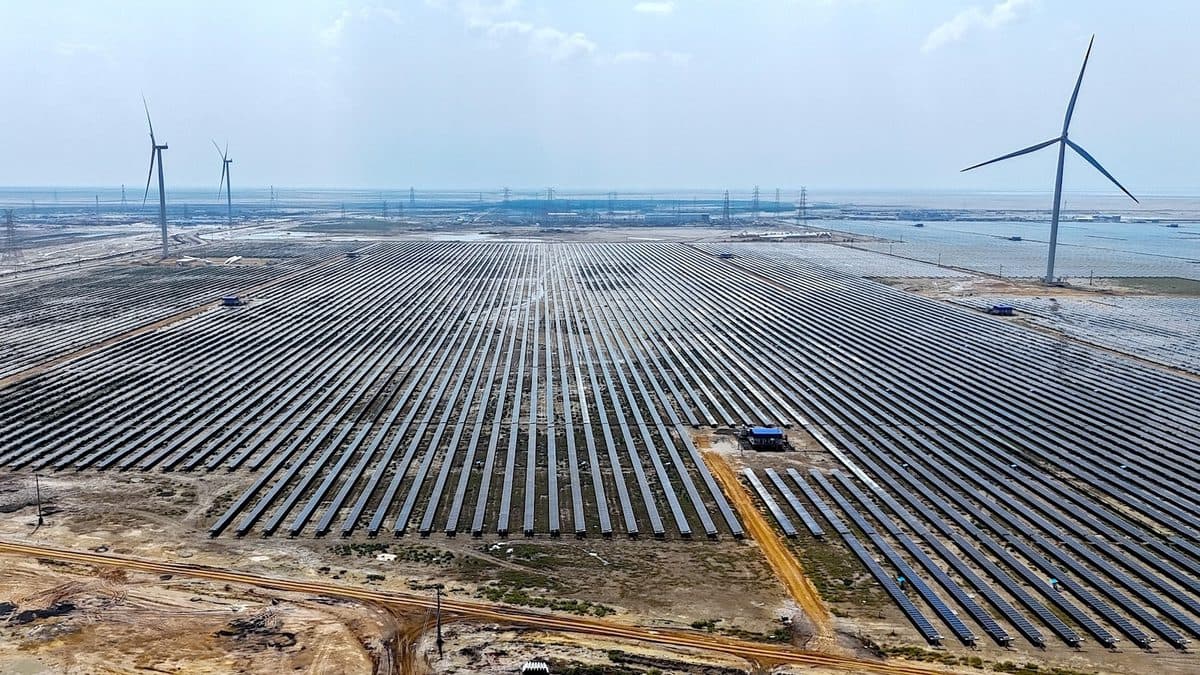
A First Among Major Nations, India Is Industrializing With Solar
Companies Mentioned
Why It Matters
India’s solar surge could redefine how emerging economies power rapid growth, cutting future carbon emissions and reshaping global renewable‑energy supply chains. The transition also tests the scalability of grid and storage solutions critical for worldwide decarbonisation.
Key Takeaways
- •Khavda solar park aims for 30 GW, world’s largest solar hub.
- •India’s installed solar capacity reached 150 GW in March, up 40% YoY.
- •Grid constraints cause up to 40% solar curtailment today.
- •$100 bn grid upgrade plan targets 29% expansion by 2032.
- •Battery storage at Khavda will deliver >1 GW for three hours nightly.
Pulse Analysis
India’s solar acceleration reflects a strategic pivot from coal‑heavy growth models that defined China’s rise. Falling photovoltaic costs, abundant sunlight and strong policy incentives have propelled capacity to 150 GW, a figure that rivals the combined output of many developed nations. This momentum is underpinned by ambitious targets to double solar capacity by 2030, positioning India as the first major economy to industrialise primarily on renewable power. The Khavda project, with its planned 30 GW output, exemplifies how scale can be achieved in remote desert zones while integrating wind and robotic cleaning technologies to maximise efficiency.
Despite the headline numbers, the transition faces two technical bottlenecks: an antiquated transmission network and insufficient storage. At peak generation, nearly 40 percent of solar output is curtailed because the grid cannot move power from western deserts to urban demand centres. The Ministry of New and Renewable Energy’s $100 billion grid‑expansion programme aims to add 29 percent more transmission capacity by 2032, creating dedicated Green Energy Corridors. Parallelly, battery‑storage mandates and pumped‑hydro projects are being fast‑tracked, with Khavda’s own gigawatt‑hour battery system set to smooth evening supply. These investments are essential to convert intermittent solar generation into reliable baseload power.
The broader implications extend beyond India’s borders. By demonstrating a viable pathway to large‑scale solar industrialisation, India offers a template for other emerging markets seeking growth without a carbon‑intensive legacy. Success could also reduce global reliance on Chinese solar component supply chains, fostering a more diversified manufacturing ecosystem. As the country edges toward meeting 90 percent of its electricity demand with solar by 2047, the world watches a potential shift in how rapid development and climate goals can coexist. This momentum may accelerate decarbonisation in energy‑intensive sectors such as steel and transport, reshaping the global emissions trajectory.
A First Among Major Nations, India Is Industrializing With Solar
Comments
Want to join the conversation?
Loading comments...