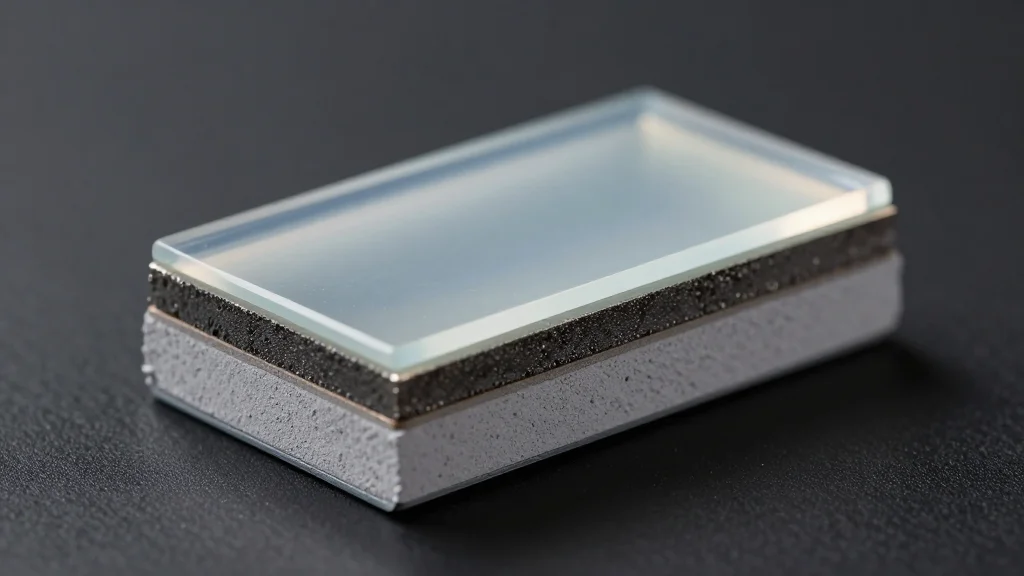
A Hybrid Solid‐State Battery with a Panoramic‐Scale Stack of Bulk Electrodes and a Thin‐Film Electrolyte
Why It Matters
By eliminating the need for thick solid electrolytes, the hybrid design reduces stack size and improves ion transport, accelerating the commercial viability of high‑energy ASSBs.
Key Takeaways
- •Thin-film electrolyte 2.5 µm thick, Li‑ion conductivity 1.91 × 10⁻² mS cm⁻¹
- •Bulk anode porosity reduced to 9.01 % via cold pressing
- •60 µm cathode sheet delivers 102.96 mAh g⁻¹ initial charge
- •Discharge capacity remains 52.59 mAh g⁻¹ after cycling
- •Hybrid stack maintains stable electrode‑electrolyte interface
Pulse Analysis
All‑solid‑state batteries (ASSBs) are hailed as the next leap in energy storage because of their inherent thermal stability and the promise of higher energy density compared with conventional liquid‑electrolyte cells. Yet, most ASSB prototypes rely on thick solid electrolytes that add bulk, increase internal resistance, and hinder fast ion transport. Researchers therefore seek architectures that preserve the safety benefits of solid electrolytes while trimming the stack height. The hybrid approach—marrying a thin‑film electrolyte with bulk electrodes—directly addresses this bottleneck, offering a route to compact, high‑performance cells suitable for electric vehicles and grid‑scale storage.
The new battery employs a co‑sputtered Li6.4La3Zr1.4Ta0.6O12 (LLZTO) film capped with Li2O, followed by infrared‑based rapid annealing in an argon atmosphere. This process yields a uniform 2.5 µm‑thick cubic‑phase electrolyte with an out‑of‑plane Li‑ion conductivity of 1.91 × 10⁻² mS cm⁻¹ at room temperature—remarkably high for a film of this thickness. Simultaneously, the anode substrate is densified through high‑speed mixing and cold pressing, achieving a low porosity of 9.01 %. The resulting bulk‑thin‑film interface is mechanically robust, enabling the integration of a 60 µm‑thick cathode sheet without compromising structural integrity.
Electrochemical testing shows the hybrid cell delivers an initial charge capacity of 102.96 mAh g⁻¹ and a discharge capacity of 52.59 mAh g⁻¹, with stable cycling and a resilient electrode‑electrolyte interface. These figures demonstrate that thin‑film electrolytes can support practical cathode thicknesses, bridging the gap between laboratory‑scale thin‑film devices and commercially relevant bulk cells. If scaled, this architecture could reduce battery pack volume, lower material costs, and speed up the adoption of ASSBs across automotive and stationary storage markets, marking a pivotal step toward a safer, higher‑energy future.
A Hybrid Solid‐State Battery with a Panoramic‐Scale Stack of Bulk Electrodes and a Thin‐Film Electrolyte
Comments
Want to join the conversation?
Loading comments...