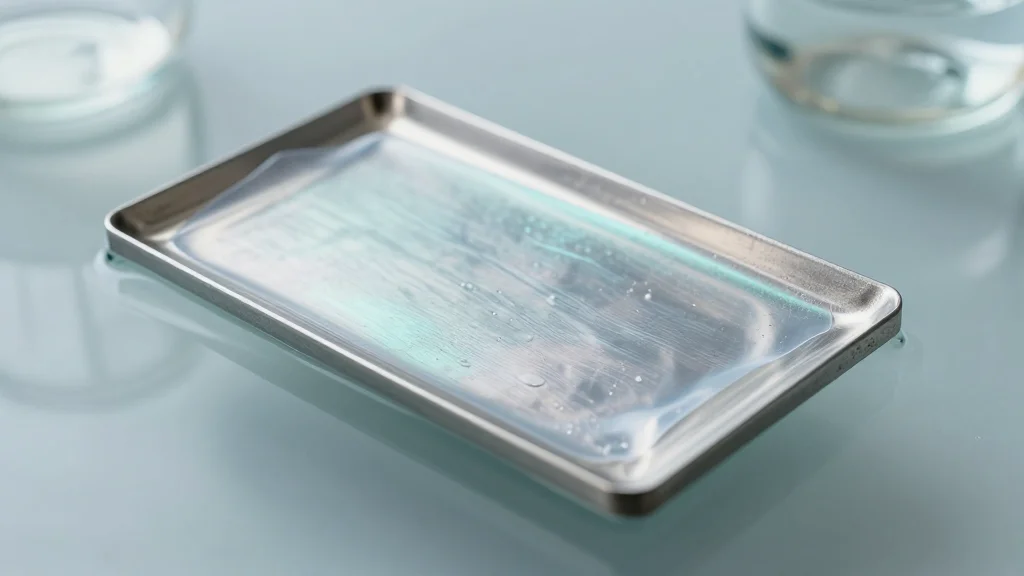
A Multifunctional Molecule Based on Rapid Adsorption Enables Highly Reversible Zinc Anodes via Steric Hindrance‐Desolvation Effect
Why It Matters
The additive dramatically extends cycle life and efficiency of zinc‑based batteries, addressing key safety and durability hurdles that have limited their commercial adoption for grid storage and portable power.
Key Takeaways
- •BCA additive forms steric hindrance layer, suppressing zinc dendrites.
- •Enables >5,000 h cycling at 5 mA cm⁻², >1,200 h at 10 mA cm⁻².
- •Asymmetric cells reach 3,400 h with 99.84% average coulombic efficiency.
- •Zn||MnO₂ retains 70.7% capacity after 1,000 cycles at 1C.
- •Demonstrated pouch battery powers 3 V LED, showing practical scalability.
Pulse Analysis
Aqueous zinc‑ion batteries have long promised low‑cost, safe energy storage, but their commercial rollout has been hampered by zinc dendrite growth and water‑induced corrosion at the anode. Traditional approaches—such as high‑concentration electrolytes or polymer coatings—often sacrifice conductivity or add manufacturing complexity. The introduction of 5‑benzimidazolecarboxylic acid (BCA) as a trace additive offers a chemically elegant solution: its imidazole and carboxyl groups bind Zn²⁺ ions, reconfiguring the solvation shell while the molecule’s bulk creates steric hindrance that physically blocks dendrite nucleation. This dual‑action mechanism also accelerates desolvation, allowing smoother ion transport across the interface.
Performance data underscore BCA’s impact. Symmetric Zn||Zn cells cycled for more than 5,000 hours at 5 mA cm⁻² and over 1,200 hours at 10 mA cm⁻² without noticeable voltage drift, a benchmark rarely achieved in aqueous systems. In asymmetric configurations, the additive delivered a remarkable 3,400‑hour lifespan with an average coulombic efficiency of 99.84%, indicating minimal side reactions. Moreover, Zn||MnO₂ full cells retained 70.7% of their initial capacity after 1,000 cycles at a 1C rate, and a high‑mass‑loading pouch cell successfully powered a 3 V LED, demonstrating that the chemistry scales beyond coin‑cell tests.
The broader implication for the energy market is significant. By extending cycle life and enhancing safety without demanding exotic materials or costly processing steps, BCA‑based electrolytes could accelerate the adoption of zinc‑ion batteries in grid‑level storage, renewable integration, and low‑power electronics. Compared with competing additives, BCA’s multifunctional nature reduces the need for multiple additives or complex separator designs, simplifying supply chains. Future research will likely explore synergistic blends with other steric agents and assess long‑term stability under real‑world temperature fluctuations, positioning zinc‑ion technology as a viable, sustainable alternative to lithium‑based systems.
A Multifunctional Molecule Based on Rapid Adsorption Enables Highly Reversible Zinc Anodes via Steric Hindrance‐Desolvation Effect
Comments
Want to join the conversation?
Loading comments...