A New Thermal Battery Could Help This Minnesota Campus Electrify Heat
Why It Matters
Thermal batteries turn stranded renewable electricity into usable heat, offering a scalable path to decarbonize large‑scale space heating and reduce reliance on fossil‑fuel boilers.
Key Takeaways
- •Cache’s thermal battery delivers up to 1,000 °F heat for steam systems.
- •Pilot runs continuously since March 24, heating a large campus workshop.
- •Battery uses limestone pellets with 30‑year lifespan, recharged by electricity.
- •Lease model eliminates upfront capital, easing adoption for institutions.
- •Excess wind generation in Minnesota creates ideal conditions for thermal storage.
Pulse Analysis
Midwestern wind farms regularly generate more electricity than the regional grid can absorb, leading to curtailments that waste clean energy. At the University of Minnesota, Morris, two on‑site turbines produce roughly 10 million kWh annually—about twice the campus’s consumption. The surplus is sold to the local utility, but the university’s aging methane‑powered steam system still relies on fossil fuel for winter heat. By installing Cache Energy’s thermal‑battery pilot, UMN Morris can capture that otherwise lost wind power and convert it into high‑temperature heat, directly feeding its steam‑distribution network and cutting greenhouse‑gas emissions.
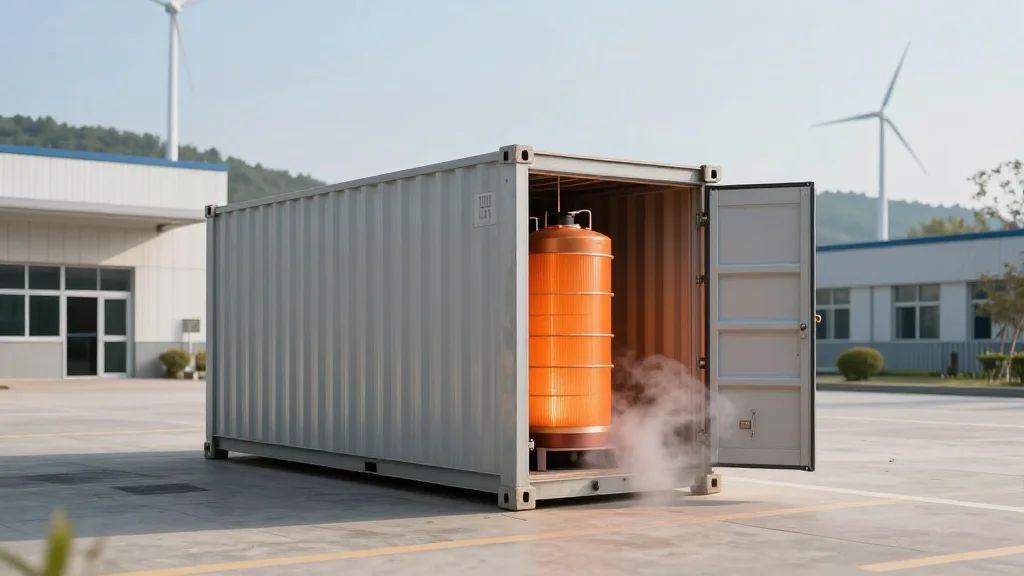
The battery’s core is a bed of limestone‑derived pellets coated with a proprietary binder. When exposed to moist air, the pellets heat to 1,000 °F, enough to generate steam for space‑heating applications. After delivering heat, the system reverses the reaction, using electricity to dry and cool the pellets, readying them for the next cycle. The pellets are rated for a 30‑plus‑year operating life, and the entire unit is housed in a shipping container for rapid deployment. Crucially, Cache offers the technology as a lease that bundles equipment, installation, maintenance, and guaranteed uptime, eliminating the high upfront capital that typically deters institutions from replacing long‑life gas boilers.
If the pilot proves economically viable, the model could be replicated across campuses, industrial plants, and even military installations that face similar curtailment and heating challenges. By leveraging low‑cost, domestically sourced materials—steel, lime, water—and pairing them with excess wind energy, thermal batteries provide a cost‑effective alternative to cheap natural gas, which remains a barrier to electrifying heat. Scaling the technology would help the Midwest meet aggressive climate targets, reduce methane‑related emissions, and create a new revenue stream for wind operators by monetizing otherwise curtailed power. The UMN Morris project thus serves as a bellwether for how renewable‑rich regions can turn surplus electricity into a reliable, low‑carbon heat source.
A new thermal battery could help this Minnesota campus electrify heat
Comments
Want to join the conversation?
Loading comments...