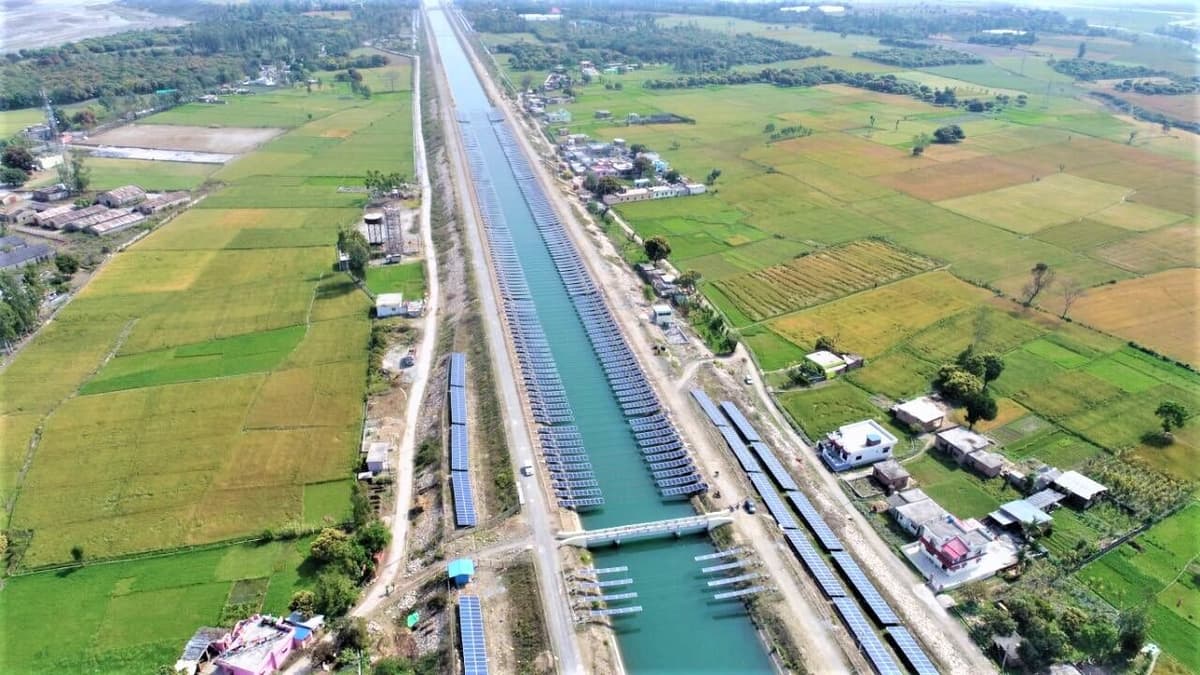
A Solution to Our Data Center Woes? Covering California’s Canals with Solar Panels Could Generate a Staggering 13GW of Clean Energy and Save Enough Water for Two Million People — so Why the Opposition?

Why It Matters
Canal‑top solar could simultaneously address California’s chronic water scarcity and its growing electricity demand, especially for data‑center cooling, while diversifying renewable‑energy siting beyond desert farms.
Key Takeaways
- •4,000 km of canals could host 13 GW solar, saving 63 bn gallons
- •Pilot Nexus project cut evaporation 50‑70% and algae 85%
- •Steel support structures add up to 40% of project cost
- •Water savings could offset data‑center cooling needs
- •Ecological impacts and maintenance access remain key concerns
Pulse Analysis
California’s water crisis and soaring data‑center power needs have driven innovators to look beyond traditional solar farms. By installing photovoltaic arrays directly over irrigation canals, utilities can harvest sunlight while dramatically curbing evaporative loss. The projected 13 GW capacity would rank among the nation’s largest renewable projects, and the estimated 63 billion gallons of saved water could supply two million households or be redirected to industrial cooling, offering a compelling synergy for water‑intensive sectors such as cloud computing.
The Nexus pilot on the Turlock Irrigation District’s waterways provides early evidence that the concept works in practice. Over a full irrigation season, evaporation fell by half to two‑thirds, algae proliferation dropped 85%, and panel output improved modestly thanks to the cooler micro‑climate beneath the shade. However, the economics remain a hurdle: heavy steel frameworks required to span canals inflate capital costs, accounting for up to 40% of total spend. Compared with flat‑ground desert installations, canal‑top solar demands more complex engineering and ongoing maintenance coordination, factors that have sparked resistance from water‑district managers and environmental groups.
Policy makers can tilt the balance by assigning a monetary value to water savings, effectively internalizing the resource’s worth into project financials. Co‑locating generation with agricultural demand reduces transmission losses, while the conserved water can be routed to cool data centers, cutting reliance on traditional, water‑heavy cooling towers. Still, regulators must assess ecological trade‑offs, such as altered dissolved‑oxygen levels and habitat impacts. As California evaluates the trade‑offs, canal‑top solar could emerge as a niche yet powerful tool in the state’s climate‑resilience toolkit.
A solution to our data center woes? Covering California’s canals with solar panels could generate a staggering 13GW of clean energy and save enough water for two million people — so why the opposition?
Comments
Want to join the conversation?
Loading comments...