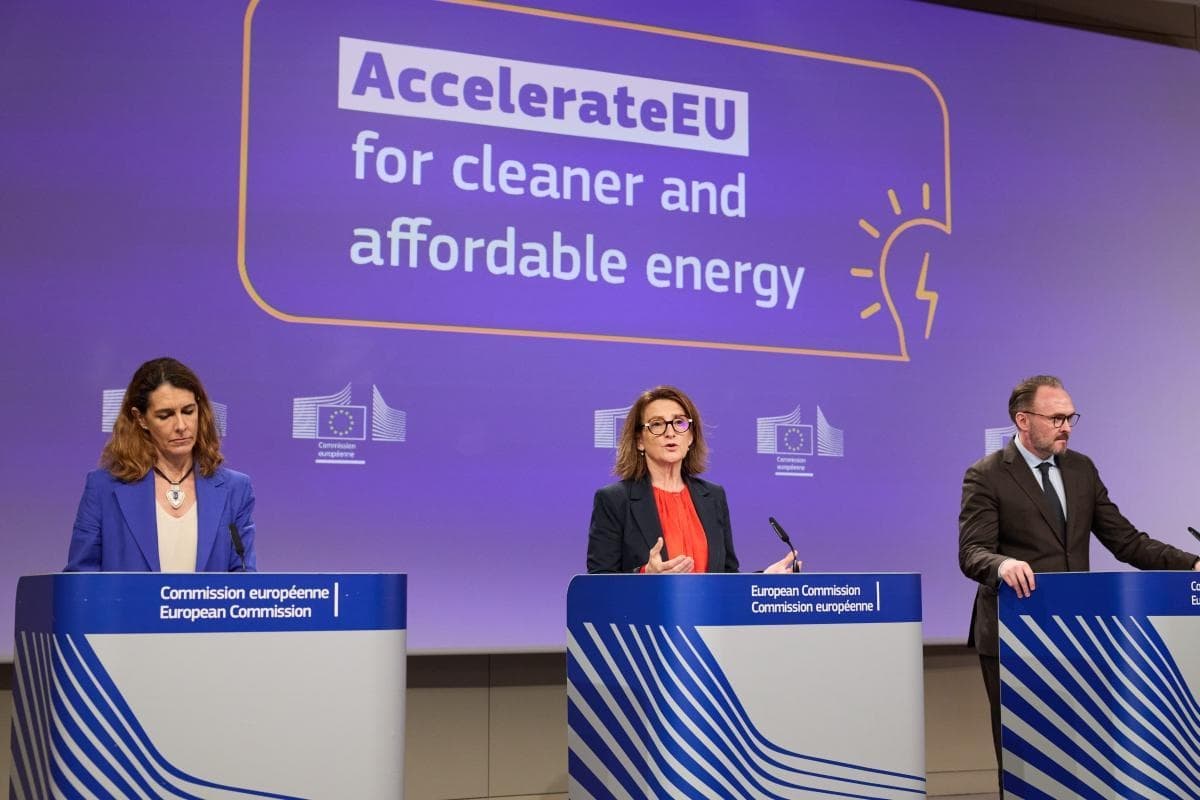
AccelerateEU ‘Emergency Toolbox’ Policy on Fossil Fuel Dependence Falls Short on Energy Storage, Trade Groups Say
Why It Matters
AccelerateEU signals a major policy shift toward energy independence, but its gaps could hinder Europe’s ability to secure affordable, reliable power and meet net‑zero goals. The outcome will shape private capital flows and the competitive landscape for storage technologies.
Key Takeaways
- •AccelerateEU sets EU-wide electrification target, aims for 200 GW storage by 2030
- •Trade groups praise storage focus but demand concrete market mechanisms
- •Long‑duration storage omitted, risking gaps in multi‑day resilience
- •€660 bn transition investment seeks private capital via Clean Energy Investment Strategy
- •Faster permitting and grid‑connection reforms urged for storage sector
Pulse Analysis
AccelerateEU arrives at a critical juncture, as Europe grapples with soaring fossil‑fuel import bills and volatile energy markets. By establishing a unified electrification goal and a 200‑gigawatt storage ambition, the EU hopes to lock in renewable generation and buffer supply shocks. The policy’s emphasis on private‑capital mobilisation through the Clean Energy Investment Strategy reflects a pragmatic acknowledgment that public funds alone cannot cover the roughly €660 billion (about US$770 billion) needed to decarbonise by 2030. This approach could unlock a wave of financing for battery factories, grid upgrades, and emerging storage technologies, positioning Europe as a hub for clean‑energy innovation.
However, industry voices such as SolarPower Europe and Energy Storage Europe warn that the toolbox stops short of delivering actionable incentives. The absence of a market‑based mechanism for non‑fossil flexibility leaves investors uncertain about revenue streams for large‑scale battery projects. Moreover, the exclusion of long‑duration energy storage—crucial for multi‑day and seasonal balancing—creates a policy blind spot that could undermine grid resilience as renewable penetration deepens. Stakeholders are urging the Commission to define sub‑targets for multi‑day storage, streamline permitting, and treat storage as a standalone asset class to attract the necessary capital.
The debate in Cyprus will test whether AccelerateEU can evolve from a high‑level signal into a concrete catalyst for Europe’s energy transition. If the EU adopts the recommended reforms—fast‑track approvals, clear market rules, and dedicated support for long‑duration technologies—it could accelerate the rollout of storage infrastructure, lower wholesale electricity prices, and reduce reliance on imported hydrocarbons. Conversely, a half‑measure could leave the bloc vulnerable to future geopolitical shocks and miss a strategic opportunity to lead the global clean‑energy market.
AccelerateEU ‘emergency toolbox’ policy on fossil fuel dependence falls short on energy storage, trade groups say
Comments
Want to join the conversation?
Loading comments...