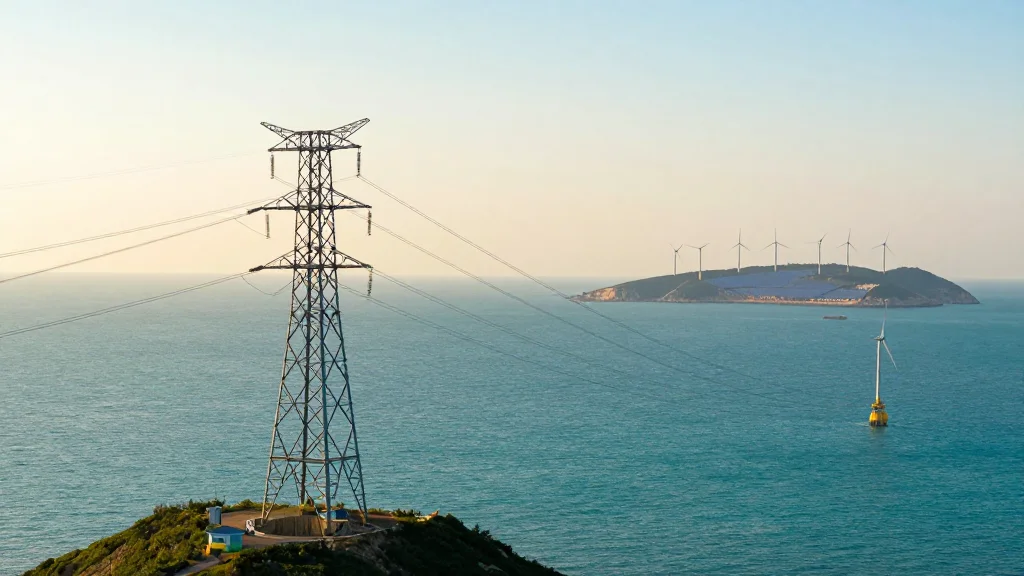
ADB Unveils $50 B Cross‑Border Power Grid Drive Across Asia‑Pacific

Companies Mentioned
Why It Matters
Linking power systems across the Asia‑Pacific creates a single, more efficient market that can absorb variable renewable output, lowering the cost of clean energy and reducing carbon emissions region‑wide. By diversifying supply sources, the grid also insulates member economies from geopolitical shocks and volatile fossil‑fuel markets, strengthening overall energy security. The initiative’s financing structure—half multilateral, half private—sets a precedent for scaling climate‑focused infrastructure in emerging markets. Successful execution could unlock further private capital for green projects, accelerating the region’s transition to net‑zero and influencing global energy investment trends.
Key Takeaways
- •ADB announced a US$50 billion (Rp 871.7 trillion) cross‑border power grid program on May 3, 2026.
- •Half of the funding will come directly from ADB; the remainder will be sourced from private investors and co‑financing partners.
- •The initiative targets completion of 10 GW of new cross‑border transmission capacity and 3 GW of storage by 2030.
- •Projected cost savings of up to 5 % on wholesale electricity prices for participating countries.
- •The program aligns with existing frameworks like the ASEAN Power Grid and aims to serve an additional 300 million people by 2035.
Pulse Analysis
The ADB’s $50 billion grid push marks a strategic shift from isolated national grids to a truly regional electricity market. Historically, Asian power systems have been fragmented, limiting the ability to trade surplus renewable generation across borders. By leveraging existing interconnections and adding new high‑capacity corridors, the initiative can smooth intermittency, lower curtailment rates, and create price arbitrage opportunities that make renewables more competitive against coal and gas.
From a financing perspective, the blended model mitigates risk for private investors while allowing ADB to retain influence over project standards and environmental safeguards. This could catalyse a wave of green bond issuances and sovereign guarantees aimed at similar cross‑border infrastructure, a sector that has traditionally struggled to attract private capital due to regulatory uncertainty and long payback periods.
Geopolitically, the grid serves as a soft power tool, binding economies through shared energy dependence and reducing the leverage of external fossil‑fuel exporters. As Middle‑East tensions continue to reverberate through global oil markets, a resilient, diversified Asian grid could become a stabilising factor for the region’s growth. The success of this program will likely shape how multilateral development banks design future climate‑finance packages, emphasizing integrated, multi‑sectoral solutions that combine energy, digital, and regulatory reforms.
ADB Unveils $50 B Cross‑Border Power Grid Drive Across Asia‑Pacific
Comments
Want to join the conversation?
Loading comments...