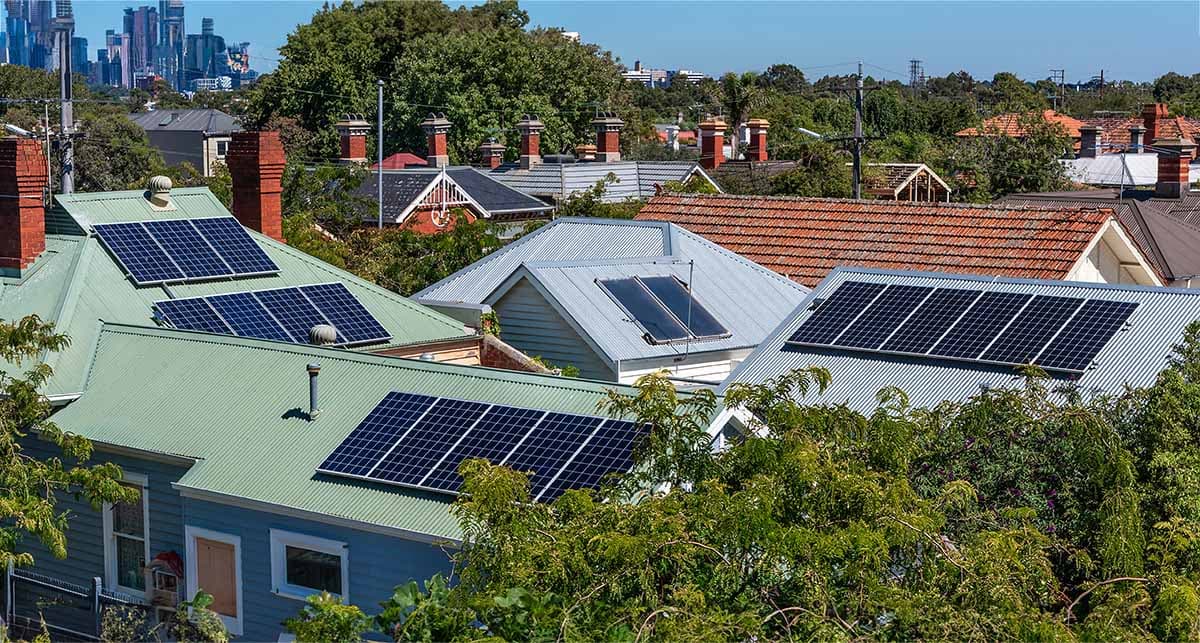
AEMO Looks to EVs, Data Centres and Industry to Help Ease Overload of Rooftop PV in Middle of Day
Why It Matters
Midday oversupply from rooftop PV threatens grid stability and limits further solar adoption; AEMO’s demand‑creation approach safeguards reliability while supporting Australia’s decarbonisation goals.
Key Takeaways
- •AEMO invites bids for Type 2 services to add midday load
- •EV charging, data centres, and industry targeted to absorb excess solar
- •Contracts may span up to ten years for new demand‑creation tech
- •South Australia and Victoria face zero‑demand risk from rooftop PV
- •Earlier battery contracts remain standby; none yet called to charge
Pulse Analysis
Australia’s rooftop solar penetration now exceeds one‑third of households, creating a pronounced "duck curve" where midday generation pushes net demand toward zero or negative levels. This imbalance strains transmission constraints and forces operators to curtail renewable output, undermining the very decarbonisation benefits the technology promises. AEMO’s response has evolved from ad‑hoc curtailments to more systematic demand‑side solutions, recognizing that a reliable grid requires not just supply but also controllable load during solar peaks.
The newly announced Minimum System Load Type 2 Transitional Services tender expands the toolbox beyond large‑scale batteries. By inviting electric‑vehicle fast‑charging stations, data‑centre compute loads, industrial processes, and long‑duration storage to provide pre‑positioned, dispatchable demand, AEMO aims to flatten the midday duck curve without sacrificing renewable generation. Eligible resources must be either novel technologies or new applications of existing ones post‑March 2024, and contracts can extend up to a decade, offering investors a stable revenue stream for demand‑response assets that have traditionally been under‑utilised.
For the energy market, this shift signals a broader move toward integrated demand‑side participation. Companies that can aggregate flexible loads stand to gain lucrative contracts, while utilities may rely less on costly curtailments or standby batteries. Moreover, the approach aligns with national policy targets for renewable integration and emissions reduction, providing a template that other jurisdictions facing similar solar‑driven oversupply could emulate. As AEMO finalises the tender, the Australian grid is poised to become a more balanced, resilient system that leverages both generation and consumption to meet future energy challenges.
AEMO looks to EVs, data centres and industry to help ease overload of rooftop PV in middle of day
Comments
Want to join the conversation?
Loading comments...