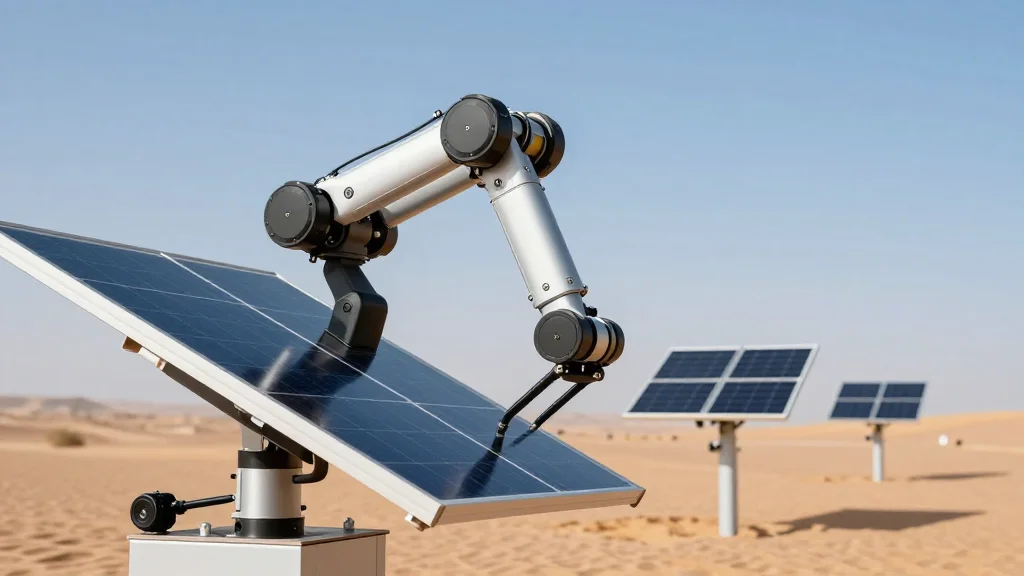
AES Deploys Maximo Robots to Install 100 MW Solar in Mojave, Cutting Build Time in Half

Companies Mentioned
Why It Matters
Automation directly addresses two of the most pressing challenges facing renewable expansion: a chronic shortage of skilled construction labor and the need to lower capital expenditures. By halving installation time, robots can accelerate the delivery of clean‑energy capacity, helping jurisdictions meet decarbonization goals on tighter schedules. Moreover, the cost efficiencies gained from reduced labor and faster build‑out can lower the overall price of electricity, enhancing the competitiveness of wind and solar against conventional generation. The successful scaling of robotics also signals a broader digital transformation within the energy sector. As AI and autonomous systems become embedded in project workflows, data collection and analytics will improve, enabling more precise forecasting, maintenance, and performance optimization. This convergence of hardware and software could unlock new business models, such as robot‑as‑a‑service offerings for smaller developers lacking in‑house expertise.
Key Takeaways
- •AES installed 100 MW of solar at Bellefield using three Maximo robots.
- •Robots achieve roughly 24 photovoltaic modules per hour per person, about double traditional rates.
- •Civ Robotics’ CivDot can mark up to 3,000 layout points per day with 8 mm accuracy.
- •Labor shortages and safety concerns are driving rapid adoption of automation in renewables.
- •Automation promises lower project costs and faster delivery, supporting clean‑energy targets.
Pulse Analysis
The deployment of Maximo’s robots at Bellefield is more than a pilot; it is a proof point that autonomous systems can handle utility‑scale workloads without sacrificing reliability. Historically, renewable construction has been labor‑intensive, with project schedules often delayed by workforce constraints. By integrating robotics, developers can compress timelines, which is crucial as policy frameworks worldwide tighten renewable‑capacity mandates.
From a market perspective, the move could trigger a competitive cascade. Early adopters like AES gain a cost advantage that can be passed to investors and, ultimately, to ratepayers. Competitors will feel pressure to either develop in‑house robotic capabilities or partner with firms like Maximo and Civ Robotics. This dynamic may spur consolidation in the niche of construction‑automation providers, as larger equipment manufacturers seek to capture a share of the growing renewable‑build market.
Looking ahead, the real test will be scaling these solutions across diverse geographies and project types. Wind turbine installation, for instance, presents different mechanical challenges than solar panel mounting. If robotics can demonstrate comparable gains in wind projects, the sector could see a wholesale shift toward autonomous construction, redefining labor demand and reshaping the supply chain for components, from foundations to electrical wiring. The pace at which regulatory bodies adapt safety standards for robot‑operated sites will also influence adoption rates.
Overall, the Bellefield case illustrates that automation is transitioning from a novelty to a core capability in renewable energy development, with the potential to accelerate the global energy transition.
AES Deploys Maximo Robots to Install 100 MW Solar in Mojave, Cutting Build Time in Half
Comments
Want to join the conversation?
Loading comments...