Africa’s Solar Boom May Be Hiding In The Import Data
Why It Matters
The divergence between imports and reported installations suggests Africa’s solar transition is occurring beneath the radar, reshaping energy access, diesel displacement, and industrial competitiveness before it appears in capacity tables.
Key Takeaways
- •Africa imported 18.2 GW of solar modules in 2025.
- •Reported solar installations were only 4.5 GW, a 54% YoY rise.
- •Most modules likely serve off‑grid, mini‑grid and industrial projects.
- •Official capacity tables may lag behind actual hardware absorption.
Pulse Analysis
The 2025 data reveal a paradox: Africa’s renewable boom is evident in a record 11.3 GW of new capacity, yet solar’s official contribution remains modest at 4.5 GW. By contrast, the continent imported 18.2 GW of photovoltaic modules, a volume that dwarfs the reported additions. This pattern mirrors other emerging markets where hardware flows precede formal registration, underscoring the importance of looking beyond utility‑scale statistics to gauge true progress. Analysts compare Africa’s trajectory to India’s centralized auction system and Brazil’s distributed‑generation surge, but note that Africa’s landscape is far more fragmented and commercially driven.
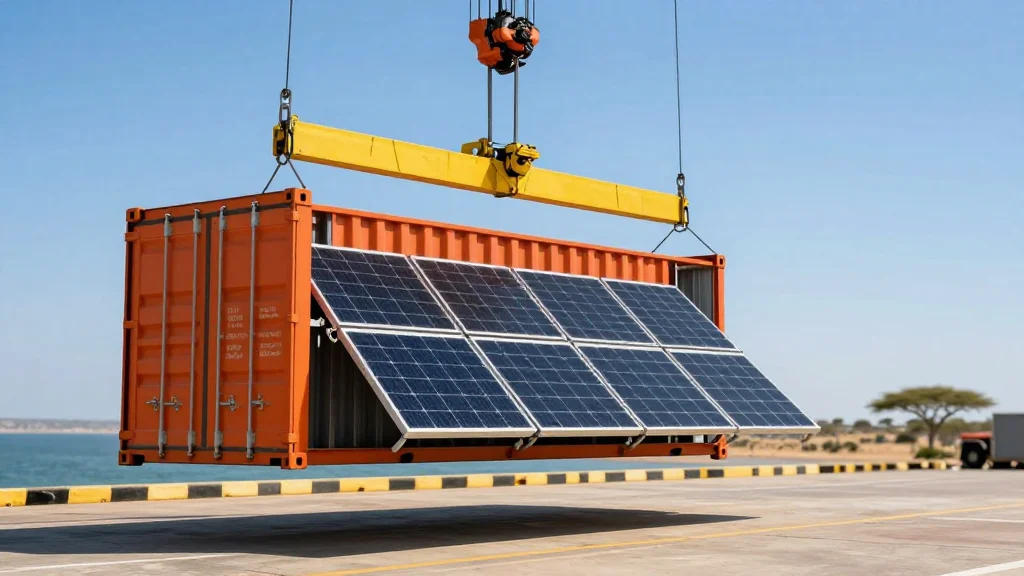
Chinese‑manufactured panels, falling battery costs, and expanding logistics corridors have created a perfect storm for rapid solar uptake across mines, telecom sites, farms and remote villages. Off‑grid and mini‑grid solutions are especially attractive where grids are unreliable or diesel fuel remains expensive. The influx of modules often sits in warehouses awaiting financing, inverters, or interconnection, meaning that capacity figures lag behind physical deployment. This hidden momentum is already displacing diesel generators, reducing operating costs for industrial customers, and improving energy resilience in weak‑grid regions.
Looking ahead to 2026, the likelihood of officially reporting 20 GW of new solar capacity is slim, but the absorption of roughly 20 GW of modules is plausible. Stakeholders should monitor import volumes, battery and inverter shipments, and contract announcements from mining and industrial firms as leading indicators. Policy makers aiming to accelerate the transition must improve reporting mechanisms and support financing pathways that bridge the gap between hardware arrival and grid integration. By tracking these early‑stage signals, investors can better assess Africa’s emerging solar market and its potential to reshape the continent’s energy landscape.
Africa’s Solar Boom May Be Hiding In The Import Data
Comments
Want to join the conversation?
Loading comments...