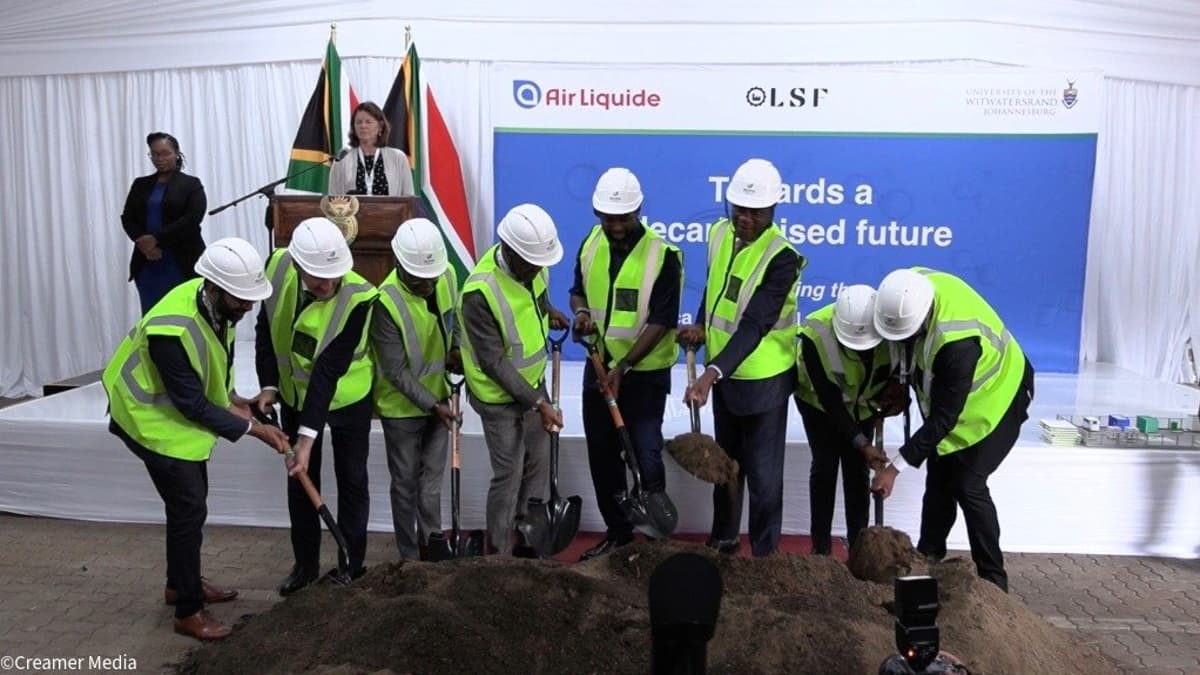
Air Liquide Invests R100m in Wits – South Africa Hydrogen Localisation Initiative
•February 27, 2026
0
Why It Matters
The investment accelerates South Africa’s transition to a low‑carbon hydrogen economy by establishing domestic production capacity and a skilled workforce, while de‑risking commercial uptake for local and international players.
Key Takeaways
- •R100 m funding from Air Liquide for Wits hydrogen hub.
- •110 kW electrolyser produces green hydrogen, 200 kg storage.
- •Plant aims to be operational by 2028, de‑risking industry.
- •Initiative strengthens South Africa’s local hydrogen supply chain.
- •High‑level government backing accelerates regulatory approvals.
Pulse Analysis
South Africa’s energy roadmap increasingly spotlights hydrogen as a cornerstone of its low‑carbon future, yet the continent has struggled to translate policy ambition into tangible production capacity. Air Liquide’s R100 million injection into the Wits‑SAHLI project bridges this gap, signaling confidence from a global gas leader in the country’s ability to host advanced clean‑energy infrastructure. The funding aligns with the company’s multi‑year decarbonisation strategy and dovetails with national objectives to diversify the energy mix, reduce reliance on fossil fuels, and meet emerging climate commitments.
The Wits‑SAHLI pilot plant is designed as a versatile testbed for both research and commercial validation. Its 110 kW electrolyser converts renewable electricity and water into green hydrogen, which is stored in a 200 kg reservoir and can be reconverted to generate up to 200 kW of clean power during peak demand. Situated on Wits’ West Campus, the modular facility will support hands‑on teaching, applied research, and on‑site testing of hydrogen applications, offering industry partners a de‑risked pathway to evaluate technologies before scaling. The public‑private partnership model, involving the university, Air Liquide, and the Localisation Support Fund, ensures knowledge transfer and aligns incentives across academia, industry, and government.
Beyond the technical showcase, the initiative is poised to catalyse a home‑grown hydrogen supply chain across South Africa. By nurturing local expertise and fostering supplier networks, Wits‑SAHLI can generate skilled jobs, stimulate downstream manufacturing, and attract further private investment. Government endorsement, highlighted by the presence of the Deputy President and Energy Minister, promises streamlined permitting and regulatory support, accelerating timelines. If successful, the project could position South Africa as a leading hydrogen hub in Africa, feeding export markets and reinforcing the nation’s role in the global green economy.
Air Liquide invests R100m in Wits – South Africa Hydrogen Localisation Initiative
0
Comments
Want to join the conversation?
Loading comments...