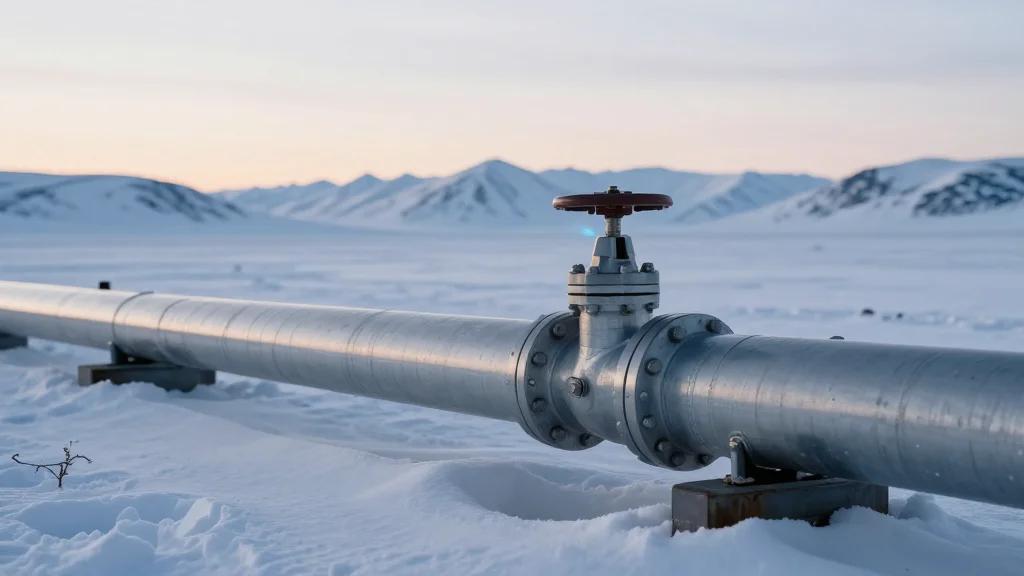
Alaska LNG Could Fuel State's Mining Future
Companies Mentioned
Why It Matters
A reliable, affordable energy supply is the linchpin for Alaska’s transition from a raw‑material exporter to a critical‑minerals powerhouse, directly affecting U.S. supply‑chain security and regional economic growth.
Key Takeaways
- •Alaska LNG proposes 800‑mile pipeline delivering 3.5 bcf/d to global markets
- •Governor proposes volumetric gas tax to replace costly property tax
- •Donlin Gold seeks 315‑mile gas pipeline, could anchor 50 mmcf/d demand
- •Energy shortages threaten Railbelt mining operations and risk rolling blackouts
- •POSCO partnership aims to develop Port MacKenzie as critical‑minerals hub
Pulse Analysis
The Alaska LNG project represents one of the most ambitious energy infrastructure efforts in the United States, aiming to unlock stranded natural gas on the North Slope and channel it through an 800‑mile pipeline to a new liquefaction hub. By delivering roughly 3.5 billion cubic feet per day, the project could supply domestic power needs, reduce reliance on imported fuels, and generate a steady export stream to Asian markets. For investors and policymakers, the initiative signals a strategic pivot toward leveraging Alaska’s abundant hydrocarbon resources to support national energy security and the burgeoning demand for clean‑energy inputs.
Economic viability, however, hinges on the state’s tax framework. Governor Dunleavy’s proposal to replace the existing property‑tax model with a volumetric tax on gas throughput seeks to lower upfront construction costs and improve project cash flows. Critics argue the new tax may under‑capture state revenue, sparking a legislative showdown that could delay approvals. A failure to resolve the tax dispute could force Alaska to import LNG, undermining the very energy independence the project promises and exposing consumers to higher rates.
Beyond power generation, the LNG pipeline is a catalyst for Alaska’s mining renaissance. Companies like Donlin Gold are negotiating dedicated gas pipelines to secure low‑cost fuel for large‑scale operations, while utilities across the Railbelt warn of rolling blackouts without additional supply. International partners such as South Korea’s POSCO see the infrastructure as a gateway to a domestic critical‑minerals hub, reducing U.S. dependence on Chinese imports. In this context, Alaska LNG is not just an energy venture; it is the backbone of a broader economic transformation that could position the state as a linchpin in the global supply chain for batteries, electronics, and defense materials.
Alaska LNG could fuel state's mining future
Comments
Want to join the conversation?
Loading comments...