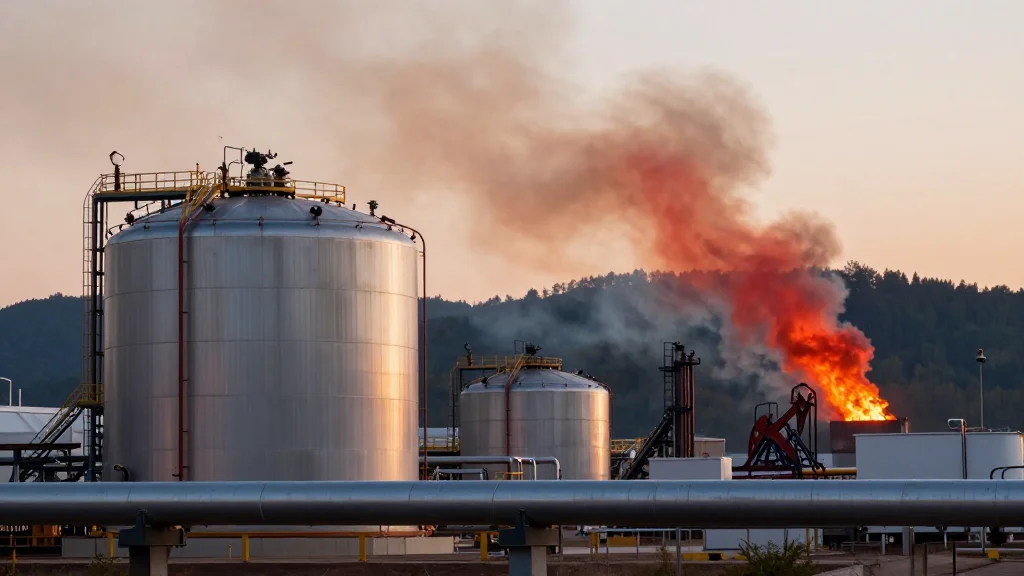
Alberta Wildfires Break Out in Lac La Biche Oil Sands Region
Companies Mentioned
Why It Matters
Disruptions could curtail Canadian oil supply at a time when global markets are already tight, reinforcing price volatility and highlighting climate‑related operational risks for the sector.
Key Takeaways
- •Six wildfires burn, largest spans 1,000 hectares near oil‑sands sites
- •Facilities within 11‑19 km produce ~500,000 barrels daily, at risk
- •2016 fires halted >1 million barrels/day; 2023 fires could cut 7%
- •Conklin community of 229 residents faces potential evacuation
Pulse Analysis
Alberta’s Lac la Biche region, a hub for in‑situ oil‑sands extraction, has become a flashpoint as six wildfires blaze across a landscape already stressed by drought and higher temperatures. The largest fire, a 1,000‑hectare inferno, threatens key infrastructure at Christina Lake, Jackfish, Kirby North and Surmont, all located within a 20‑kilometer radius. Emergency crews are monitoring air quality and fire spread, while the provincial government has urged the 229‑person community of Conklin to stand by for possible evacuation. This scenario underscores how climate‑driven events are increasingly intersecting with high‑value energy assets.
Historically, Alberta wildfires have proven capable of disrupting oil output. In the summer of 2016, flames forced the shutdown of more than a million barrels per day for weeks, and a 2023 fire event briefly cut about 7% of national production. With the current fires encircling facilities that collectively process roughly 500,000 barrels daily, even a short‑term interruption could shave several hundred thousand barrels from the supply chain. Such a dip arrives as global oil markets grapple with a 20% reduction in Middle‑East supply due to the Iran conflict, pushing Brent crude above $100 per barrel and tightening North American fuel margins.
The broader implication for the energy sector is a renewed focus on resilience planning. Operators are evaluating fire‑break designs, remote monitoring, and rapid shut‑in protocols to mitigate risk. Investors and policymakers alike are watching how Canada balances its role as the world’s fourth‑largest oil producer with the escalating cost of climate‑related disruptions. As wildfires become a more regular operational hazard, the industry’s ability to safeguard production while meeting ESG expectations will shape both regional economics and global energy security.
Alberta Wildfires Break Out in Lac la Biche Oil Sands Region
Comments
Want to join the conversation?
Loading comments...