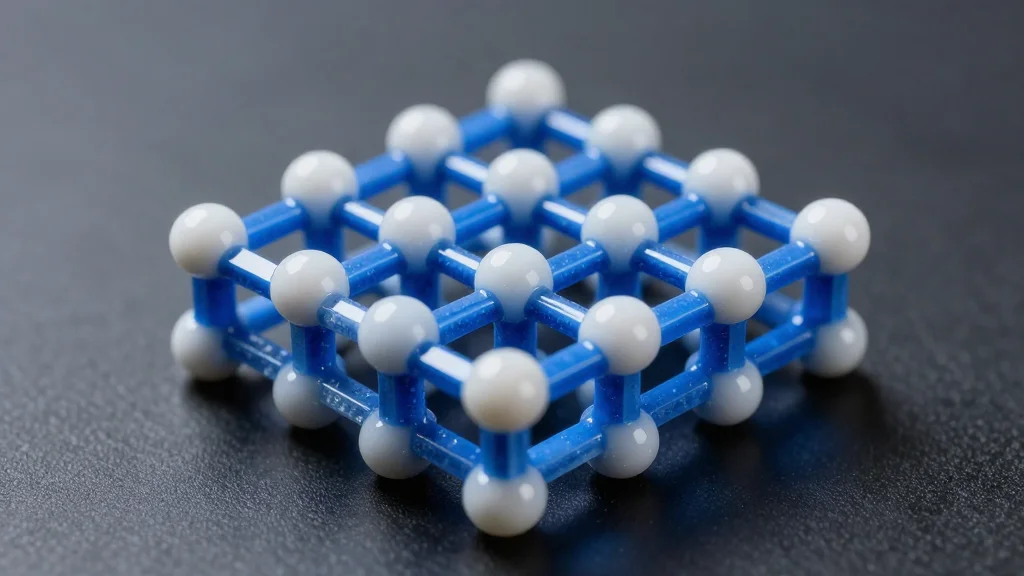
Ammonium‐Anchored Mn‐Based Prussian Blue Analogues via Hydrogen Bonding for Robust Sodim‐Ion Battery Cathodes
Why It Matters
By extending cycle life and preserving capacity, the approach makes sodium‑ion batteries a more viable, cost‑effective alternative to lithium‑ion systems for large‑scale renewable energy integration.
Key Takeaways
- •NH4+ ions create N‑H···N hydrogen bonds in MnHCF framework
- •Hydrogen bonding suppresses Jahn‑Teller distortion during deep desodiation
- •Prevents irreversible cubic‑to‑tetragonal phase change, reducing particle cracking
- •A‑MnHCF retains ~88% capacity after 1,000 cycles at 1 C rate
- •Provides a scalable route to long‑life, low‑cost sodium‑ion batteries
Pulse Analysis
Sodium‑ion batteries (SIBs) have emerged as a promising complement to lithium‑ion technology, chiefly because sodium is abundant and inexpensive. Among the various cathode families, manganese‑based Prussian blue analogues (Mn‑PBAs) stand out for their high operating voltage and inexpensive raw materials. Yet, Mn‑PBAs suffer from rapid capacity loss due to structural degradation: Jahn‑Teller distortion of Mn²⁺/Mn³⁺, dissolution of manganese, and an irreversible cubic‑to‑tetragonal phase transition during deep desodiation. These phenomena fracture particles and erode the crystal lattice, limiting practical cycle life and undermining commercial adoption.
The new study tackles these failure modes by embedding tetrahedral ammonium (NH₄⁺) ions into the vacant A‑sites of Mn‑hexacyanoferrate. The NH₄⁺ cations form directional N‑H···N hydrogen bonds with adjacent cyanide ligands, effectively “gluing” the framework together at the molecular scale. In‑situ X‑ray diffraction, FT‑IR and X‑ray photoelectron spectroscopy confirm that the hydrogen‑bond network persists throughout charge‑discharge cycling, suppressing Jahn‑Teller elongation and blocking the cubic‑to‑tetragonal shift. Electrochemical testing shows the A‑MnHCF cathode retains about 88 % of its initial capacity after 1,000 cycles at 1 C, a benchmark rarely achieved by conventional Mn‑PBAs.
For grid‑scale energy storage, where cost per kilowatt‑hour and longevity are paramount, this stabilization strategy could shift the economics in favor of SIBs. The use of inexpensive NH₄⁺ salts and a straightforward synthesis route suggests the method can be scaled without prohibitive capital expenditure. Moreover, the hydrogen‑bond anchoring concept is transferable to other Prussian blue analogues, opening a pathway to engineer robust cathodes across chemistries. As utilities seek alternatives to lithium‑ion batteries for stationary applications, durable Mn‑PBA cathodes may accelerate the transition to low‑cost, long‑life sodium‑ion systems.
Ammonium‐Anchored Mn‐Based Prussian Blue Analogues via Hydrogen Bonding for Robust Sodim‐Ion Battery Cathodes
Comments
Want to join the conversation?
Loading comments...