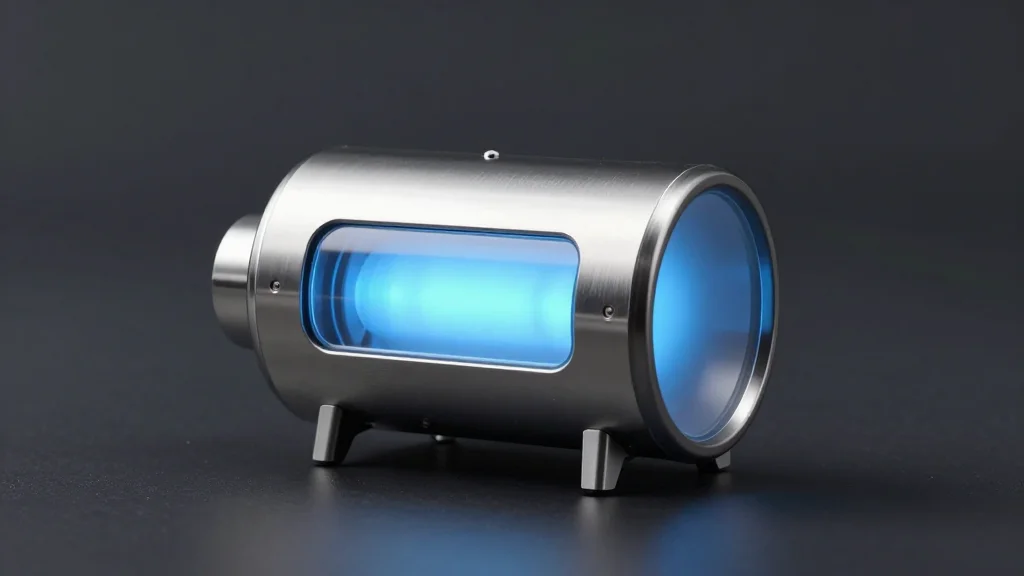
AMPERA Leverages New Regulation for Next-Generation Reactor
Companies Mentioned
Why It Matters
By using Part 53, AMPERA could shorten the licensing timeline for advanced nuclear tech, accelerating low‑cost, ultra‑safe power into the U.S. energy market.
Key Takeaways
- •AMPERA filed pre‑application under NRC Part 53 for thorium microreactor.
- •Reactor design is subcritical, factory‑fabricated, containerized for rapid deployment.
- •AI‑driven safeguards‑by‑design aims to reduce licensing complexity.
- •Target pre‑application meeting set for May 2026 to align with NRC.
- •Success could accelerate commercial rollout of low‑cost, ultra‑safe nuclear power.
Pulse Analysis
The Nuclear Regulatory Commission’s recent adoption of 10 CFR Part 53 marks a watershed for innovative reactor concepts. By separating safety assessment from legacy design comparisons, the rule creates a clearer, faster pathway for novel fuels and configurations. AMPERA’s decision to file a pre‑application under this regime signals confidence that its thorium‑based, subcritical microreactor can meet the agency’s safety expectations while avoiding the lengthy justifications required for traditional light‑water designs. This regulatory shift is expected to attract additional startups seeking to commercialize advanced nuclear solutions.
AMPERA’s microreactor blends several emerging technologies: a subcritical core that relies on external neutron sources, thorium fuel that reduces long‑lived waste, and a modular, containerized form factor that can be mass‑produced in a factory. The company also integrates artificial‑intelligence algorithms to continuously monitor and adjust safety parameters, a "safeguards‑by‑design" philosophy that could lower operational risk and simplify licensing documentation. By packaging the reactor in a sealed, transportable unit, AMPERA aims to cut construction time from years to months, offering a scalable power source for remote sites, data centers, or grid‑edge applications.
If AMPERA secures its license, the broader market could see a surge in low‑cost, carbon‑free electricity options that compete with natural‑gas peaker plants and large‑scale renewables. The ability to deploy reactors quickly and safely would appeal to utilities facing reliability challenges and to industries seeking on‑site power without emissions. Moreover, successful navigation of Part 53 could set a precedent, encouraging other innovators to pursue similar pathways, potentially reshaping the U.S. energy mix and accelerating the transition to a diversified, resilient grid.
AMPERA Leverages New Regulation for Next-Generation Reactor
Comments
Want to join the conversation?
Loading comments...