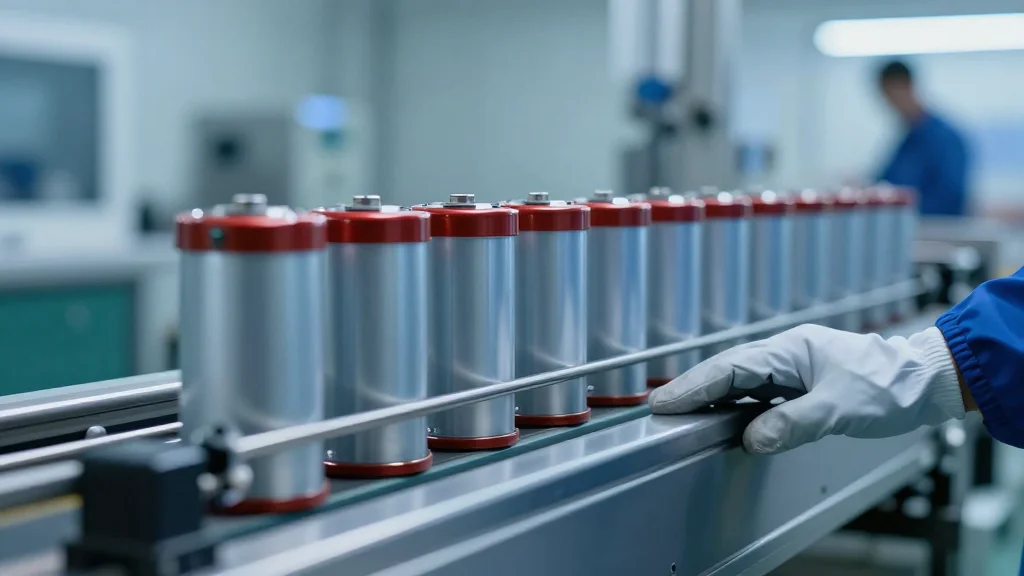
Amplify Battery Cell Manufacturing JV Faces More Delays
Companies Mentioned
Why It Matters
The impairment highlights the financial risk of premature large‑scale EV battery investments amid a soft commercial‑vehicle market, signaling caution for other automakers and suppliers. It also underscores the broader challenge of aligning infrastructure rollout with uncertain demand for electric trucks.
Key Takeaways
- •Daimler Truck records $235M impairment due to Amplify JV delays
- •Production start now uncertain, previously pushed to 2028
- •$2‑3B Mississippi plant faces market‑driven capacity deferral
- •Weak EV truck demand and reduced incentives stall battery rollout
- •Joint venture maintains limited construction to stay future‑ready
Pulse Analysis
The Amplify Cell Technologies joint venture, backed by Daimler Truck, Paccar and Cummins, was envisioned as a cornerstone for North America’s electric‑truck supply chain. Groundbreaking in May 2024 and construction beginning shortly after, the 2.6‑million‑square‑foot facility in Byhalia, Mississippi, promised to deliver high‑volume battery cells for freightliners and other commercial vehicles. However, the commercial‑vehicle market has softened considerably, with fleet operators delaying electrification purchases amid a broader freight recession and reduced federal infrastructure funding. This mismatch between supply expectations and demand realities forced the partners to pause the full‑scale rollout, triggering a $235 million impairment for Daimler Truck.
Financially, the impairment reflects a prudent accounting response to the delayed asset utilization, but it also sends a cautionary signal to investors about the volatility of large‑scale EV battery projects. The plant’s $2‑3 billion capital outlay now faces an uncertain timeline, potentially extending the payback period and affecting the cost‑competitiveness of the batteries produced. For the broader industry, the episode illustrates the importance of aligning production capacity with realistic adoption curves, especially when government incentives—once a key catalyst—are being scaled back.
Looking ahead, the JV’s decision to continue limited construction preserves the site’s strategic value while providing flexibility to accelerate once market conditions improve. Stakeholders are watching for signs of renewed demand, such as higher fuel‑price pressures or new regulatory mandates that could revive fleet electrification plans. If adoption picks up, the Byhalia plant could still become a pivotal hub for battery‑cell supply, but for now, the delay underscores the need for cautious scaling and adaptive investment strategies in the evolving electric‑commercial‑vehicle landscape.
Amplify Battery Cell Manufacturing JV Faces More Delays
Comments
Want to join the conversation?
Loading comments...