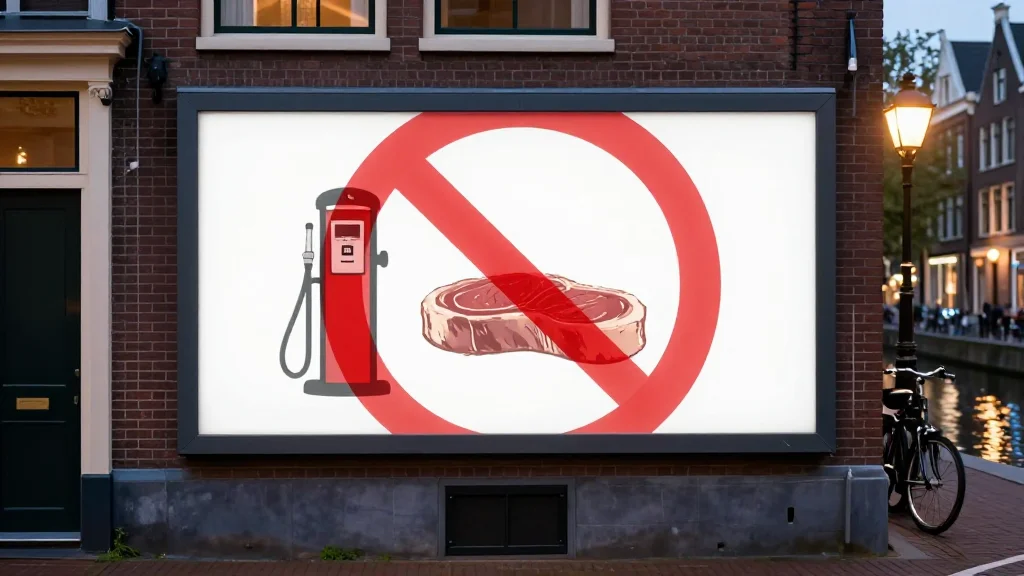
Amsterdam Bans Fossil Fuel and Meat Ads, First World Capital to Do So

Why It Matters
The Amsterdam ad ban marks a novel regulatory approach that could reshape how governments influence consumer habits in the energy and food sectors. By targeting the advertising pipeline, the city aims to reduce demand for high‑carbon products, potentially accelerating the shift toward electric mobility and plant‑based diets. If other capitals adopt similar measures, the cumulative effect could pressure multinational advertisers and manufacturers to rethink product positioning and investment in low‑carbon alternatives. However, the policy also raises questions about efficacy and fairness. Critics point to limited climate impact estimates and warn of economic disruption for farmers and energy firms. The outcome of Amsterdam’s experiment will likely inform future debates on whether advertising restrictions are a viable tool in the broader climate‑policy toolkit or an over‑reach that undermines consumer choice.
Key Takeaways
- •Amsterdam bans public ads for fossil fuels and meat effective May 1, 2026.
- •The ban was driven by GreenLeft and Party for the Animals in the city council.
- •Over 50 cities worldwide have introduced similar advertising restrictions.
- •CO₂ Coalition analysis estimates eliminating all cattle would cut warming by only 0.04 °C.
- •UN Secretary‑General Antonio Guterres praised such bans as part of climate action.
Pulse Analysis
Amsterdam’s dual advertising ban is a bold experiment in demand‑side climate policy. Historically, governments have focused on supply‑side levers—fuel taxes, emissions standards, and renewable subsidies—to curb greenhouse‑gas emissions. By turning to the advertising arena, Amsterdam is testing whether shaping consumer perception can produce a measurable shift in purchasing patterns. The precedent set by anti‑tobacco campaigns suggests that reducing exposure can change social norms, but the scale and complexity of energy and food markets differ markedly.
From an industry perspective, the ban could accelerate the reallocation of marketing spend toward digital channels, where regulation is harder to enforce. Energy firms may double down on brand‑building through sponsorships or influencer partnerships, while meat producers could intensify lobbying for alternative promotional avenues. The policy also creates a potential legal battleground; advertisers may argue that the ban infringes on commercial speech, prompting court challenges that could set jurisprudential standards for future climate‑related regulations.
If other capitals emulate Amsterdam, the cumulative effect could reshape global advertising spend, nudging billions of dollars away from high‑carbon products. This could, in turn, incentivize firms to innovate greener product lines to regain market visibility. Yet the real test will be in the data: will reduced ad exposure translate into lower fuel sales, fewer meat purchases, and ultimately, a measurable dip in emissions? The answer will determine whether advertising bans become a staple of climate strategy or remain a symbolic gesture with limited practical impact.
Amsterdam Bans Fossil Fuel and Meat Ads, First World Capital to Do So
Comments
Want to join the conversation?
Loading comments...