Energy News and Headlines
  • All Technology
  • AI
  • Autonomy
  • B2B Growth
  • Big Data
  • BioTech
  • ClimateTech
  • Consumer Tech
  • Crypto
  • Cybersecurity
  • DevOps
  • Digital Marketing
  • Ecommerce
  • EdTech
  • Enterprise
  • FinTech
  • GovTech
  • Hardware
  • HealthTech
  • HRTech
  • LegalTech
  • Nanotech
  • PropTech
  • Quantum
  • Robotics
  • SaaS
  • SpaceTech
AllNewsDealsSocialBlogsVideosPodcastsDigests

Energy Pulse

EMAIL DIGESTS

Daily

Every morning

Weekly

Sunday recap

NewsDealsSocialBlogsVideosPodcasts
EnergyNewsAn FTA No One Is Talking About Can Give India a Strategic Edge
An FTA No One Is Talking About Can Give India a Strategic Edge
EnergyGlobal EconomyCommodities

An FTA No One Is Talking About Can Give India a Strategic Edge

•February 11, 2026
0
ET EnergyWorld (The Economic Times)
ET EnergyWorld (The Economic Times)•Feb 11, 2026

Companies Mentioned

Adani

Adani

532921

Why It Matters

The deal gives India a reliable source of battery‑grade minerals, reducing dependence on volatile global markets and strengthening its industrial competitiveness. Securing these inputs underpins the country’s renewable‑energy transition and export‑driven manufacturing growth.

Key Takeaways

  • •Chile holds vast lithium, copper, cobalt reserves.
  • •India‑Chile CEPA targets critical minerals, digital services.
  • •Coal India to create 100% Chile holding company.
  • •Imports from Chile rose 72% in FY 2024‑25.
  • •Agreement could boost Make in India manufacturing resilience.

Pulse Analysis

Global competition for critical minerals has intensified as nations treat lithium, copper and cobalt as strategic assets rather than mere commodities. Chile, the world’s leading lithium exporter and a major source of copper and rhenium, sits at the centre of this race. For India, whose manufacturing push under Make in India and its ambitious clean‑energy targets require secure, affordable inputs, a stable supply line from Chile could offset the volatility of existing markets and lower input costs for batteries, solar panels and high‑tech devices.

The proposed Comprehensive Economic Partnership Agreement goes beyond traditional tariff cuts, embedding cooperation on digital services, investment promotion and, crucially, critical mineral trade. Recent corporate actions underscore the partnership’s momentum: Coal India’s board approved a 100% owned Chilean holding company to explore lithium and copper, while the Adani Group signed a joint‑exploration framework with Codelco. Trade figures reinforce the narrative—Indian imports from Chile jumped 72% to $2.6 billion in FY 2024‑25, even as exports slipped, revealing a clear raw‑material dependency that the CEPA aims to transform into a value‑added supply chain.

If concluded, the India‑Chile pact could become a cornerstone of India’s resource‑security strategy, offering a diversified alternative to Chinese‑dominated supply chains. By locking in long‑term access to essential minerals, India can accelerate its renewable‑energy rollout, boost domestic battery production, and enhance the competitiveness of its export‑oriented manufacturing sector. The agreement also signals to other trading partners that India is pursuing a proactive, strategic approach to trade, positioning itself as a resilient player in the evolving geopolitics of critical mineral supply.

An FTA no one is talking about can give India a strategic edge

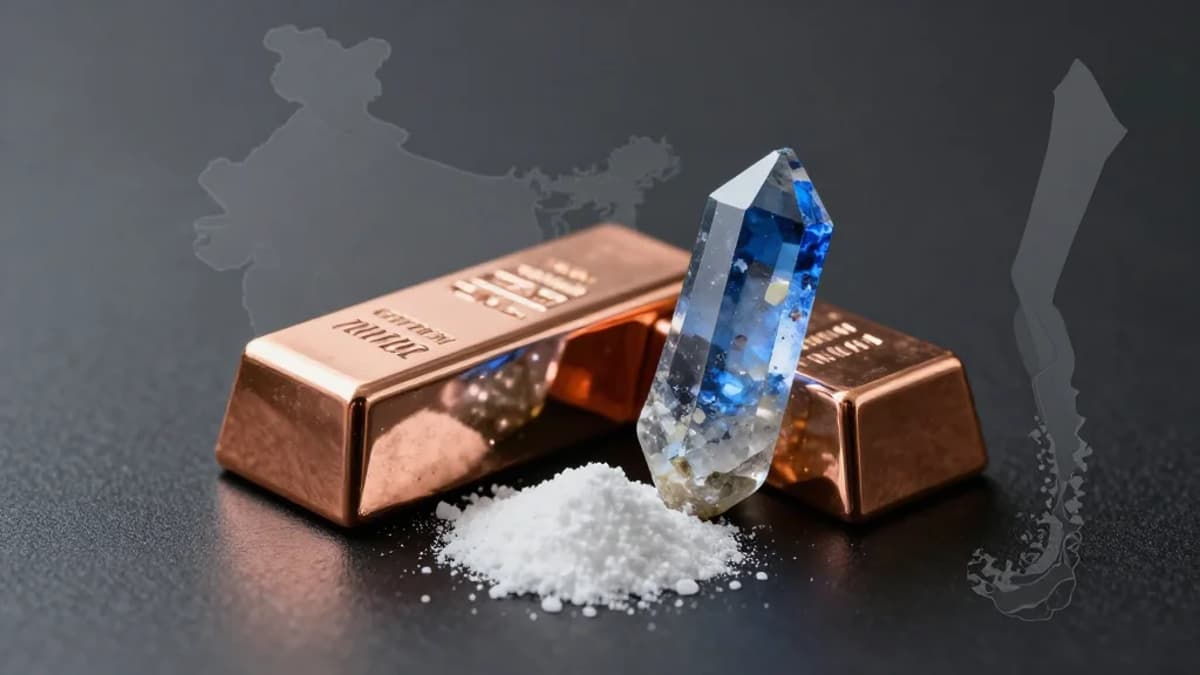
Image: At a time when mineral supply chains are becoming strategic tools in global politics, the proposed pact could support India’s manufacturing growth and energy transition.


Why Chile matters for India

In today’s global economy, critical minerals are no longer just industrial inputs but are strategic assets. Lithium, copper, cobalt, rhenium and molybdenum are indispensable for electronics, electric vehicles, renewable energy systems and advanced manufacturing. Control over their supply chains increasingly determines industrial competitiveness and national security. As countries compete to secure these resources amid supply disruptions and geopolitical rivalries, India’s ability to ensure reliable access has become a strategic necessity rather than a commercial choice. It is against this backdrop that the India‑Chile free trade negotiations acquire their true significance.

Chile stands out globally for its vast reserves of critical minerals. The South American nation is particularly known for lithium, a key component for batteries powering electric vehicles and energy storage systems. Beyond lithium, Chile also possesses significant reserves of copper, rhenium, molybdenum and cobalt, the materials that are central to electronics manufacturing, automobiles, and the solar energy sector. For India, which is pushing to scale up domestic manufacturing under initiatives such as Make in India and its clean‑energy transition, access to these minerals can offer long‑term supply stability and cost advantages.


From preferential trade to a big deal

India and Chile are not starting from scratch. The two countries implemented a preferential trade agreement in 2006, laying the groundwork for closer economic engagement. However, the current negotiations aim to go far beyond tariff concessions. The proposed Comprehensive Economic Partnership Agreement (CEPA) is designed to widen the scope of cooperation and deepen economic integration. In addition to goods trade, the CEPA seeks to cover digital services, investment promotion and cooperation, MSMEs, and, crucially, critical minerals. This expansion reflects a shift from transactional trade to a strategic partnership aligned with future economic and technological priorities.

The negotiations appear to be nearing completion. Commerce and Industry Minister Piyush Goyal said last month that talks between India and Chile for the free trade agreement would be concluded soon. Goyal underlined that the pact would open up access to critical minerals for Indian businesses. He also noted that India is engaged in active dialogue with several developed nations for free trade agreements, positioning the Chile pact as part of a broader trade and industrial strategy.


Trade numbers hint at untapped potential

Despite the strategic logic, bilateral trade between India and Chile remains modest, highlighting the untapped potential of a deeper partnership. In 2024–25, India’s exports to Chile declined by 2.46 % to $1.15 billion. Imports from Chile, however, surged sharply, growing by 72 % to $2.60 billion. This imbalance underscores Chile’s role as a supplier of raw materials and the opportunity for India to move up the value chain by securing inputs that can feed domestic manufacturing rather than relying on volatile global markets.


India’s early moves in Chile

India has already begun translating diplomatic intent into concrete action. A week ago, Coal India Ltd’s board approved the setting up of an intermediate holding company in Chile to pursue opportunities in critical minerals, including lithium and copper. The move comes as both countries edge closer to finalising the free trade agreement. In a regulatory filing, Coal India confirmed that it would hold 100 % equity in the proposed Chile‑based entity. This marks a significant shift for the state‑owned coal major and signals how India’s public sector is aligning itself with the country’s evolving resource‑security strategy.

India’s private sector is also stepping into Chile’s mineral landscape. In November last year, Chilean state‑owned miner Codelco and India’s Adani Group signed an agreement for copper‑project exploration in Chile. The agreement involves the review of three copper projects and establishes a framework for potential joint development. This collaboration highlights growing confidence among Indian companies in Chile as a long‑term partner and reflects how the proposed FTA could catalyse deeper investment‑led ties beyond trade flows.


A strategic edge hidden in plain sight

The evolving India‑Chile free trade agreement represents more than a conventional trade pact. It is a strategic instrument that can strengthen India’s access to critical minerals at a time when global supply chains are increasingly weaponised. By combining diplomatic engagement, public‑sector investment and private‑enterprise participation, India is quietly building a diversified and resilient minerals supply base. While other FTAs continue to grab headlines, this under‑the‑radar agreement with Chile may ultimately prove to be one of India’s most consequential moves in securing its industrial and strategic future.


Source: ET Online

Published: Feb 11 2026 at 02:29 PM IST

Read Original Article
0

Comments

Want to join the conversation?

Loading comments...