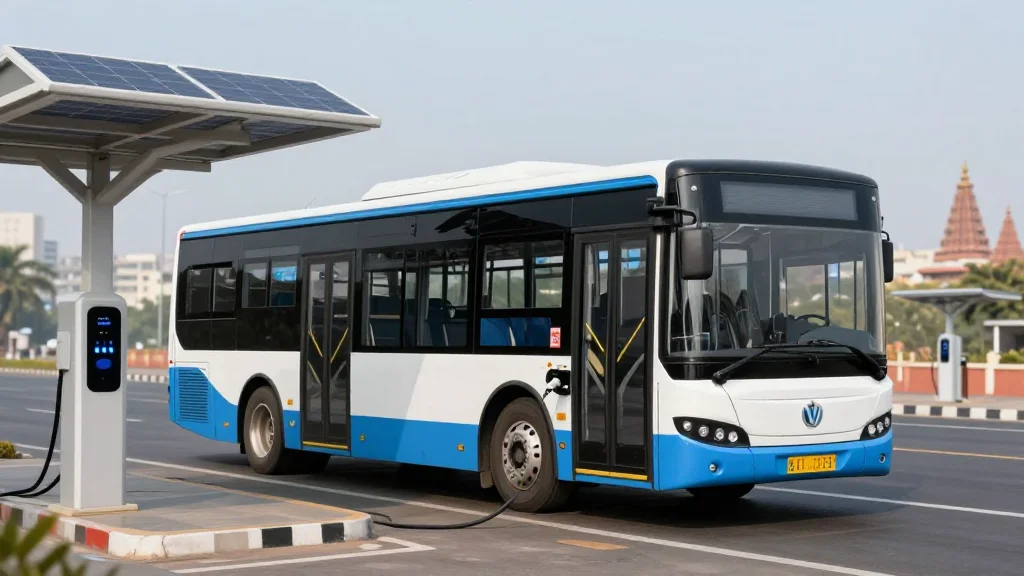
Andhra Govt Accelerates Electric Bus Infrastructure Under PM E-Bus Sewa Scheme
Why It Matters
The deployment will dramatically cut urban emissions and showcase scalable electric mobility, encouraging other Indian states and private investors to fund similar clean‑transport projects.
Key Takeaways
- •Andhra to receive 750 electric buses for 11 cities, 300 for Tirupati
- •Project cost ₹89.9 crore (~$10.8 M); central funding covers $9.6 M
- •Charging stations and high‑tension lines being built at 12 depots
- •Andhra aims to become national model for electric public transport
- •APSRTC, APTRANSCO, and central ministries coordinating rollout
Pulse Analysis
India’s PM e‑Bus Sewa scheme is a cornerstone of the nation’s push toward sustainable urban mobility, offering a template for large‑scale electric public transport adoption. By earmarking funds and technical support, the central government aims to reduce reliance on diesel fleets, lower city‑wide pollution, and stimulate domestic manufacturing of electric buses and related components. Andhra Pradesh’s aggressive rollout underscores how state‑level ambition can translate national policy into tangible infrastructure, positioning the region as a testbed for future expansions across the country.
The Andhra plan allocates 750 electric buses across 11 cities and an additional 300 for Tirupati, creating a fleet of 1,050 vehicles that will serve both 12‑metre and nine‑metre routes. With an estimated project cost of ₹89.9 crore (about $10.8 million), the centre has approved ₹79.9 crore (~$9.6 million) in assistance, and a first tranche of ₹17.8 crore (~$2.1 million) has already been disbursed for high‑tension power connections and depot‑level charging stations. The coordinated effort among APSRTC, APTRANSCO, and central ministries accelerates the deployment of behind‑the‑meter charging infrastructure, ensuring buses can operate reliably without grid strain.
Beyond environmental gains, the initiative signals a lucrative market for electric‑mobility suppliers, battery manufacturers, and infrastructure firms. Successful implementation could lower total cost of ownership for operators, attract private investment, and inspire other states to replicate the model. As Andhra Pradesh moves toward becoming a national exemplar, the broader Indian transport sector may witness a rapid shift toward electrified fleets, driving economies of scale and reinforcing India’s commitment to clean‑energy goals.
Andhra govt accelerates electric bus infrastructure under PM e-Bus Sewa scheme
Comments
Want to join the conversation?
Loading comments...