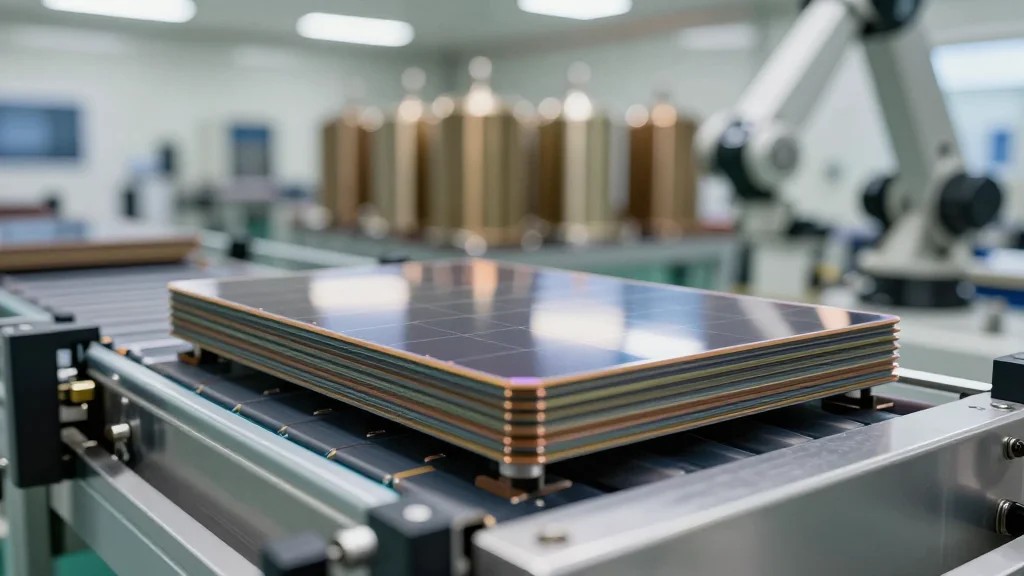
Andhra Pradesh to Host ₹5,400 Crore Solar Manufacturing Project Groundbreaking
Why It Matters
The project bolsters India’s clean‑energy manufacturing base, reducing import dependence and supporting the country’s 2030 renewable‑capacity goal. It also signals Andhra Pradesh’s emergence as a preferred hub for large‑scale green investments.
Key Takeaways
- •₹5,400 crore ($650 M) solar ingot and wafer plant announced
- •6 GW capacity aims to meet India's 500 GW 2030 target
- •Project will create over 2,100 direct and indirect jobs
- •Andhra Pradesh's Clean Energy Policy 2024 attracts $9.9 B investments
Pulse Analysis
India’s renewable‑energy ambitions are increasingly tied to domestic manufacturing, a strategy championed under the Atmanirbhar Bharat initiative. While the nation races toward a 500 GW non‑fossil‑fuel capacity by 2030, reliance on imported solar cells and wafers remains a vulnerability. By fostering large‑scale production facilities, the government aims to lock in supply‑chain security, lower costs, and create high‑skill employment across its states. The Andhra Pradesh Integrated Clean Energy Policy 2024 exemplifies this approach, offering incentives and infrastructure to attract global players.
ReNew Energy Global plc’s new plant in Anakapalli marks a decisive step in that direction. With a capital outlay of roughly $650 million, the 6 GW ingot and wafer line will be one of the largest of its kind in the region. The project’s timeline—commissioning within two years—reflects confidence in the state’s regulatory environment and logistical readiness. Beyond the headline investment, the facility is projected to support over 2,100 jobs, spanning manufacturing, engineering, and ancillary services, thereby stimulating the local economy and building a skilled workforce aligned with clean‑tech demands.
The broader impact extends beyond state borders. As Andhra Pradesh positions itself as a clean‑energy hub, the ReNew facility could become a cornerstone for export‑oriented solar component production, helping India capture a larger share of the global market. The $9.9 billion total investment pledged by ReNew underscores growing investor appetite for Indian renewable infrastructure. Successful execution may encourage further foreign and domestic capital, accelerate technology transfer, and reinforce India’s credibility as a self‑sufficient renewable power leader. In the coming years, such projects are likely to shape supply‑chain dynamics, drive down component costs, and accelerate the nation’s transition to a low‑carbon economy.
Andhra Pradesh to host ₹5,400 crore solar manufacturing project groundbreaking
Comments
Want to join the conversation?
Loading comments...