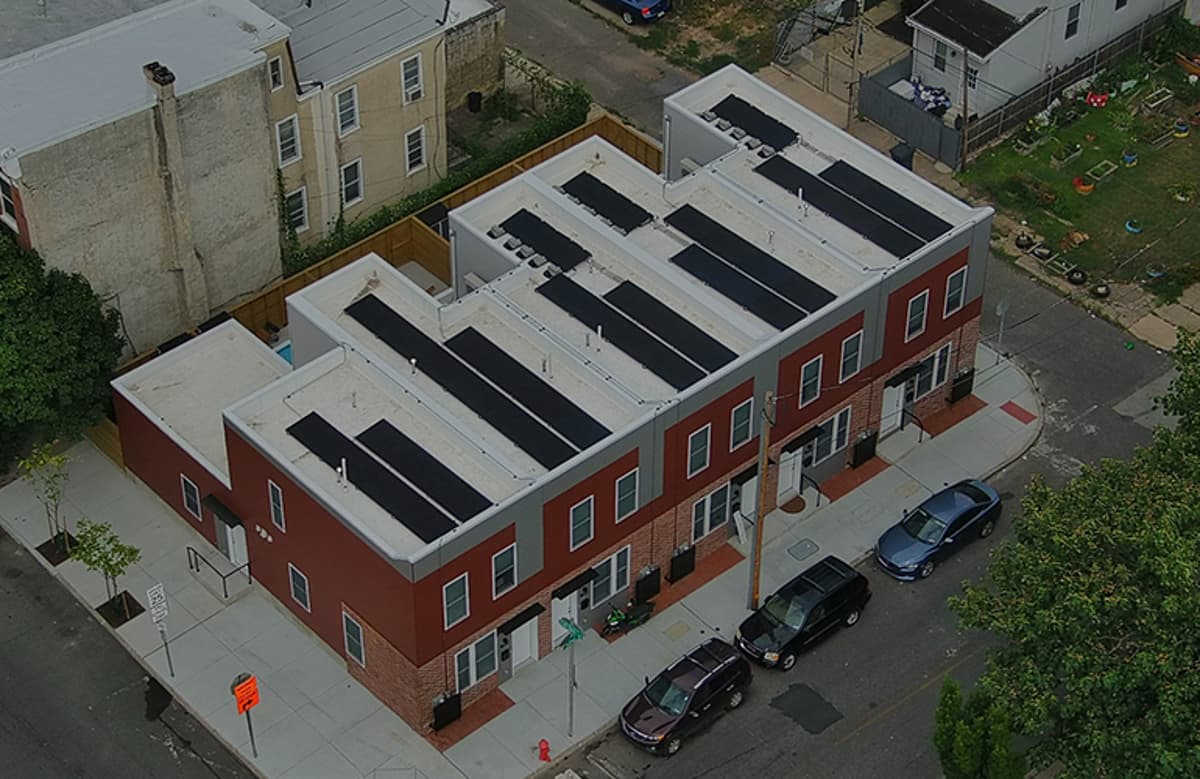
Anonymous Donor Helps Philadelphia Habitat for Humanity Homes Go Solar Solar Power World’s Projects of Impact.
Companies Mentioned
Why It Matters
The initiative proves that donor‑backed residential solar can deliver substantial cost savings and energy equity for low‑income families while respecting historic preservation constraints.
Key Takeaways
- •Anonymous donor funds solar on five Habitat homes
- •Exact Solar navigated historic zoning with concealed equipment
- •Homeowners contributed sweat equity during installation
- •Systems expected to save over $40,000 each lifetime
- •Project highlights social impact of residential photovoltaic installations
Pulse Analysis
Donor‑driven solar projects are gaining traction as a pragmatic way to bridge the energy‑affordability gap for low‑income households. By channeling philanthropic capital into photovoltaic installations, organizations like Habitat for Humanity can offer reduced‑cost homeownership alongside tangible utility savings. The Strawberry Mansion effort showcases how a single anonymous contribution can catalyze multiple installations, creating a replicable model for other nonprofits seeking to embed clean energy into affordable‑housing programs.
From a technical standpoint, Exact Solar’s deployment of VSUN 400‑W modules paired with Enphase IQ8 microinverters delivers both high efficiency and granular monitoring for each home. The historic district’s strict visual guidelines forced the team to paint conduit and conceal inverters behind mesh, illustrating how aesthetic compliance can coexist with modern solar design. Such solutions demonstrate that even heritage‑rich neighborhoods can adopt cutting‑edge renewable technology without compromising architectural integrity.
Economically, the projected $40,000 lifetime savings per residence translates to roughly $1,000 a year—an amount that can significantly improve household budgets in a region where energy costs often strain limited incomes. This financial relief not only reduces monthly utility bills but also frees capital for other essential needs, reinforcing the broader concept of energy equity. As municipalities and policymakers observe these outcomes, the case strengthens for incentives, streamlined permitting, and public‑private partnerships that scale similar projects nationwide, accelerating both climate goals and social welfare.
Anonymous donor helps Philadelphia Habitat for Humanity homes go solar Solar Power World’s Projects of Impact.
Comments
Want to join the conversation?
Loading comments...