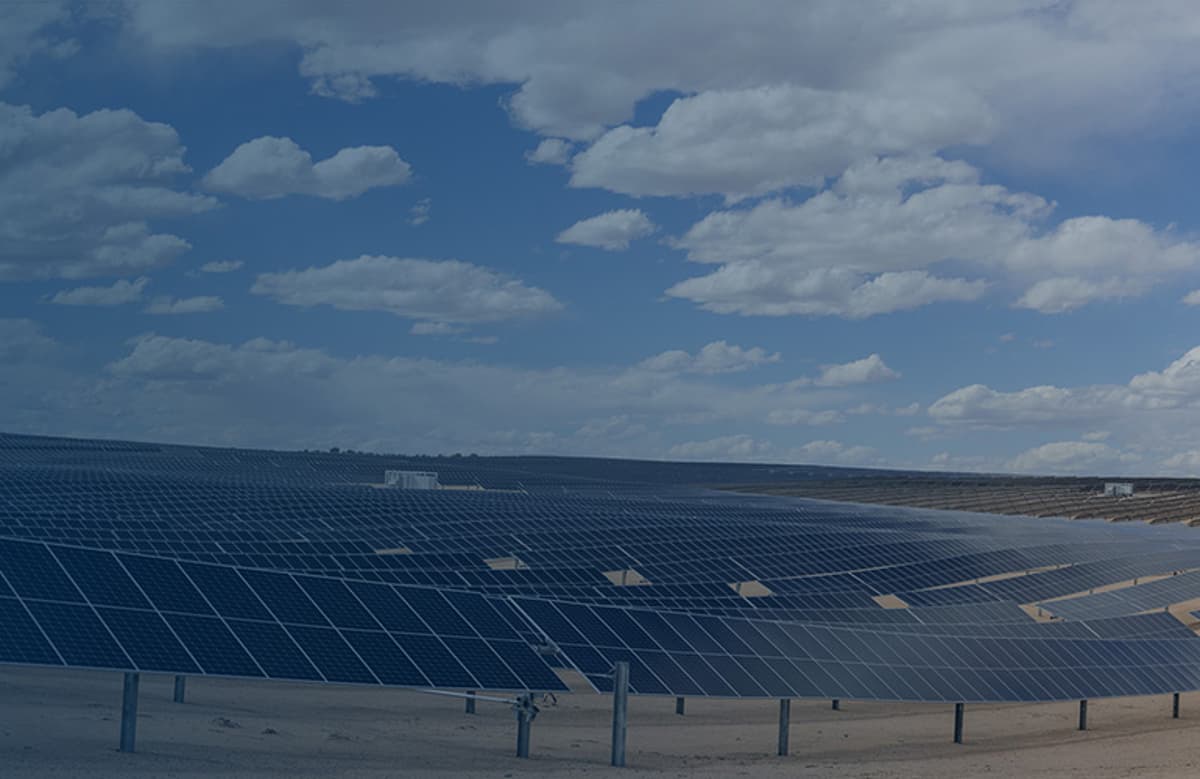
ARRAY Increases Angling on Terrain-Following Solar Tracker
Why It Matters
By eliminating extensive site grading, the new OmniTrack cuts capital expenditures and opens marginal land for utility‑scale solar, accelerating renewable‑energy deployment and improving project economics.
Key Takeaways
- •OmniTrack now articulates up to 2° between foundations.
- •Updated tracker reduces need for site grading.
- •Enables faster, cheaper deployment on uneven terrain.
- •Shipping begins in Q3 2026.
- •Most popular ARRAY tracker since 2024 launch.
Pulse Analysis
The solar‑energy sector has long wrestled with the high cost of site preparation, especially on hilly or uneven terrain. Traditional fixed‑axis trackers require extensive grading to create a level platform, inflating both upfront capital and environmental impact. Terrain‑following trackers, which can pivot at each foundation, address this bottleneck by conforming to the natural topography, preserving land integrity while reducing earth‑moving expenses. As utility‑scale projects scale up, such flexibility becomes a decisive factor in site selection and overall project viability.
ARRAY’s OmniTrack evolution reflects a broader industry shift toward adaptable mounting solutions. Inspired by the rugged DuraTrack platform, the original OmniTrack introduced single‑axis articulation for modest slope compensation. The latest iteration doubles the articulation angle to 2°, enabling a wider range of undulating sites to be serviced without additional civil work. This mechanical refinement, coupled with ARRAY’s proven reliability record, positions OmniTrack as a turnkey option for developers seeking to minimize balance‑of‑system costs while maintaining high energy yield.
The commercial implications are significant. By sidestepping extensive grading, developers can shave millions off the balance‑sheet, improve project cash flow, and meet tighter construction schedules demanded by power‑purchase agreements. Moreover, the ability to tap previously marginal land expands the geographic footprint of solar farms, supporting grid‑decoupling goals and renewable‑energy targets. As the new OmniTrack ships in Q3 2026, industry observers expect accelerated adoption, especially in regions with rugged terrain such as the Southwest and Appalachia, further cementing ARRAY’s role as a catalyst for cost‑effective, large‑scale solar deployment.
ARRAY increases angling on terrain-following solar tracker
Comments
Want to join the conversation?
Loading comments...