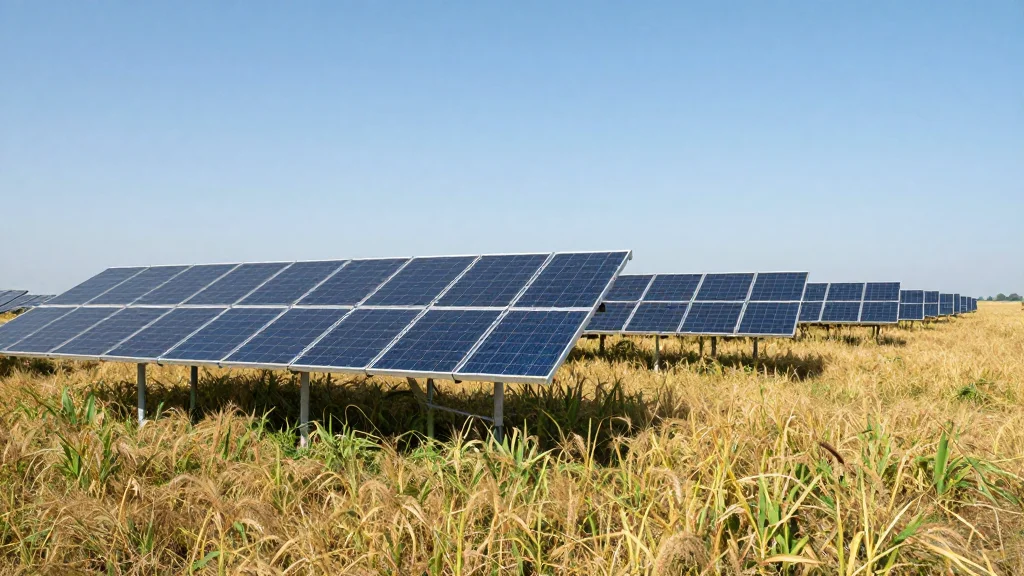
Assessment of Nigeria’s Agrivoltaic Potential Identifies Northern States as Optimal Areas
Why It Matters
Deploying agrivoltaics on a tiny fraction of farmland could supply most of Nigeria’s future solar demand while easing crop heat stress, addressing energy poverty, and supporting rural development.
Key Takeaways
- •Northern states need <1% cropland for 2050 solar target
- •Southern states require up to 19% cropland for same capacity
- •Partial shading reduces heat and evaporation stress on crops
- •Agrivoltaics can provide decentralized power to energy‑poor communities
Pulse Analysis
Nigeria’s electricity deficit is projected to widen as the population approaches 250 million, prompting the government and international donors to chase renewable solutions. Solar energy, with abundant irradiance especially in the Sahelian north, is a natural fit, yet large‑scale PV farms compete with valuable cropland. Agrivoltaics—integrating solar panels with agriculture—offers a compromise, allowing farmers to maintain production while generating electricity. The concept has gained traction worldwide, from France’s vineyards to California’s almond orchards, and now appears poised for a breakthrough in West Africa.
The recent geospatial assessment, conducted by researchers from the University of Texas Rio Grande Valley, Indiana University and Cornell, applied a composite suitability index that blends cropland extent, solar output and aridity. Results pinpoint Kano, Katsina and Jigawa as the most promising sites, where less than 1 % of cultivated land could satisfy the nation’s projected 2050 solar capacity additions. In contrast, humid southern states would need between 6 % and 19 % of their farms to host panels. Beyond power generation, the partial shading effect can lower field temperatures, curb evaporation and improve crop resilience in water‑stressed zones.
Translating these findings into real‑world projects will require targeted incentives, clear land‑tenure policies and early farmer‑developer collaboration. Demonstration farms could showcase economic returns, while financing mechanisms—such as low‑interest loans or feed‑in tariffs for hybrid energy‑agriculture outputs—would lower upfront barriers. If scaled, agrivoltaics could contribute a significant share of the 75 GW of off‑grid solar capacity IRENA expects Nigeria to add by 2050, accelerate rural electrification, and advance several Sustainable Development Goals, notably clean energy and zero hunger.
Assessment of Nigeria’s agrivoltaic potential identifies northern states as optimal areas
Comments
Want to join the conversation?
Loading comments...