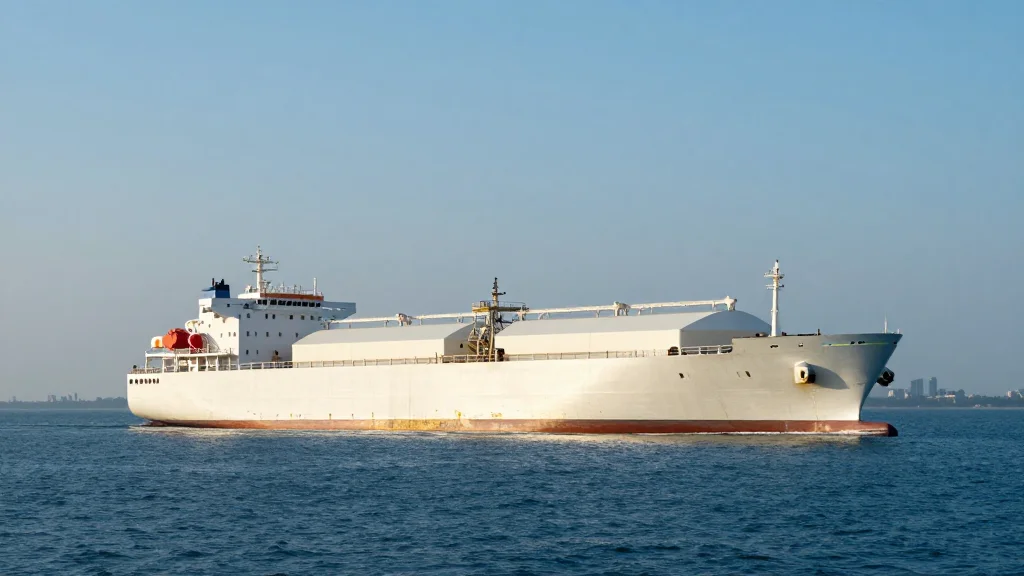
Australia in No Position to Ease Asian Gas Crunch, Data Shows
Companies Mentioned
Why It Matters
Australia’s constrained LNG capacity limits its ability to cushion Asia’s gas shortfall, affecting regional energy security and domestic fuel prices. The Singapore pact underscores how bilateral deals are becoming essential tools for securing critical energy supplies amid global volatility.
Key Takeaways
- •Queensland LNG trains at 94.6% capacity, WA at 98% – little slack
- •Asia's LNG shortfall from Middle East disruptions drives demand for Australian cargoes
- •Australia can add only 3‑4 extra LNG cargoes per month short‑term
- •Extra shipments may require buying gas from domestic market, raising local prices
- •Energy pact with Singapore secures refined fuel imports, Australia pledges LNG supply
Pulse Analysis
The Asian gas market is under unprecedented strain. Conflict in the Middle East has blocked key shipping lanes and damaged production hubs, erasing up to 20% of global LNG supply. Asian economies, from Japan to South Korea, rely heavily on imported liquefied natural gas to power homes and industry, and the sudden shortfall has driven spot prices to record highs. In this context, Australia, the world’s third‑largest LNG exporter, has become a focal point for nations scrambling to secure reliable cargoes.
Australia’s own production landscape, however, offers limited flexibility. EnergyQuest data shows Queensland’s export trains running at 94.6% and Western Australia’s at 98% capacity, meaning most facilities are already at peak throughput. Operators such as Woodside’s North West Shelf and Shell’s Prelude can each squeeze out a handful of additional shipments, but the aggregate gain is modest—roughly three to four extra cargoes a month in a market that typically moves over 90 shipments. Adding volume would likely require purchasing gas that would otherwise serve the domestic market, a move that could lift Australian fuel prices, which have already climbed to about $1.65 USD per litre for regular unleaded.
Strategically, the new energy‑security agreement between Prime Minister Anthony Albanese and Singapore’s Lawrence Wong reflects a shift toward bilateral arrangements that trade fuel access for export assurances. By locking in refined fuel imports, Australia shields its own transport sector while leveraging its LNG reliability to negotiate favorable terms with other Asian partners. Long‑term, the country plans to develop new fields that could expand export capacity, but those projects will take years to come online. In the meantime, the tight supply‑demand balance underscores the importance of flexible contracts and government‑backed schemes, such as the recent tax‑payer‑guaranteed fuel‑purchase program, to stabilize domestic markets amid global turbulence.
Australia in no position to ease Asian gas crunch, data shows
Comments
Want to join the conversation?
Loading comments...