Australian Innovation Can Slash Wind Farm Concrete Pours, Build Times and Costs. But It Needs a Willing Guinea Pig
Why It Matters
The innovation promises faster, cheaper and greener wind farm builds, directly addressing cost and skill shortages that constrain Australia’s renewable expansion. Early adoption could set a new industry standard and boost the nation’s competitiveness in offshore and remote wind projects.
Key Takeaways
- •Precast foundations cut concrete use by 30% per turbine
- •On‑site concrete pours reduced 70%, saving water and labor
- •Project timelines shrink 20 weeks, accelerating wind farm delivery
- •Net cost savings estimated at 10‑15% per turbine
- •Requires early‑adopter developer to validate technology in Australia
Pulse Analysis
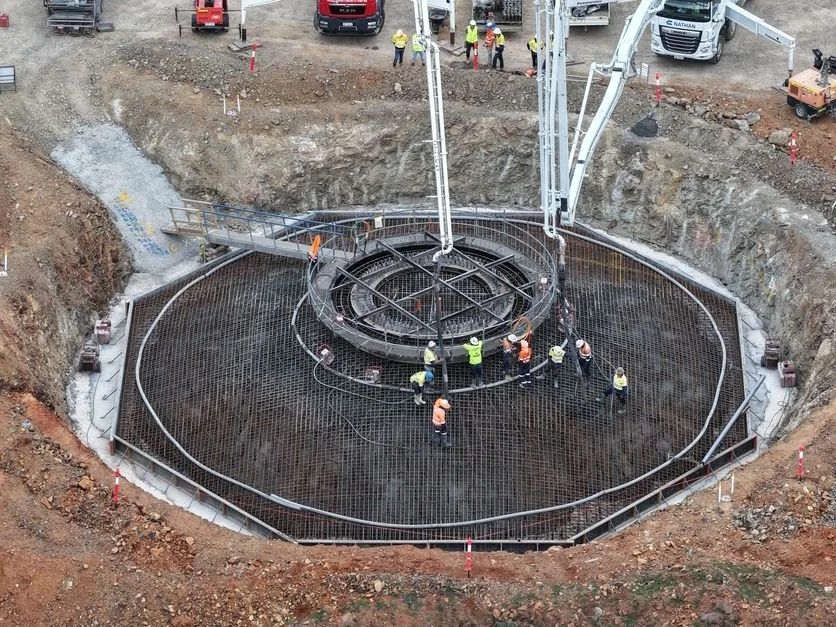
The precast foundation system reimagines how wind turbines are anchored, replacing monolithic gravity footings with a series of factory‑produced concrete ribs. By engineering each rib to precise specifications and bolting them together on site, icubed eliminates the need for massive on‑site pours, cutting concrete consumption by about a third and water usage by the same margin. Advanced 3D finite‑element modelling and third‑party peer review underpin the design, ensuring structural integrity while delivering a more sustainable construction footprint.
From a financial perspective, the modular approach translates into tangible savings. Developers can expect a 10‑15% reduction in overall foundation costs per turbine, driven by lower material volumes, reduced formwork, and less labor‑intensive reinforcement placement. Although backfill requirements rise by roughly 20%, the net effect remains positive, especially when combined with a 20‑week acceleration in project timelines. Faster commissioning not only improves cash‑flow timing but also reduces exposure to weather‑related delays and equipment idle time.
Adoption, however, hinges on a willing pioneer. While precast foundations are already proven in Europe and the United States, Australia has yet to see a large‑scale rollout. The technology aligns well with remote mine sites, high‑capacity 6‑7 MW turbines, and projects constrained by skilled‑labor shortages. Securing an early‑stage developer to act as a guinea pig could unlock a cascade of benefits—lowered capital expenditures, enhanced schedule certainty, and a greener construction process—potentially reshaping the Australian wind market for the next decade.
Australian innovation can slash wind farm concrete pours, build times and costs. But it needs a willing guinea pig
Comments
Want to join the conversation?
Loading comments...