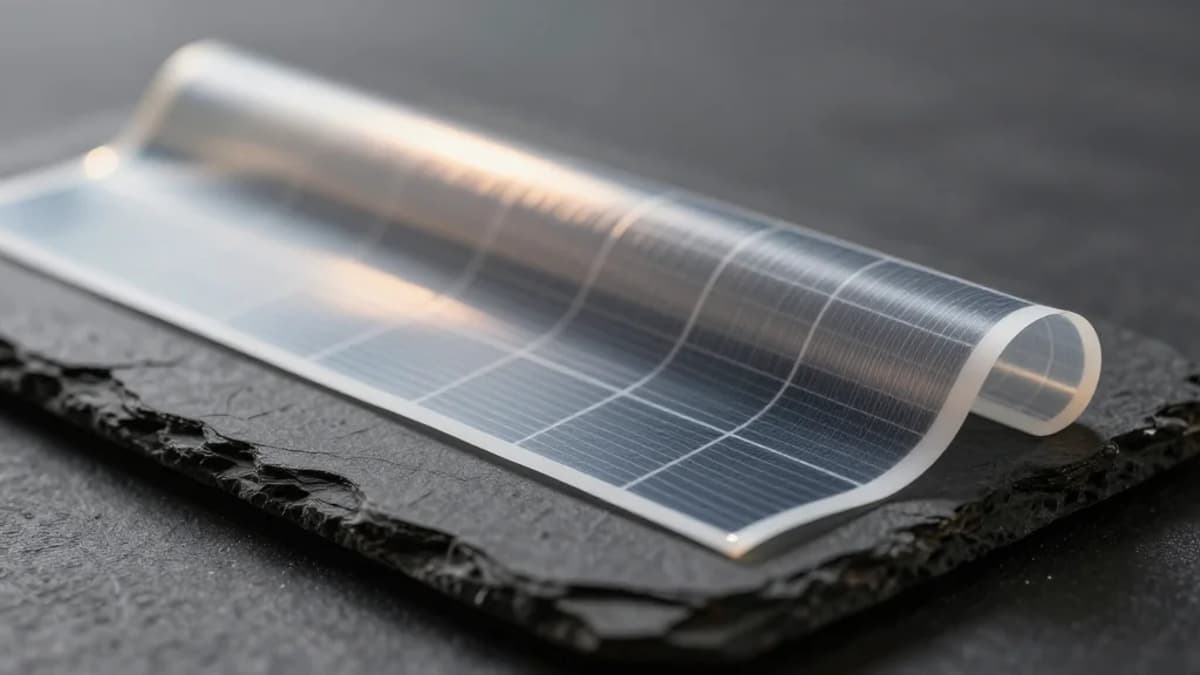
Australian Printed Solar Technology Used to Power Coldplay World Tour Secures Federal Funding
•March 4, 2026
0
Companies Mentioned
Why It Matters
The grant validates printed solar as a scalable, low‑cost clean‑energy solution and positions Australia as a leader in next‑generation photovoltaics, potentially reshaping global solar supply chains.
Key Takeaways
- •$2.1M federal grant supports commercial pilot
- •Printed polymer panels cost less than silicon
- •Panels lightweight, flexible, install with tape or velcro
- •Tested on Coldplay tour, Tesla road‑trip, shade structures
- •Funding accelerates Australian clean‑energy manufacturing
Pulse Analysis
Printed solar technology represents a paradigm shift in photovoltaics, replacing rigid silicon wafers with ink‑based, polymer‑laden films that can be produced on conventional printing presses. This manufacturing approach slashes material costs, reduces energy intensity, and yields panels that can conform to curved surfaces or be adhered with simple fasteners. Early demonstrations— from university rooftops to mobile power on a Tesla road‑trip—show that performance is sufficient for niche applications while the cost advantage remains compelling for large‑scale deployment.
The Australian federal grant of $2.1 million, layered on top of a prior state investment, signals strong policy backing for this emerging sector. By funding a pilot production line, the government aims to bridge the gap between laboratory prototypes and market‑ready products, fostering domestic supply chains and high‑skill jobs. Such support aligns with national decarbonisation targets, offering a home‑grown alternative to imported silicon modules and reducing the carbon footprint associated with panel manufacturing and transport.
Looking ahead, printed solar panels could unlock new markets beyond traditional rooftops, including automotive skins, wearable electronics, and temporary installations for events or disaster relief. Their lightweight, recyclable nature also addresses growing concerns about end‑of‑life waste in the solar industry. As global demand for renewable energy accelerates, scalable, low‑cost solutions like Kardinia’s printed panels may become a cornerstone of the next wave of clean‑energy infrastructure, prompting both investors and competitors to watch Australia’s rollout closely.
Australian printed solar technology used to power Coldplay world tour secures federal funding
0
Comments
Want to join the conversation?
Loading comments...