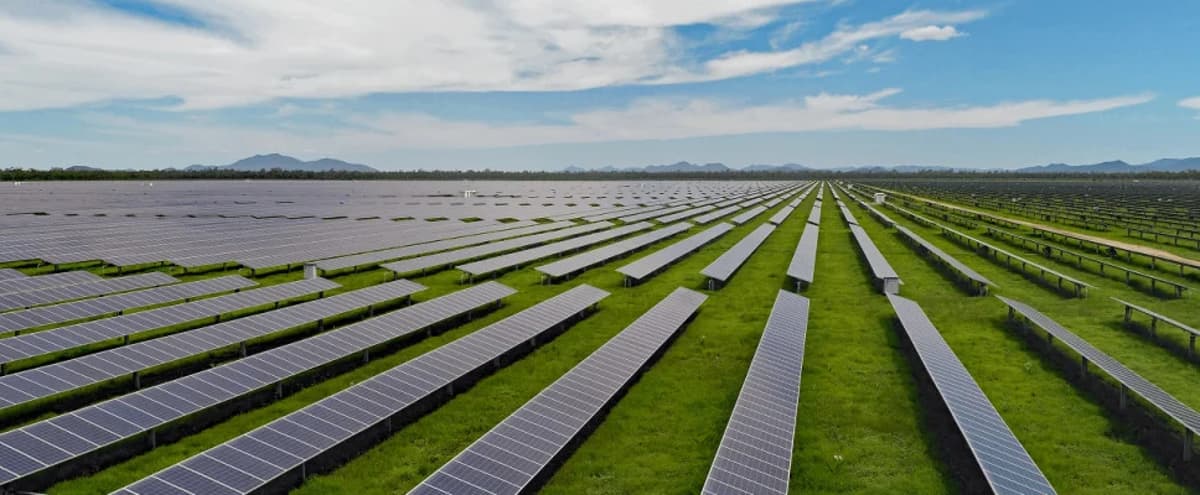
Australian Utility-Scale Solar and Wind Generation Rises 10% Year-on-Year in May, Says Rystad Energy
Companies Mentioned
Why It Matters
The growth underscores Australia’s rapid transition to renewables, reshaping wholesale electricity pricing and accelerating battery‑storage integration across the NEM.
Key Takeaways
- •May 2026 generation hit 4.6 TWh, +10% YoY
- •Victoria set wind record with 1,079 GWh
- •Queensland led solar PV with 549 GWh record
- •New projects add 2.6 GWdc PV construction in 2026
- •Intraday price spread fell below AU$106/MWh
Pulse Analysis
Australia’s renewable surge is more than a statistical uptick; it signals a structural shift in the nation’s energy mix. The 10% YoY rise to 4.6 TWh in May reflects expanding utility‑scale solar and wind capacity, with state‑level milestones—Victoria’s wind output and Queensland’s solar generation—highlighting regional leadership. These gains are driven by a pipeline of large‑scale projects, including Edify Energy’s 720 MWdc solar‑plus‑battery complex and Fortescue’s 690 MWdc Turner River plant, which together bring the 2026 construction tally to 2.6 GWdc, edging toward a historic annual start figure.
The influx of clean generation is compressing wholesale price spreads, as evidenced by the sub‑AU$106/MWh (US$76/MWh) two‑hour intraday spread—the lowest May level since the pandemic‑induced slump of 2020. With batteries absorbing midday solar surplus, negative pricing events have receded, reducing arbitrage opportunities but improving grid stability. This price compression benefits large industrial consumers while challenging traditional peaker plants, prompting a re‑evaluation of market participation strategies.
Looking ahead, the continued expansion of solar‑plus‑storage assets is poised to deepen the NEM’s resilience. Curtailment pressures, already evident with over 7 TWh of excess generation in 2025, will likely be mitigated as storage capacity scales, allowing more renewable energy to be dispatched during peak demand. Policymakers and investors should monitor the evolving price dynamics and capacity‑factor trends, as they will shape the economics of future renewable projects and the broader decarbonisation pathway for Australia’s power sector.
Australian utility-scale solar and wind generation rises 10% year-on-year in May, says Rystad Energy
Comments
Want to join the conversation?
Loading comments...