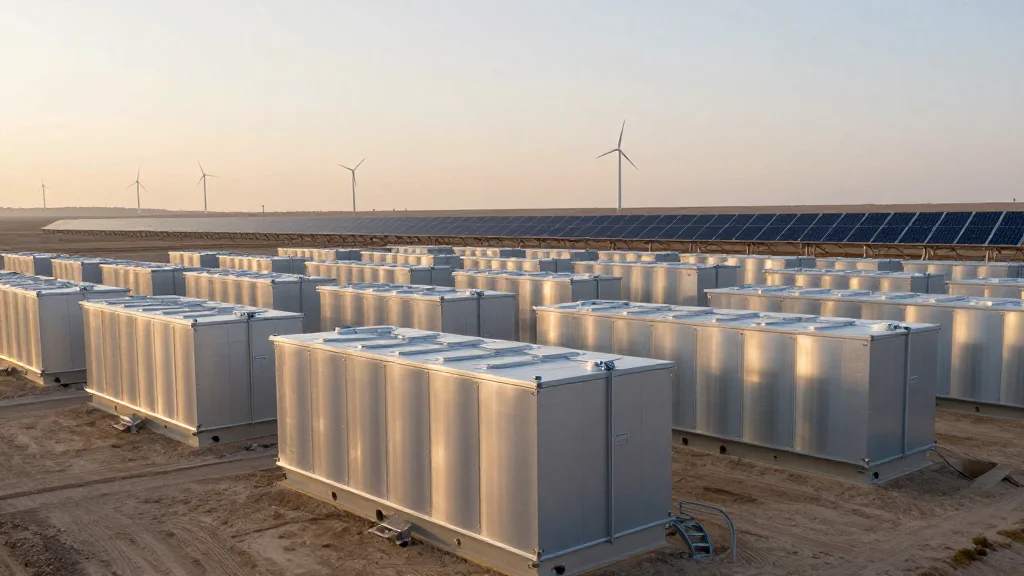
Australia’s Battery Fleet Triples Load‑Shifting as 4.4 GW BESS Comes Online in Q1 2026

Why It Matters
The rapid deployment of 4.4 GW of battery storage dramatically improves the NEM’s flexibility, allowing more solar and wind generation to be integrated without over‑loading the grid. By shifting energy from daylight to evening peaks, batteries reduce reliance on gas‑fired peaking plants, lowering emissions and operating costs. The revenue surge also signals a maturing market where storage can earn viable returns, encouraging further private investment and accelerating Australia’s transition to a low‑carbon electricity system. Moreover, the price‑setting dominance of batteries reshapes market dynamics, compressing price spreads and dampening negative price events that previously favored coal and hydro. This creates a more stable pricing environment for generators and consumers alike, while providing a new revenue stream for storage owners through energy arbitrage.
Key Takeaways
- •4,445 MW of new BESS added in Q1 2026, raising total installed capacity above 8 GW.
- •Average battery discharge jumped to 359 MW, more than three times the Q1 2025 level.
- •Battery‑set prices occurred in 32% of trading intervals, overtaking hydro.
- •Estimated battery revenue doubled to AU$96.9 million (≈US$68.5 million).
- •BESS pipeline grew to 33.2 GW, representing 49% of all NEM connection projects.
Pulse Analysis
Australia’s battery boom is more than a capacity story; it marks a structural shift in how the NEM balances supply and demand. Historically, the market relied on dispatchable coal and gas plants to manage the steep evening ramp as solar output waned. The new 4.4 GW of storage now provides a fast‑acting, low‑emission alternative that can be dispatched within seconds, effectively flattening the demand curve and curbing price volatility. This operational flexibility is reflected in the 12% drop in average wholesale prices and the compression of price spreads, especially in Queensland and Victoria where solar penetration is highest.
From an investment perspective, the revenue jump underscores that storage is moving from a policy‑driven niche to a commercially viable asset class. Energy arbitrage now accounts for 97% of battery earnings, indicating that market participants are capitalising on predictable price differentials between day and night. The decline in FCAS revenue suggests that ancillary‑service markets may need to evolve to reward the fast‑frequency response that modern grid‑forming batteries can provide.
Policy implications are equally significant. As batteries assume a larger price‑setting role, regulators will need to ensure that market rules continue to incentivise both charging and discharging behaviours that support grid stability. Future reforms may focus on refining price‑formation mechanisms, enhancing transparency around storage bids, and aligning incentives for longer‑duration storage that can address multi‑hour deficits. If the current trajectory holds, Australia could become a global benchmark for large‑scale battery integration, prompting other markets with high renewable shares to emulate its regulatory and commercial framework.
Australia’s Battery Fleet Triples Load‑Shifting as 4.4 GW BESS Comes Online in Q1 2026
Comments
Want to join the conversation?
Loading comments...