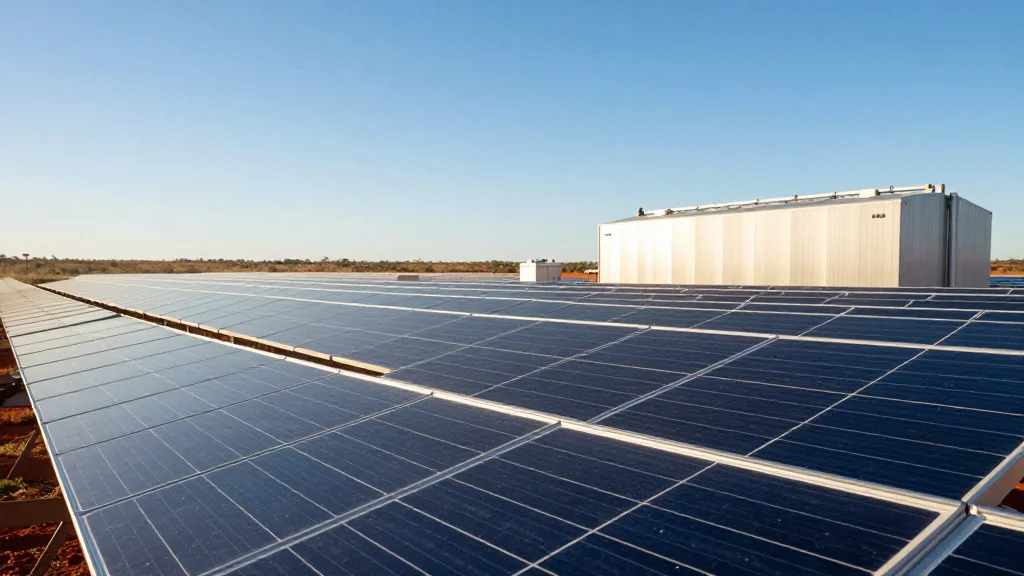
Australia’s Biggest Solar Farm Enjoys Less Curtailment, but Lower Prices, as Big Battery Starts Commissioning
Why It Matters
The surge in generation and lower curtailment demonstrates how large‑scale battery storage can stabilize solar output, while the revenue growth despite falling prices underscores the financial resilience of diversified renewable portfolios.
Key Takeaways
- •Acen’s Australian output rose 87% to 528 GWh in Q1.
- •New England solar curtailment fell as 200 MW battery nears completion.
- •Stubbo’s start boosted revenue but wholesale prices dropped 6%.
- •Revenue hit P1.45 bn (~$26 m), up 76% despite lower prices.
- •Acen begins 75 MW Jinbi solar project in WA’s Pilbara region.
Pulse Analysis
Australia’s solar market is entering a maturation phase where battery storage is becoming a critical grid asset. The Australian Energy Market Operator’s recent data shows that large‑scale batteries, like the 200 MW unit at Acen’s New England farm, provide a daytime price floor, reducing the need for costly curtailment when solar output exceeds transmission capacity. This shift not only improves the capacity factor of solar assets but also smooths price volatility, making renewable projects more attractive to investors and off‑takers.
Acen Renewables leveraged these dynamics to post a near‑doubling of generation and a 76% revenue increase in the March quarter, despite a 6% dip in wholesale prices. Converting its P1.45 billion (≈$26 million) revenue and P994 million earnings (≈$18 million) into U.S. dollars highlights the company’s solid cash flow in a market where many peers are still grappling with low price environments. The company’s earnings growth slowed to 59% due to higher depreciation and interest costs tied to the newly commissioned Stubbo facility, illustrating the typical front‑loaded financial profile of large solar projects.
Looking ahead, Acen’s pipeline—including the 75 MW Jinbi solar project in the resource‑rich Pilbara, the Valley of the Winds solar farm, the Phoenix pumped‑hydro storage, and the Robbins Island wind venture—positions it to capture further upside as Australia expands its renewable capacity targets. The integration of storage with new solar builds will likely continue to mitigate curtailment, improve market prices, and enhance the overall economics of the sector, offering a compelling narrative for stakeholders tracking the transition to a low‑carbon energy mix.
Australia’s biggest solar farm enjoys less curtailment, but lower prices, as big battery starts commissioning
Comments
Want to join the conversation?
Loading comments...