Bangladesh’s PV Capacity to Reach 8.5 GW by 2035, Says GlobalData
Companies Mentioned
Why It Matters
Bangladesh’s rapid solar build‑out positions the country to meet rising electricity demand while reducing reliance on fossil fuels, signaling a major shift for South Asia’s energy mix. The scale of procurement and policy support also creates new market opportunities for equipment manufacturers and financiers.
Key Takeaways
- •Solar capacity projected to hit 8.5 GW by 2035.
- •Growth shifts from off‑grid to rooftop and utility‑scale solar.
- •Government incentives include tax holidays and duty exemptions.
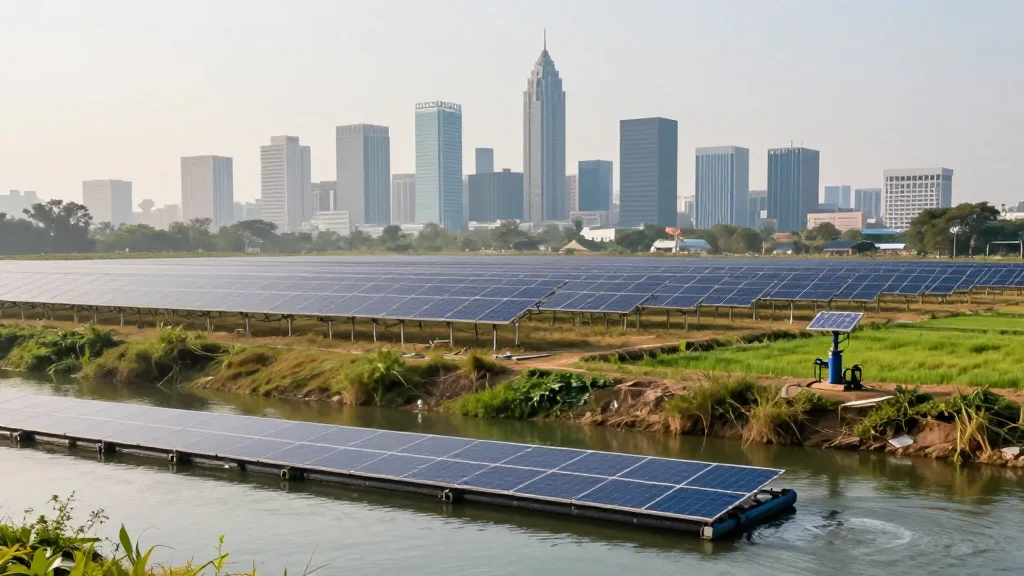
- •Floating solar and irrigation schemes address land scarcity.
- •Thermal power still dominates, with gas reaching 20 GW.
Pulse Analysis
Bangladesh, home to over 165 million people, has been grappling with a chronic electricity shortfall that threatens industrial growth and household welfare. GlobalData’s latest outlook projects photovoltaic capacity to surge from 1.3 GW in 2025 to 8.5 GW by 2035, a sixfold increase that would make solar the cornerstone of the nation’s renewable portfolio. This growth reflects a broader regional trend where densely populated, land‑constrained economies are turning to solar as the most scalable clean‑energy option, leveraging the country’s high solar irradiance of roughly 5 kWh/m² per day.
The acceleration is underpinned by a suite of policy levers. Net‑metering frameworks now allow commercial and industrial rooftops to sell excess power, while the government offers tax holidays, import‑duty waivers and VAT relief on solar equipment. Recent procurement activity underscores the momentum: a 2.65 GW tender launched in March 2025 and a 523 MW PPA signed in January 2026 are the largest contracts in the market’s history. To overcome limited land, developers are piloting floating solar farms on reservoirs and coupling solar pumps with irrigation schemes, creating dual‑use assets that maximize output per hectare.
For investors and equipment suppliers, Bangladesh’s solar trajectory opens a multi‑billion‑dollar opportunity, especially in high‑efficiency modules, inverters and storage solutions needed for grid stability. However, the sector must navigate lingering challenges, including grid integration bottlenecks and the continued dominance of thermal generation—gas capacity is slated to rise to 20 GW and coal to 7.7 GW by 2035. Successful scaling will depend on coordinated grid upgrades, financing mechanisms that de‑risk projects, and sustained policy certainty, positioning Bangladesh as a potential benchmark for renewable transition in South Asia.
Bangladesh’s PV capacity to reach 8.5 GW by 2035, says GlobalData
Comments
Want to join the conversation?
Loading comments...