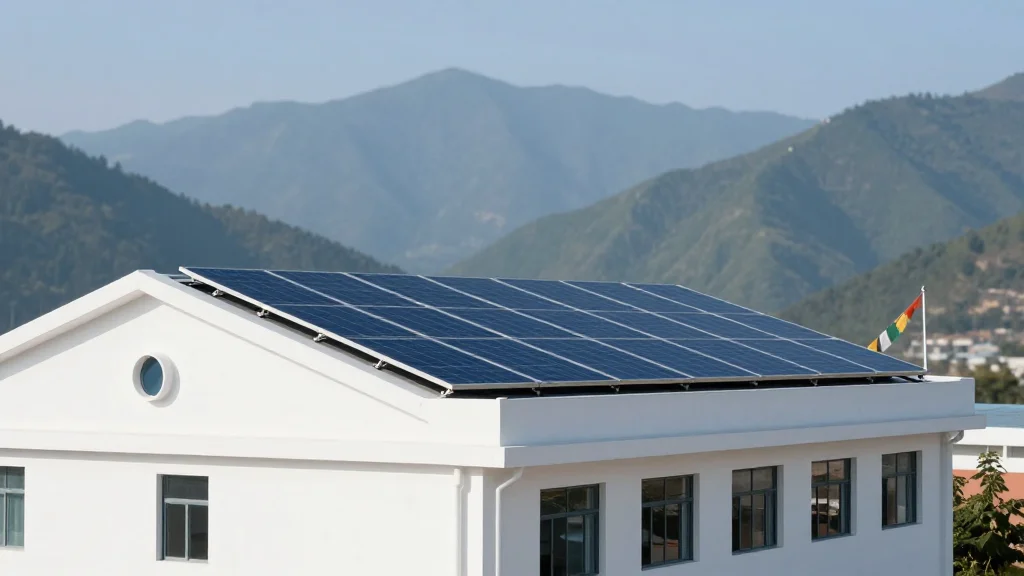
Bhutan Tenders Solar Projects for Healthcare Facilities
Why It Matters
The tender accelerates Bhutan’s renewable transition while improving energy reliability for critical health services, and offers investors a structured, low‑risk entry into the country’s fast‑growing solar market.
Key Takeaways
- •12.1 MW rooftop solar for 73 Bhutanese hospitals.
- •Tender splits facilities into four ~3 MW geographic bundles.
- •Green financing blends 35‑45% debt, 40‑50% concessional equity.
- •Developers must operate plants for 25‑year concession.
- •Project supports Bhutan’s goal of 1 GW solar by 2030.
Pulse Analysis
Bhutan is rapidly scaling its renewable portfolio, having jumped from 3 MW of solar at the end of 2024 to 21 MW by 2025 after commissioning its first utility‑scale 17.38 MW plant. The latest tender focuses on distributed generation for public health facilities, a sector where reliable power is essential for patient care and medical equipment. By targeting 73 hospitals and clinics, the government not only diversifies its energy mix but also reduces grid dependency in remote regions, reinforcing energy security across the nation.
The tender’s financing model is a hallmark of Bhutan’s green investment strategy. A blended package provides 35‑45% senior debt backed by first‑loss guarantees, coupled with 40‑50% concessional equity that benefits from low‑cost capital, while developers contribute the remaining 15%. This structure mitigates risk for private investors and aligns returns with sustainability goals. The 25‑year build‑own‑operate concession, coupled with a dedicated special‑purpose company, ensures long‑term operational control and stable revenue through power purchase agreements, making the projects attractive to both domestic and international renewable‑energy funds.
Strategically, the initiative dovetails with Bhutan’s ambition to achieve 1 GW of solar capacity by 2030 and 5 GW by 2040, positioning the kingdom as a regional leader in clean energy despite its modest size. The focus on healthcare facilities showcases a policy shift toward sector‑specific renewable deployment, which could be replicated in education and government buildings. Successful execution will not only lower carbon emissions but also set a precedent for blended financing models in other emerging markets seeking to accelerate their green transitions.
Bhutan tenders solar projects for healthcare facilities
Comments
Want to join the conversation?
Loading comments...