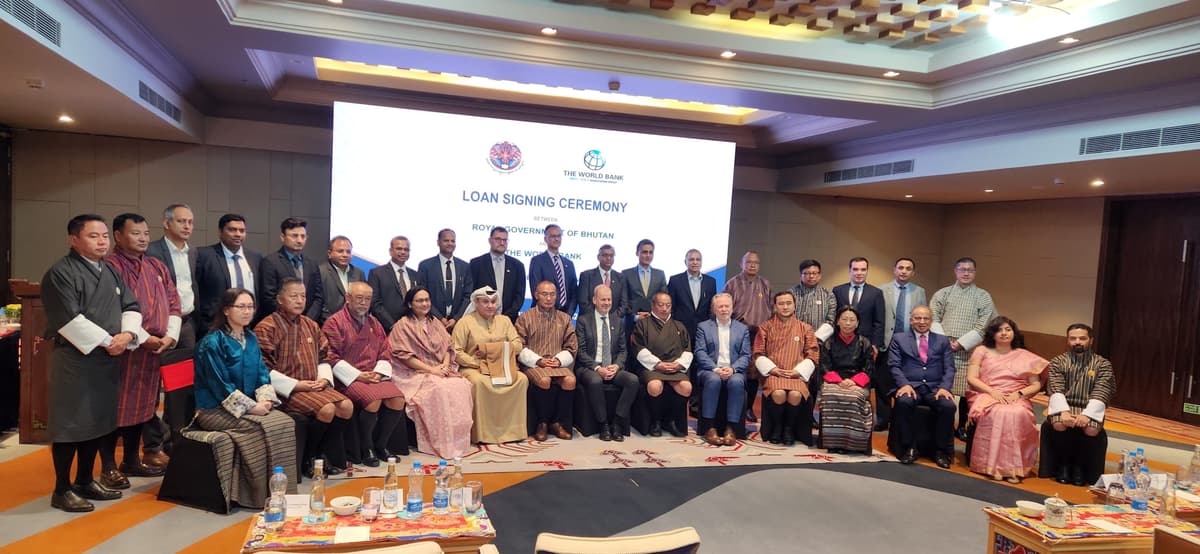
Bhutan, World Bank Seal $515 Million Pact for Dorjilung Hydropower
Companies Mentioned
Why It Matters
The deal provides Bhutan with clean, export‑ready power while protecting its fiscal health, and it showcases a scalable blended‑finance model for large infrastructure in developing economies.
Key Takeaways
- •World Bank commits $515M to Bhutan's Dorjilung hydro project
- •Project will generate 4,500 GWh annually, covering one‑third of Bhutan's power
- •Expected to lift Bhutan GDP by 2.4% and create jobs
- •Financing mix includes $300M IDA grant, $215M IBRD loan, $300M IFC
- •PPP aims to mobilize $900M private capital while limiting sovereign debt
Pulse Analysis
Bhutan’s ambition to become a net exporter of clean electricity has taken a decisive step forward with the Dorjilung Hydroelectric Power Project. Situated on the Kurichhu River in the east, the 1,125 MW facility is slated to produce more than 4,500 GWh each year—roughly one‑third of the kingdom’s total generation. By filling the seasonal winter deficit and channeling surplus power to India during the summer, Dorjilung strengthens Bhutan’s energy independence and supports the broader South Asian grid, a critical advantage amid global fuel volatility.
The $1.7 billion venture is underpinned by a novel financing package that blends concessional and commercial capital. The World Bank Group contributes $515 million—$300 million from the IDA, including a $150 million grant, $215 million from the IBRD, and up to $300 million from the IFC—while the PPP structure invites $900 million of private investment from Tata Power and other partners. Bhutan’s sovereign exposure is capped at $150 million, preserving debt sustainability and demonstrating how blended finance can unlock large‑scale infrastructure in low‑income economies.
Beyond the balance sheet, Dorjilung is projected to lift Bhutan’s GDP by 2.4 percent and generate thousands of construction and operations jobs, catalyzing entrepreneurship in manufacturing, tourism and small‑business sectors. Annual emissions avoidance of 3.3 million tonnes of CO₂ aligns with the kingdom’s carbon‑negative pledge and offers measurable climate benefits for the region. Revenue streams from power sales—estimated at $4 billion over the 30‑year credit period—will be earmarked for health, education and further infrastructure, creating a virtuous cycle of sustainable development.
Bhutan, World Bank Seal $515 Million Pact for Dorjilung Hydropower
Comments
Want to join the conversation?
Loading comments...