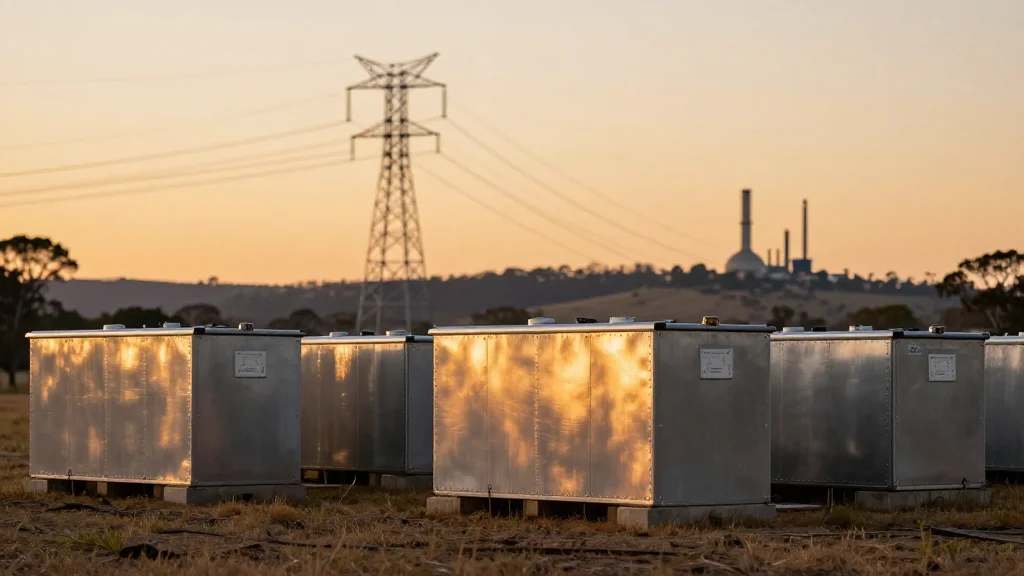
Big Batteries Took a Bite Out of Gas Generators’ Evening Peak Party, Then They Ate the Whole Dinner
Why It Matters
The displacement of gas by batteries reshapes Queensland’s energy mix, cutting emissions and altering investment incentives for new gas projects. It also signals a broader market transition where storage, not fossil generation, underpins grid reliability.
Key Takeaways
- •Battery storage cut Queensland peak gas output 40% early 2026
- •Large-scale batteries now dominate daily grid balancing over gas
- •Gas plants shift to seasonal backup; batteries handle daily peaks
- •State forecasts overestimate gas need, risking unnecessary exploration
- •Household battery adoption accelerates grid decarbonization, reducing fossil reliance
Pulse Analysis
Queensland’s power system has historically leaned on gas‑fired peaking plants to meet evening demand spikes, a legacy of its coal‑heavy generation portfolio. The recent commissioning of utility‑scale battery projects—most notably the 150 MW Neoen hub and several 100 MW installations—has introduced fast‑response storage that can inject power within milliseconds. By absorbing excess solar output and delivering energy during the critical 6 p.m. to 9 p.m. window, these batteries have slashed gas‑generator dispatch by roughly 40% in just two months, a shift that traditional grid models did not anticipate.
This rapid displacement carries weighty implications for market forecasts and policy. Energy planners have long justified new gas exploration and pipeline approvals on the premise that gas is indispensable for real‑time balancing. The Queensland experience challenges that narrative, suggesting that future capacity auctions may prioritize storage over new fossil assets. Consequently, investors and regulators must reassess the economic case for additional gas projects, focusing instead on seasonal reserve strategies where batteries are less cost‑effective. The transition also pressures state agencies to update reliability standards and incorporate storage performance metrics into long‑term planning.
Beyond the utility scale, residential battery adoption is accelerating, driven by falling lithium‑ion costs and incentives for behind‑the‑meter resilience. Homeowners equipped with systems like Tesla Powerwall or LG Chem can shave peak demand from the grid, further eroding the economic advantage of peaking gas plants. As storage proliferates, the grid’s carbon intensity is set to decline, opening pathways for deeper renewable penetration and reinforcing Australia’s broader decarbonization goals. Stakeholders who embrace this storage‑first paradigm will likely capture the next wave of growth in the evolving energy landscape.
Big batteries took a bite out of gas generators’ evening peak party, then they ate the whole dinner
Comments
Want to join the conversation?
Loading comments...