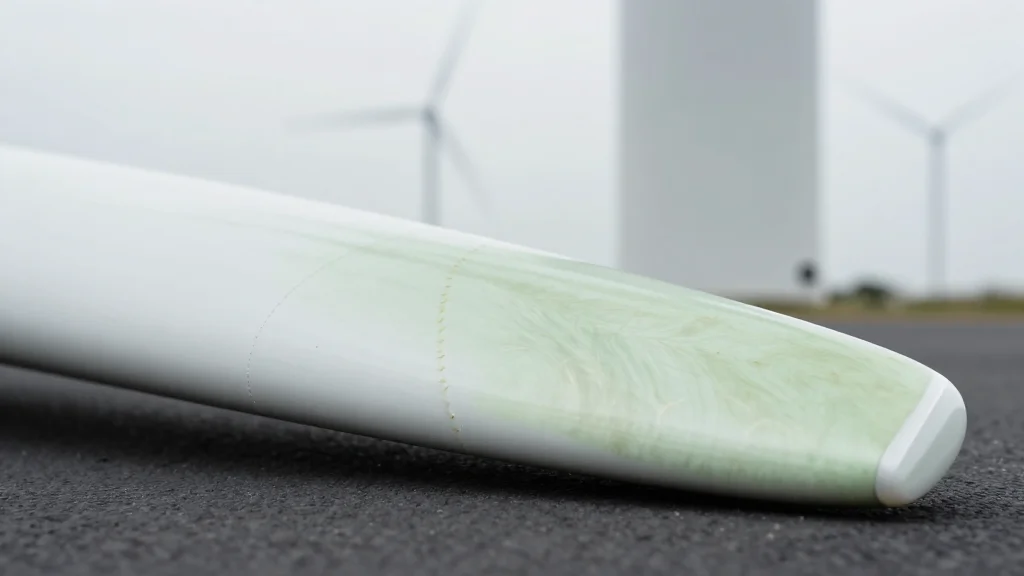
BLADE2CIRC Project Advances Reversible Polymers, Bio-Based Fibers and Enzymatic Recycling
Why It Matters
Circular blade technology cuts waste and disposal costs while supporting the EU’s climate targets, creating a competitive advantage for wind manufacturers adopting sustainable materials.
Key Takeaways
- •Specific Polymers created recyclable vitrimer polymers for blade composites
- •University of Limerick scaled lignin‑based fiber yarns for reinforcement
- •Centexbel produced lignin‑PAN fabric prototypes for blade manufacturing
- •EvoEnzyme advanced enzymatic recycling of composite blade components
Pulse Analysis
The European Union’s Horizon‑type funding has propelled the BLADE2CIRC consortium into the halfway point of its 42‑month agenda, targeting a new class of wind turbine blades that can be taken apart and reused. Traditional blades rely on thermoset resins that lock carbon fibers in place, creating end‑of‑life waste that often ends in landfills. By embedding bio‑based fibers and reversible polymer chemistries, the project seeks to close that loop, aligning blade manufacturing with the EU’s circular‑economy roadmap and the broader push for decarbonised energy infrastructure.
Recent milestones illustrate how chemistry and materials science are converging on practicality. Specific Polymers has demonstrated vitrimer systems that can be re‑configured under heat, allowing damaged sections to be healed or reclaimed. Meanwhile, the University of Limerick and Centexbel have scaled lignin‑derived yarns and woven them with polyacrylonitrile, delivering fabrics that meet strength requirements while reducing petroleum‑based inputs. EvoEnzyme’s enzyme‑driven depolymerisation offers a low‑energy route to recover resin and fiber fractions, and EireComposites is mapping the regulatory pathway to ensure REACH compliance, smoothing market entry.
If these prototypes translate to commercial blade production, manufacturers could lower material costs, extend product lifespans, and avoid costly disposal fees. The ability to recycle blades on‑site would also reduce supply‑chain emissions, a key metric for offshore wind developers facing stringent ESG criteria. Investors are watching for scalable solutions that can meet the EU’s 2050 climate‑neutrality target, and successful demonstration could unlock additional public‑private financing. Ultimately, BLADE2CIRC’s progress signals a shift toward truly sustainable wind energy components, setting a benchmark for other renewable‑technology sectors.
BLADE2CIRC project advances reversible polymers, bio-based fibers and enzymatic recycling
Comments
Want to join the conversation?
Loading comments...