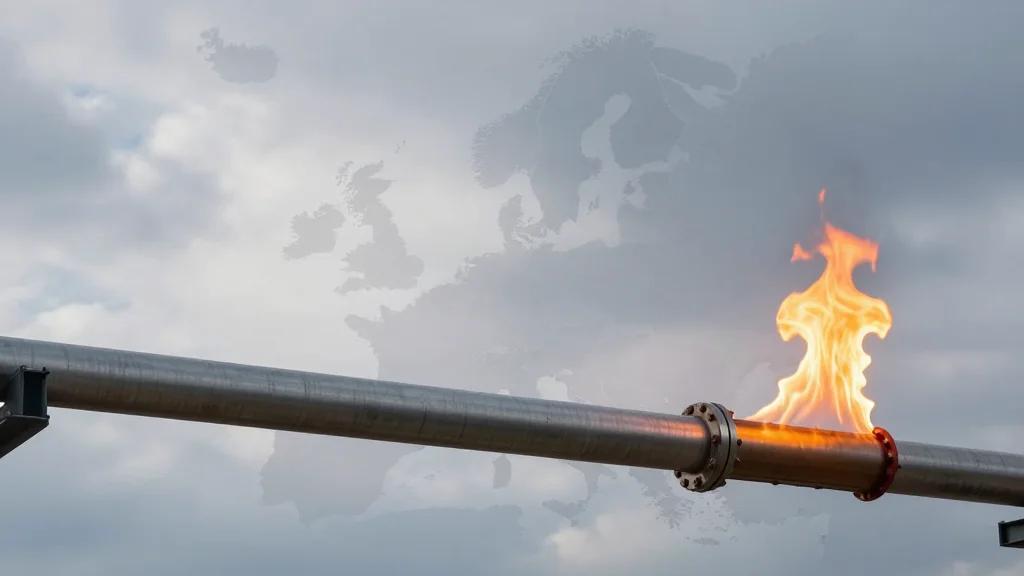
Bloomberg Warns Iran War Exposes Europe's Fossil Fuel Reliance, Green Shift at Risk

Why It Matters
The Iran‑driven gas price surge exposes a structural weakness in Europe’s energy mix: a persistent reliance on imported fossil fuels despite decades of climate pledges. If the bloc fails to address this gap, it risks higher production costs, reduced industrial competitiveness, and a potential rollback of climate‑friendly policies. Conversely, a decisive policy response could accelerate renewable‑energy deployment, strengthen energy security, and reinforce Europe’s leadership in the global fight against climate change. The situation also has geopolitical ramifications. Europe’s dependence on volatile energy imports makes it more susceptible to external shocks, limiting its strategic autonomy. By confronting the crisis head‑on, the EU can demonstrate that climate ambition and economic security are not mutually exclusive, setting a precedent for other regions facing similar energy‑security dilemmas.
Key Takeaways
- •Natural gas supplies about 20% of EU energy consumption, a share unchanged for 20 years.
- •Since February, gas prices have risen over 60% due to the Iran conflict.
- •The price surge adds an estimated €30 billion to annual industrial energy costs.
- •EU renewable‑capacity projects currently meet only ~35% of the 2030 clean‑energy goal.
- •Upcoming EU meetings will decide on short‑term relief and a revised 2026 renewable roadmap.
Pulse Analysis
Europe’s energy shock underscores a classic dilemma: the tension between immediate security needs and long‑term climate goals. Historically, crises have either accelerated policy change—such as the oil embargo of the 1970s prompting fuel‑efficiency standards—or entrenched existing dependencies, as seen after the 2008 financial crisis when many governments delayed green investments. The current Iran‑driven spike falls somewhere in between. While the price shock is severe, it is not as dramatic as the post‑Ukraine‑invasion surge, which suggests that the EU still has some buffer to act without resorting to emergency fossil‑fuel subsidies.
From a market perspective, the spike could make renewable projects more attractive to investors seeking stable, long‑term returns, especially as gas price volatility adds risk to fossil‑fuel contracts. However, the immediate fiscal pressure on governments may lead to short‑term subsidies for gas‑intensive industries, potentially crowding out green‑finance initiatives. The key will be how the EU allocates its €1.5 trillion Green Deal budget amid competing demands.
Looking ahead, the EU’s ability to lock in renewable capacity before the next price shock will be decisive. If the bloc can fast‑track offshore wind, solar, and green‑hydrogen projects while bolstering strategic gas reserves, it could turn the crisis into a catalyst for a more resilient, low‑carbon energy system. Failure to do so risks a re‑entrenchment of fossil‑fuel reliance, higher consumer bills, and a loss of credibility on the global climate stage.
Bloomberg warns Iran war exposes Europe's fossil fuel reliance, green shift at risk
Comments
Want to join the conversation?
Loading comments...