Bosch, Mitsubishi Win First China Customer for Battery Service Venture
Companies Mentioned
Why It Matters
The service reduces total cost of ownership for fleet operators and unlocks new revenue streams for OEMs, accelerating heavy‑duty electrification in the world’s largest truck market.
Key Takeaways
- •Bosch-Mitsubishi JV launches first battery‑service hub in Chizhou, China.
- •Hub serves 100+ electric trucks daily with swapping, AI charging, inspection.
- •Battery‑in‑the‑Cloud platform predicts health, reduces fleet total cost of ownership.
- •China heavy‑truck EV sales projected >50% by 2030, fueling demand.
- •Data enables new aftermarket services like connected insurance and maintenance.
Pulse Analysis
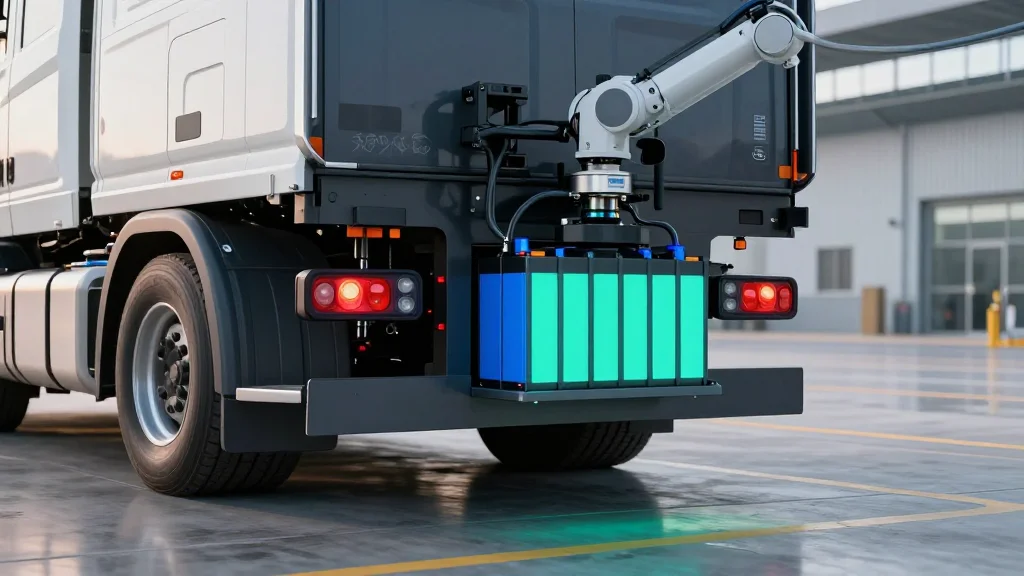
China’s heavy‑duty truck market is undergoing a rapid transformation, driven by stringent emissions policies and the scale of logistics demand. Bosch and Mitsubishi’s joint venture taps this momentum by offering battery‑as‑a‑service (BaaS), a model that shifts the financial and operational risk of battery ownership from fleet operators to service providers. The Chizhou hub, the first commercial deployment of the Bosch MC Battery Service Innovations technology, demonstrates how BaaS can be integrated into existing fleet operations, delivering immediate utility through on‑site swapping and AI‑optimized charging while gathering granular performance data.
At the heart of the offering is Bosch’s “Battery in the Cloud” platform, which leverages machine‑learning algorithms to assess state of health, forecast degradation trajectories, and fine‑tune charging profiles. For fleet managers, this translates into predictable battery performance, extended asset life, and clearer residual‑value calculations—critical factors when evaluating total cost of ownership. The AI‑based inspection system further enhances safety and uptime by detecting anomalies before they become failures, a capability that is especially valuable for high‑utilisation routes common in China’s logistics corridors.
Beyond the immediate operational benefits, the data generated by the hub opens a suite of aftermarket opportunities. Connected insurance products can price premiums based on real‑time battery health, while predictive maintenance services reduce downtime and parts inventory. As Chinese heavy‑truck sales are expected to surpass 1.1 million units in 2025 and electric models to dominate by 2030, providers that can bundle hardware, software, and services will likely capture a decisive share of the emerging ecosystem. Bosch and Mitsubishi’s early market entry positions them to shape standards, influence policy, and build the digital infrastructure essential for a fully electrified freight sector.
Bosch, Mitsubishi win first China customer for battery service venture
Comments
Want to join the conversation?
Loading comments...