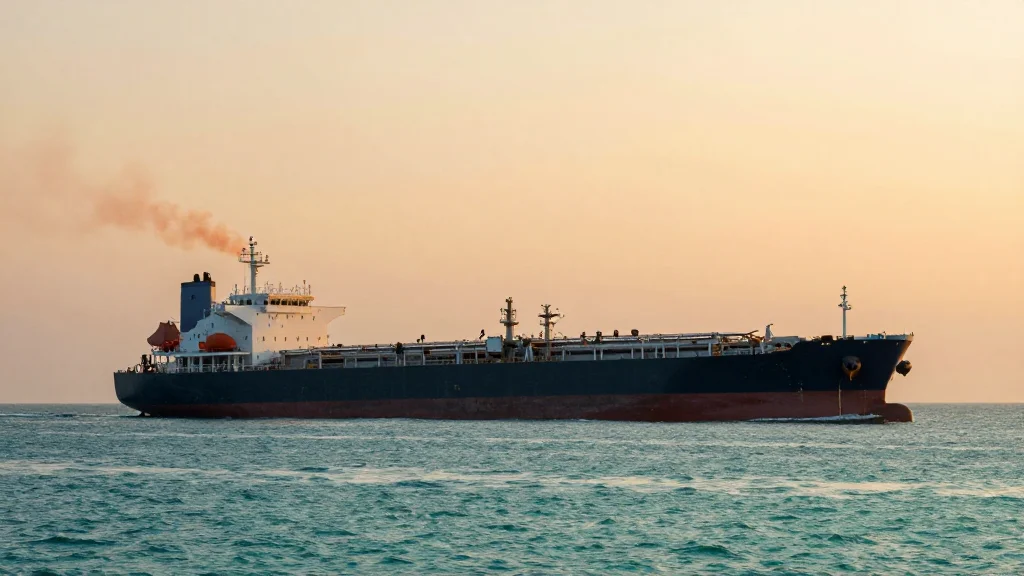
Brent Jumps 4% as US Strikes Iran
Companies Mentioned
Why It Matters
The price jump signals renewed geopolitical risk to global oil supplies, pressuring energy markets and inflation worldwide. Investors and policymakers must monitor the cease‑fire’s stability as it directly influences commodity pricing and economic outlooks.
Key Takeaways
- •Brent rose 4% to $99.92 after U.S. strikes in Iran.
- •WTI fell 3% to $93.72, widening the Brent‑WTI spread.
- •Iran halted 20% of global oil flow through Hormuz.
- •Doha talks persist as U.S. strike raises diplomatic tensions.
- •Oil market volatility likely to rise until cease‑fire confirmed.
Pulse Analysis
The latest U.S. strikes in Iran’s Hormozgan province have reignited geopolitical risk in the world’s most critical oil corridor, the Strait of Hormuz. For nearly seven weeks, Tehran has limited non‑Iranian vessels, curtailing roughly one‑fifth of global oil and LNG shipments. The military action coincided with Iranian foreign minister negotiations in Doha, underscoring the fragile cease‑fire that underpins maritime traffic. Analysts warn that any escalation could choke supply lines, prompting a swift reassessment of energy‑security strategies across Europe and Asia.
Crude markets reacted sharply, with Brent futures jumping 3.9% to $99.92 a barrel, while U.S. West Texas Intermediate slipped 3% to $93.72, widening the Brent‑WTI spread to its widest in months. The price surge reflects a risk premium investors attach to supply disruptions in the Gulf, as well as expectations of tighter inventories. Traders are also pricing in the possibility of further sanctions on Iran and a potential rerouting of cargoes to longer, costlier paths. The differential highlights divergent sentiment between European and American benchmarks amid heightened uncertainty.
The ripple effects extend beyond the energy sector. Higher oil prices feed into transportation costs, inflation pressures, and corporate earnings, especially for airlines and logistics firms. Policymakers in the United States and Europe may face calls to bolster strategic petroleum reserves or to accelerate the transition to alternative fuels. Meanwhile, diplomatic channels remain open; a swift diplomatic resolution could temper price spikes, whereas prolonged hostilities risk entrenching a new normal of elevated oil costs. Market participants will watch the Doha talks closely for any sign of de‑escalation.
Brent jumps 4% as US strikes Iran
Comments
Want to join the conversation?
Loading comments...